“You have to try the soup with that pesto on top,” my friend Jenna texted me one chilly April afternoon. I was skeptical. I mean, minestrone soup is classic enough on its own, right? But she was insistent, and honestly, I was tired of the usual soup routine after a long day juggling work and family chaos. So, I grabbed some fresh spring veggies and whipped up this fresh spring minestrone soup with basil pesto. The kitchen quickly filled with the earthy aroma of simmering vegetables and herbs. The pesto, bright and garlicky, added a lively twist that made every spoonful sing. I couldn’t believe how something so simple became my new go-to comfort food that week.
What stuck with me wasn’t just the flavors but how this soup felt like a reset—a cozy moment of calm with a bowl full of freshness. It’s light yet hearty, perfect for those days when you want something nourishing but not heavy. The pesto topping? That little extra spark that turns regular soup into something special without much fuss. It’s the kind of recipe that sneaks up on you, making you eager for seconds and quietly promising to be a staple whenever spring rolls around.
Why You’ll Love This Recipe
This fresh spring minestrone soup with basil pesto is honestly one of those dishes that feels both comforting and fresh at the same time. I’ve made this several times—sometimes on a whim, sometimes planning ahead—and each time it delivers that perfect balance of flavors you didn’t know you needed. Here’s why it’s a keeper:
- Quick & Easy: Ready in about 40 minutes, this soup fits nicely into busy weeknight dinners or even lazy weekend lunches.
- Simple Ingredients: If you have staple vegetables like zucchini, carrots, and canned beans in your pantry, you’re basically halfway there. No fancy trips needed!
- Perfect for Spring: The fresh veggies and vibrant basil pesto capture the season’s bright flavors—ideal for when you want a light but satisfying meal.
- Crowd-Pleaser: I’ve brought this soup to casual gatherings, and it’s always a hit with both kids and grown-ups alike.
- Unbelievably Delicious: The pesto topping adds a creamy, herby punch that transforms the soup from ordinary to memorable.
What really makes this soup stand out is the pesto. Instead of stirring it in, placing dollops on top lets you enjoy bursts of fresh basil and olive oil with every bite. Plus, making your own pesto is surprisingly simple and way better than store-bought. If you want something cozy but not heavy, this is your recipe. It’s the kind of meal that makes you close your eyes, savor the moment, and feel… well, just right.
What Ingredients You Will Need
This recipe relies on fresh, wholesome ingredients to create a soup that’s vibrant and satisfying without being complicated. Most are pantry staples or easy to find at your local market in spring.
- Olive oil: for sautéing (I prefer extra virgin for flavor)
- Yellow onion: finely chopped, adds sweetness and depth
- Garlic cloves: minced, essential for that savory base
- Carrots: diced, bring natural sweetness and color
- Celery stalks: diced, classic minestrone flavor builder
- Zucchini: chopped, fresh spring crunch
- Canned diced tomatoes: (14.5 oz/400g), for tang and richness
- Vegetable broth: about 6 cups (1.4 liters), homemade or low-sodium store-bought
- Small pasta shapes: like ditalini or elbow macaroni (about ¾ cup/90g)
- Canned cannellini beans: drained and rinsed (15 oz/425g), protein-packed and creamy
- Fresh spinach or baby kale: a couple of handfuls, added at the end for color and nutrients
- Salt and freshly ground black pepper: to taste
For the basil pesto topping:
- Fresh basil leaves: about 2 cups packed (loosely)
- Pine nuts: ¼ cup (35g), toasted for nuttiness
- Parmesan cheese: ½ cup grated (optional for a vegetarian version, swap with nutritional yeast)
- Garlic clove: 1 small, minced
- Extra virgin olive oil: ½ cup (120ml), slowly drizzled in for a silky texture
- Salt: a pinch to bring out flavors
When choosing ingredients, I like to pick firm, fresh vegetables—especially zucchini that’s not too watery to keep the soup from getting too thin. For the beans, I recommend Goya cans—they hold up well without breaking apart. For pesto, fresh basil is key; if you’re lucky to find it at a farmers market, grab it. Otherwise, supermarket basil does just fine for this recipe.
Equipment Needed
- Large soup pot or Dutch oven: for cooking soup evenly; I prefer enameled cast iron for heat retention but any heavy-bottomed pot works.
- Blender or food processor: essential for whipping up the basil pesto smoothly. A small chopper works too but expect chunkier pesto.
- Wooden spoon: for stirring the soup without scratching your pot.
- Measuring cups and spoons: precise measurements help keep the seasoning balanced.
- Knife and cutting board: sharp knife makes veggie prep quicker and safer.
If you don’t have a food processor, no worries—my first pesto was made with a mortar and pestle, which gives a rustic texture. Budget-wise, a simple immersion blender can double for soup blending and pesto making when needed. Just make sure to clean it well between uses!
Preparation Method
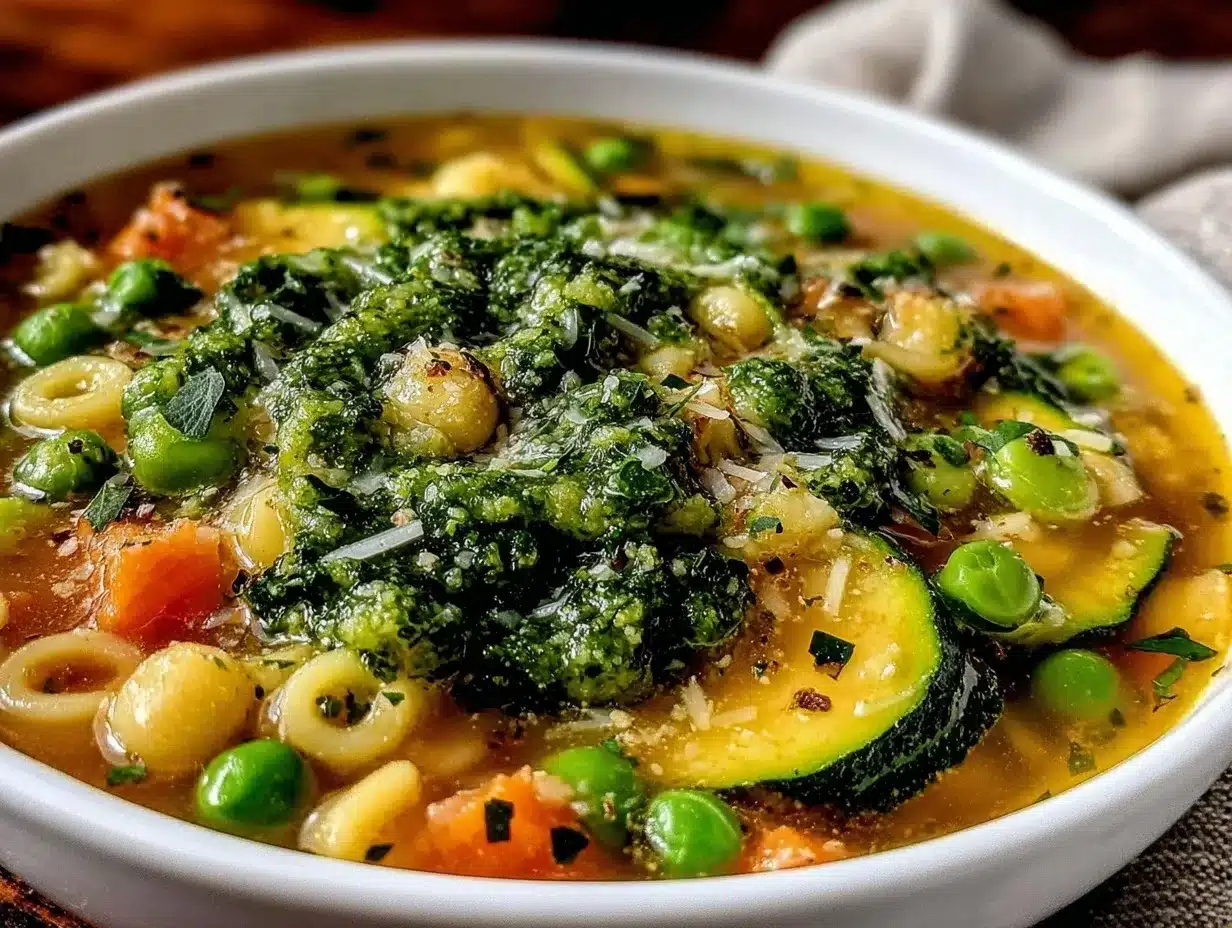
- Prep the base: Heat 2 tablespoons (30ml) olive oil in your large pot over medium heat. Add the chopped onion, carrots, and celery. Sauté for about 7 minutes, stirring occasionally, until softened and fragrant but not browned.
- Add garlic: Toss in the minced garlic and cook for another minute, just until aromatic. Be careful not to burn it—it turns bitter fast.
- Add zucchini and tomatoes: Stir in the chopped zucchini and canned diced tomatoes with their juices. Cook for 3-5 minutes to let the flavors meld.
- Pour in broth and simmer: Add the 6 cups (1.4 liters) of vegetable broth and bring to a boil. Reduce heat to low and simmer gently for 15 minutes. This is when the veggies soften and the soup develops its soul.
- Cook pasta: Add the small pasta shapes and cook according to package instructions (usually around 8-10 minutes) until al dente. Stir occasionally to prevent sticking.
- Mix in beans and greens: Stir in the rinsed cannellini beans and fresh spinach or baby kale. Cook for another 3-4 minutes until greens wilt but still look vibrant.
- Season: Taste and season with salt and freshly ground black pepper. Remember, broth and cheese in pesto add salt—adjust gradually.
- Make basil pesto: While soup simmers, blend 2 cups fresh basil, ¼ cup toasted pine nuts, ½ cup Parmesan, 1 minced garlic clove, and a pinch of salt in your food processor. Slowly drizzle ½ cup olive oil until smooth and creamy.
- Serve: Ladle soup into bowls and top each serving with a generous spoonful of fresh basil pesto. The contrast of warm soup and cool pesto is magic.
Pro tip: If soup thickens too much once pasta is in, add a splash of broth or water. And don’t overcook pasta—you want it tender but still with a bite.
Cooking Tips & Techniques
One lesson I learned early is to never rush sautéing the base veggies. The onion, carrot, and celery trio (mirepoix) needs gentle coaxing to release their sweetness and build depth. If you rush or high-heat, you risk bitter notes or uneven cooking.
When making pesto, toast the pine nuts lightly in a dry pan. Raw nuts can taste grassy and dull. Also, add olive oil slowly to create that lush, silky texture rather than oily or grainy.
Common mistake? Over-salting early. Since the broth and Parmesan add salt, it’s best to season lightly at first and adjust at the end. This keeps flavors balanced and prevents a salty soup.
Multi-tasking tip: Make your pesto while the soup simmers. Saves time and keeps pesto fresh. Also, stirring pasta gently prevents clumping.
Lastly, use fresh basil—you’ll notice a big difference in aroma and taste compared to dried. If you want, try adding a squeeze of lemon juice to pesto for a bright, zingy note.
Variations & Adaptations
Like to mix things up? Here are a few ways to customize this fresh spring minestrone soup with basil pesto to suit your mood or dietary needs:
- Protein boost: Add cooked shredded chicken or Italian sausage for a meaty twist. Or try keto stuffed peppers for a low-carb complement.
- Gluten-free: Swap pasta for gluten-free varieties or use spiralized veggies like zucchini noodles to keep it light and grain-free.
- Vegan version: Skip the Parmesan in pesto and replace with nutritional yeast; use vegetable broth and ensure pasta is egg-free.
- Seasonal twists: In summer, swap zucchini for fresh sweet corn and cherry tomatoes for a sweeter profile. In fall, add diced butternut squash for warmth.
- Cooking methods: This soup also works well in a slow cooker—just add ingredients and cook on low for 6-8 hours. Add pasta and greens near the end to prevent mushiness.
One of my favorite variations is stirring in a splash of cream or coconut milk for a silkier texture, especially when serving guests. It pairs nicely with the pesto’s herbaceous brightness.
Serving & Storage Suggestions
This soup is best served hot, with a few dollops of basil pesto on top right before serving. I like to garnish with an extra sprinkle of Parmesan and a few fresh basil leaves for a pretty finish.
Pair it with crusty bread or a fresh green salad for a balanced meal. If you’re after a heartier option, a slice of creamy chicken pasta makes an excellent follow-up or side dish.
Store leftovers in an airtight container in the fridge for up to 3 days. The soup thickens as it sits; add a splash of broth or water when reheating to loosen it up. Reheat gently on the stove or microwave until warmed through.
The pesto is best fresh but can be kept separately in a sealed jar in the fridge for up to 2 days. Spoon it on after reheating for that fresh punch. Flavors mellow beautifully overnight, making leftovers even tastier.
Nutritional Information & Benefits
This fresh spring minestrone soup with basil pesto is packed with vitamins, fiber, and plant-based protein, making it a nourishing choice for any meal. A typical serving contains roughly:
| Calories | 280-320 kcal |
|---|---|
| Protein | 12-15 grams (thanks to beans and pasta) |
| Fiber | 7-9 grams |
| Fat | 10-12 grams (mostly healthy fats from olive oil and pine nuts) |
The fresh vegetables contribute antioxidants and phytonutrients, while the basil pesto adds heart-healthy fats and vitamin K. This soup suits vegetarian, gluten-free (with substitutions), and low-sodium diets when made with appropriate broth.
I appreciate this recipe for how light it feels yet how filling and balanced it is—comfort food that’s good for the body and soul.
Conclusion
This fresh spring minestrone soup with basil pesto quickly became one of those recipes I reach for when I want something wholesome, easy, and just a little bit special. The bright, fresh flavors combined with that punchy pesto topping create a bowl that’s both soothing and lively.
Feel free to tweak the veggies or make the pesto your own—cooking should always reflect what you love. I hope this recipe inspires a few cozy meals in your kitchen, just like it did in mine.
And if you give it a try, I’d love to hear how you made it yours. Happy cooking!
FAQs
Can I make this soup ahead of time?
Yes! The soup can be made a day ahead and tastes even better after the flavors have melded. Just keep the pesto separate and add it fresh when serving.
What pasta works best in minestrone soup?
Small pasta shapes like ditalini, elbow macaroni, or small shells work great because they cook quickly and blend well with the veggies.
Can I freeze this minestrone soup?
You can freeze the soup without the pesto for up to 2 months. Thaw overnight in the fridge and reheat gently. Add fresh pesto after reheating.
How do I store leftover pesto?
Store pesto in an airtight container in the fridge for up to 2 days. To keep it vibrant, drizzle a thin layer of olive oil on top before sealing.
Is this recipe suitable for vegans?
Yes! Simply skip the Parmesan cheese in the pesto and replace it with nutritional yeast or omit it altogether for a delicious vegan version.
Pin This Recipe!
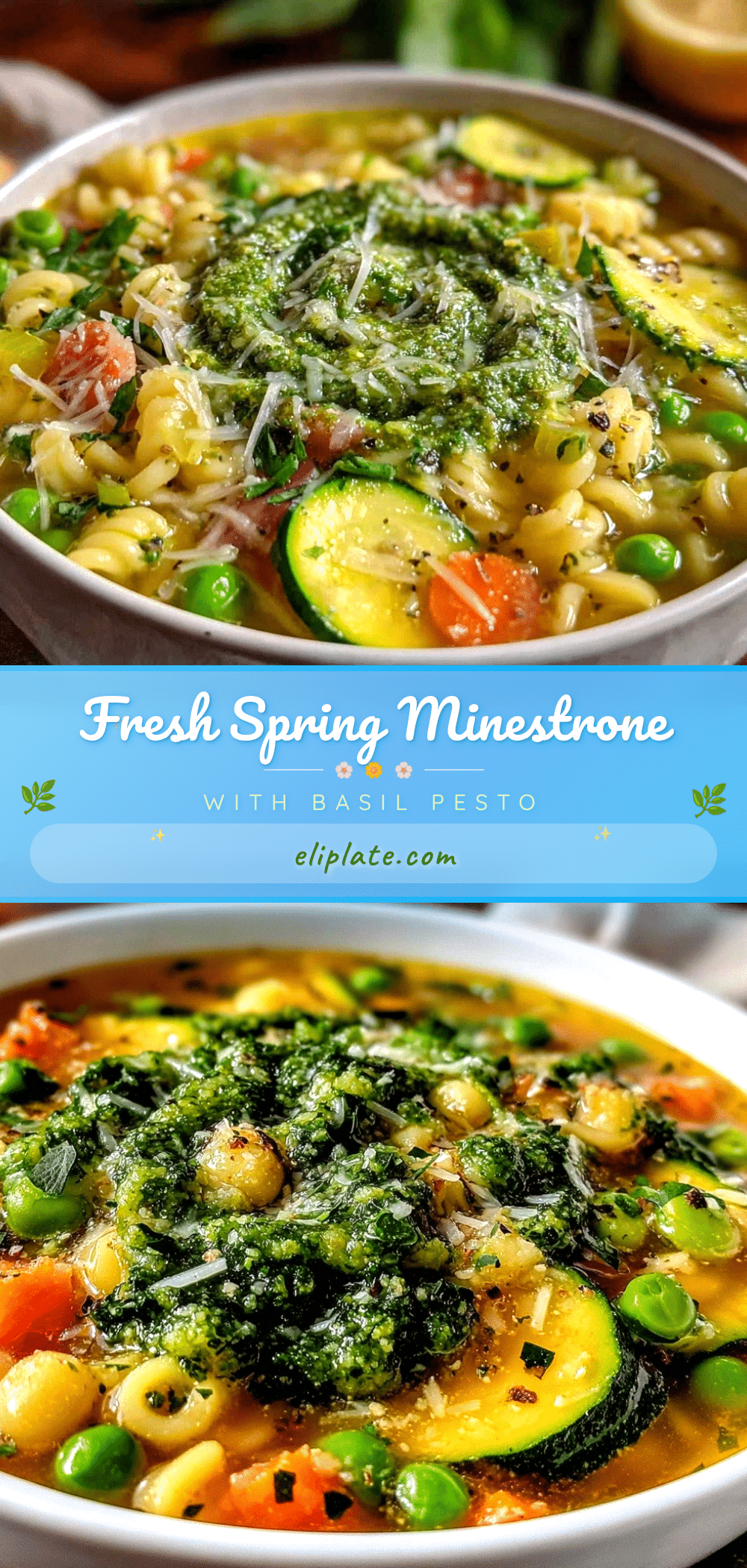
Fresh Spring Minestrone Soup Recipe with Easy Basil Pesto Topping

A light yet hearty fresh spring minestrone soup topped with a bright and garlicky basil pesto, perfect for a nourishing and comforting meal.
- Prep Time: 15 minutes
- Cook Time: 25 minutes
- Total Time: 40 minutes
- Yield: 6 servings 1x
- Category: Main Course
- Cuisine: Italian
Ingredients
- 2 tablespoons olive oil (extra virgin preferred)
- 1 yellow onion, finely chopped
- 3 garlic cloves, minced (1 for pesto, 2 for soup)
- 2 carrots, diced
- 2 celery stalks, diced
- 1 medium zucchini, chopped
- 14.5 oz (400g) canned diced tomatoes
- 6 cups (1.4 liters) vegetable broth (homemade or low-sodium store-bought)
- 3/4 cup (90g) small pasta shapes like ditalini or elbow macaroni
- 15 oz (425g) canned cannellini beans, drained and rinsed
- 2 handfuls fresh spinach or baby kale
- Salt and freshly ground black pepper to taste
- For the basil pesto topping:
- 2 cups packed fresh basil leaves
- 1/4 cup (35g) toasted pine nuts
- 1/2 cup grated Parmesan cheese (optional; substitute nutritional yeast for vegan)
- 1 small garlic clove, minced
- 1/2 cup (120ml) extra virgin olive oil
- Pinch of salt
Instructions
- Heat 2 tablespoons olive oil in a large soup pot over medium heat. Add chopped onion, carrots, and celery. Sauté for about 7 minutes until softened and fragrant but not browned.
- Add minced garlic and cook for another minute until aromatic, being careful not to burn it.
- Stir in chopped zucchini and canned diced tomatoes with their juices. Cook for 3-5 minutes to meld flavors.
- Pour in 6 cups vegetable broth and bring to a boil. Reduce heat to low and simmer gently for 15 minutes.
- Add small pasta shapes and cook according to package instructions (8-10 minutes) until al dente, stirring occasionally.
- Stir in rinsed cannellini beans and fresh spinach or baby kale. Cook for another 3-4 minutes until greens wilt but remain vibrant.
- Taste and season with salt and freshly ground black pepper, adjusting gradually.
- While soup simmers, blend 2 cups fresh basil, 1/4 cup toasted pine nuts, 1/2 cup Parmesan, 1 minced garlic clove, and a pinch of salt in a food processor. Slowly drizzle in 1/2 cup olive oil until smooth and creamy.
- Ladle soup into bowls and top each serving with a generous spoonful of fresh basil pesto.
Notes
[‘If soup thickens too much after adding pasta, add a splash of broth or water to loosen it.’, ‘Do not overcook pasta; it should be tender but still have a bite.’, ‘Toast pine nuts lightly in a dry pan before adding to pesto for better flavor.’, ‘Add olive oil slowly to pesto for a silky texture.’, ‘Season soup gradually to avoid over-salting, as broth and Parmesan add salt.’, ‘Make pesto while soup simmers to save time and keep pesto fresh.’, ‘Use fresh basil for best aroma and flavor; dried basil is not recommended.’, ‘For vegan pesto, omit Parmesan and substitute with nutritional yeast.’, ‘Soup can be made ahead; store pesto separately and add fresh when serving.’, ‘Soup can be frozen without pesto for up to 2 months; add fresh pesto after reheating.’]
Nutrition
- Serving Size: 1 bowl (approximatel
- Calories: 280320
- Sugar: 68
- Sodium: 300400
- Fat: 1012
- Saturated Fat: 1.52
- Carbohydrates: 3540
- Fiber: 79
- Protein: 1215
Keywords: minestrone soup, basil pesto, spring soup, vegetarian soup, easy soup recipe, healthy soup, Italian soup, fresh vegetables