“You really have to slow down for this one,” my grandma once said, as I impatiently hovered over the stove, poking at the pot roast like it was some impatient beast. Honestly, I was skeptical at first—who has hours to spare on a weeknight? But that smell… the rich, meaty aroma mingling with sweet, melting carrots, it hooked me instantly. I didn’t realize then that this recipe wasn’t just food; it was a quiet ritual, a little pocket of calm in the middle of chaos.
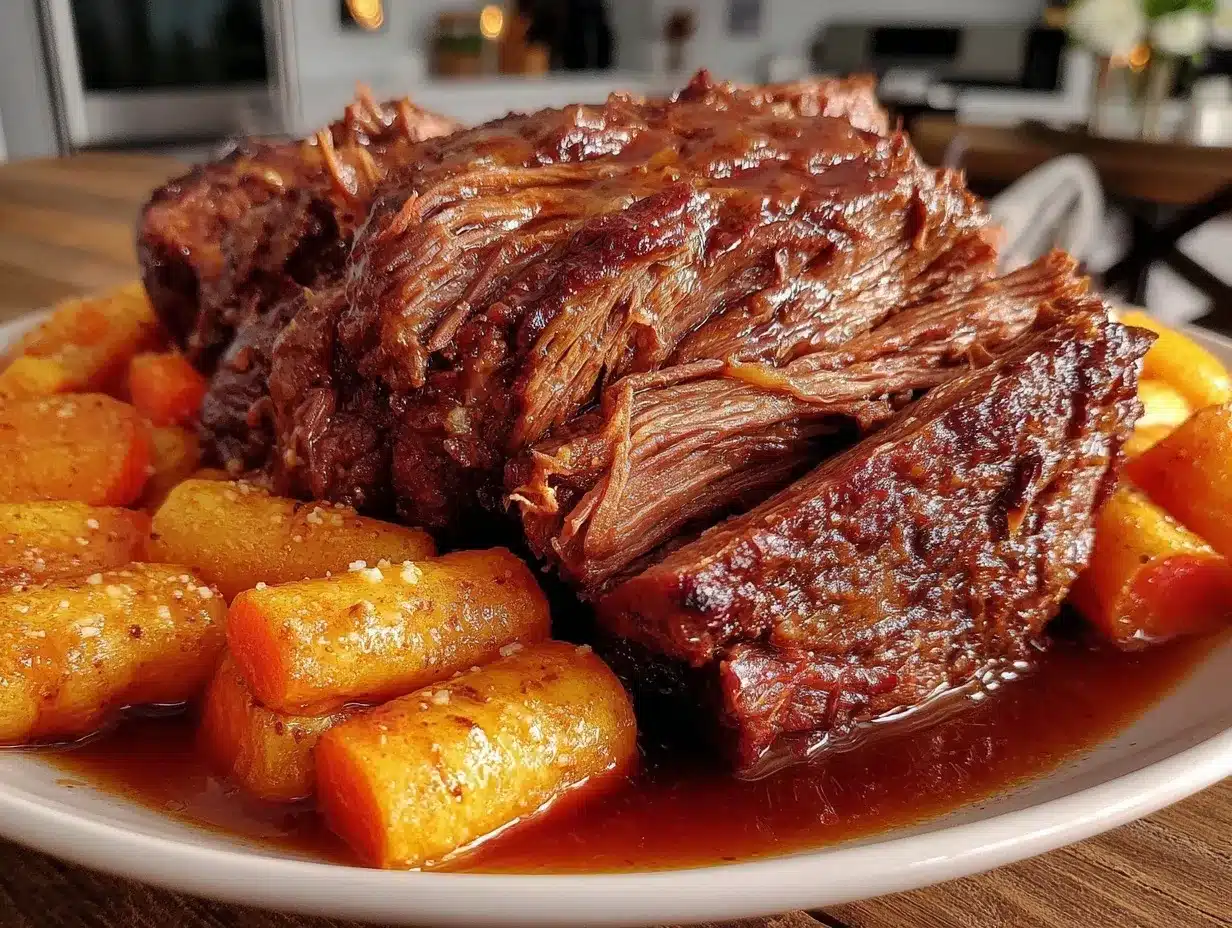
That pot roast, the one she called “Sunday dinner,” was never rushed. The carrots literally fall apart, soaking up all that savory goodness, turning into silky threads of flavor. I remember sitting by the kitchen window, the late afternoon light warming the room, the tender meat pulling apart with just a fork’s gentle press. It was less about the meal and more about the moment—a shared breath of contentment.
This recipe stuck with me, not because it was fancy or complicated, but because it felt like a hug from the past. It’s the kind of dish that makes you slow down, appreciate the small things, and maybe even call someone you love. Grandma’s pot roast isn’t just about feeding the belly—it’s about feeding the soul, one tender bite at a time.
Why You’ll Love This Recipe
After making this tender grandma’s Sunday pot roast with carrots that fall apart more times than I can count, I’m convinced it’s a keeper for good reason. It’s not just comfort food; it’s an experience you’ll want to repeat.
- Slow-Cooked Tenderness: The long braise breaks down the meat beautifully, resulting in a melt-in-your-mouth texture that honestly surprises even skeptics.
- Simple Ingredients: No need for exotic spices or hard-to-find items—most of these are pantry staples or easy to pick up at any store.
- Perfect for Gatherings: Whether it’s a Sunday dinner or a cozy get-together, this pot roast impresses without the stress of last-minute prep.
- Carrots That Truly Melt: Unlike any ordinary side, these carrots soak up all the savory juices and become soft enough to fall apart with just a nudge.
- Flavor That Builds Over Time: The slow cooking means every bite is layered with deep, rich flavors that make you savor each mouthful.
What sets this pot roast apart is the balance of seasoning and the gentle simmer that coaxes out the natural flavors instead of masking them. Plus, the technique of adding carrots at just the right moment keeps them tender but not mushy. Honestly, it’s a recipe that’s been tested through years of family dinners and passed down with care. If you’re the kind of cook who enjoys dishes that feel like a warm story told at the table, this one’s made just for you.
What Ingredients You Will Need
This recipe uses simple, wholesome ingredients to deliver bold flavor and satisfying texture without the fuss. Most of these are pantry staples, with fresh vegetables adding that homey touch.
- Beef Chuck Roast (about 3 to 4 pounds / 1.4 to 1.8 kg) – The star of the dish, well-marbled for that tender, juicy result.
- Carrots (4 to 5 large, peeled and cut into chunks) – These will soak up all the savory goodness and become irresistibly soft.
- Yellow Onions (2 medium, sliced) – Adds sweetness and depth to the braising liquid.
- Garlic Cloves (4, minced) – For that subtle warmth and aroma.
- Beef Broth (3 cups / 720 ml) – Look for low-sodium versions; I prefer Kitchen Basics for a clean, rich taste.
- Red Wine (1 cup / 240 ml, optional) – Adds complexity; use a dry red like Cabernet Sauvignon or Merlot.
- Tomato Paste (2 tablespoons) – Concentrates flavor and adds a subtle tang.
- Fresh Thyme (4 to 5 sprigs) – Fresh herbs make a big difference here.
- Bay Leaves (2) – Classic aromatic for braised dishes.
- Salt and Pepper – To taste; freshly cracked black pepper is best.
- Olive Oil (2 tablespoons) – For searing the roast.
- All-Purpose Flour (2 tablespoons) – Helps thicken the gravy; optional if you prefer a thinner sauce.
If you want to swap the beef broth for a gluten-free option, just make sure your broth doesn’t contain wheat-based additives. For the carrots, baby carrots can work in a pinch, but the large chunks really soak up flavor best. And if you’re avoiding alcohol, just skip the wine and add a bit more broth with a splash of balsamic vinegar to keep the acidity balanced.
Equipment Needed
- Large Dutch Oven or Heavy-Bottomed Pot: This is ideal for searing the roast and slow braising. I’ve used both cast iron and enameled versions — both work great, but cast iron retains heat beautifully.
- Tongs: For turning the roast while searing, a good pair of sturdy tongs is a must.
- Sharp Knife: To prep your vegetables cleanly.
- Wooden Spoon or Heatproof Spatula: For stirring the base and scraping up browned bits.
- Meat Thermometer: Helpful but not essential; it ensures your roast hits the perfect tenderness without overcooking.
- Optional: Slow Cooker or Instant Pot: If you want to adapt this recipe, both can be convenient alternatives, though the flavor and texture will vary slightly.
For budget-friendly options, a heavy pot with a tight lid will do. Just avoid thin pans that might burn the meat or dry out the braising liquid. If you’re a fan of multitasking, the Dutch oven can go from stove to oven seamlessly, which I find handy when prepping roasted vegetable bowls on the side.
Preparation Method
- Prep the Roast: Pat the beef chuck roast dry with paper towels. Season generously with salt and freshly cracked black pepper on all sides (about 1 teaspoon salt and ½ teaspoon pepper). Let it rest while you prep the vegetables (10 minutes).
- Heat the Dutch Oven: Place 2 tablespoons of olive oil in the pot over medium-high heat. When shimmering hot, add the roast and sear until deeply browned on all sides, about 4 to 5 minutes per side. This seals in juices and creates flavor-building fond. Remove and set aside.
- Sauté Aromatics: Lower heat to medium. Add sliced onions and minced garlic to the same pot. Stir occasionally, scraping up browned bits from the bottom. Cook until onions soften and turn golden, about 5 minutes.
- Deglaze: Stir in tomato paste and cook for 1 minute. Pour in 1 cup (240 ml) red wine (or extra broth). Use a wooden spoon to scrape up any stuck bits — that’s flavor gold. Let the liquid simmer until reduced by half, about 5 minutes.
- Add Broth and Herbs: Return the roast to the pot. Pour in 3 cups (720 ml) beef broth, add fresh thyme sprigs and 2 bay leaves. The liquid should come about halfway up the roast; add water if needed. Bring to a gentle simmer.
- Slow Cook: Cover with a tight-fitting lid and transfer to a 325°F (160°C) oven. Cook for 2½ hours, turning the roast once halfway through. This slow braise breaks down connective tissue for that tender texture.
- Add Carrots: After 2½ hours, add the carrot chunks around the roast. Return to oven and cook uncovered for another 30 to 40 minutes, or until carrots are tender and starting to fall apart.
- Make the Gravy: Remove the roast and carrots to a serving platter, tent with foil to keep warm. Skim any excess fat from the braising liquid. For a thicker gravy, whisk 2 tablespoons flour into a small amount of cold water and stir into the pot. Simmer on stove over medium heat until thickened, about 5 minutes.
- Serve: Slice or shred the roast against the grain. Spoon carrots and gravy over top, and enjoy the cozy comfort.
Pro tip: If the roast feels tough when you check at 2 hours, give it more time. Patience makes all the difference. And don’t rush adding the carrots—they need that last cooking phase to soak up flavor without turning to mush too soon.
Cooking Tips & Techniques
Getting the perfect pot roast isn’t just about following steps; there’s a bit of art to it, you know? One thing I learned the hard way is that searing the meat well is non-negotiable. It locks in flavor and prevents the roast from tasting one-note. Once, I skipped searing because I was in a rush, and the difference was night and day.
Another tip? Keep your oven temperature steady around 325°F (160°C). Too hot and the meat dries out; too low and it takes forever. This middle ground gives you tender meat with a rich sauce. Also, adding veggies like carrots too early can turn them into mush. I usually add them in the last 40 minutes, just enough to soften but still hold some shape.
When stirring the pot, scrape that fond off the bottom. It’s where all the flavor hides, and letting it dissolve into the broth is key. I like to multitask here—while the roast cooks, it’s a good time to prep sides like a simple mashed potato or a fresh salad.
Consistency is king in recipes like this. Always use a kitchen thermometer if you have one to check that the internal temperature hits around 190°F (88°C) for that fork-tender pull-apart texture. And don’t forget to rest the meat before slicing; this helps the juices redistribute.
Variations & Adaptations
- Slow Cooker Version: Sear the roast on the stovetop, then transfer to a slow cooker. Add all ingredients except carrots, cook on low for 7-8 hours. Add carrots in the last hour to keep them from getting mushy.
- Low-Carb Adaptation: Skip flour for thickening and use a slurry of xanthan gum if desired. Serve with cauliflower mash or roasted veggies like in my keto bacon cheeseburger casserole.
- Seasonal Twist: Swap carrots with parsnips or turnips in fall and winter for an earthier flavor. You can also add pearl onions halfway through cooking for a sweet pop.
- Herb Variations: If you don’t have thyme, rosemary or sage work beautifully too and add a lovely aromatic note.
- Personal Twist: I once added a splash of Worcestershire sauce to the braising liquid for an extra depth that made everyone ask what was different about the dish!
Serving & Storage Suggestions
This pot roast is best served warm, straight from the oven, with plenty of that rich gravy spooned over. I like to pair it with creamy mashed potatoes or buttery egg noodles to soak up the juices. A side of roasted green beans or a bright salad balances the richness perfectly.
Leftovers keep beautifully in the fridge for 3 to 4 days. The flavors deepen overnight, so reheating actually improves the taste. Warm gently on the stove or in the oven at 300°F (150°C) to avoid drying out. You can also freeze portions in airtight containers for up to 3 months; just thaw slowly in the fridge before reheating.
The carrots tend to become even softer after resting, turning into that signature melt-in-your-mouth texture that makes this dish a standout. This makes the pot roast a perfect make-ahead meal for busy weeks or unexpected guests.
Nutritional Information & Benefits
Per serving (approximate, based on 6 servings):
| Calories | 420 |
|---|---|
| Protein | 38g |
| Fat | 22g |
| Carbohydrates | 12g |
| Fiber | 3g |
This pot roast provides a hearty dose of protein and iron from the beef, supporting muscle health and energy levels. Carrots contribute beta-carotene, which supports eye health, and the slow cooking preserves many nutrients. If you’re mindful of sodium, opting for low-sodium broth and moderating added salt helps keep it balanced.
For gluten-sensitive eaters, just skip the flour or use a gluten-free thickener. This recipe fits nicely into a balanced diet focused on whole foods and classic flavors.
Conclusion
Grandma’s Sunday pot roast with carrots that fall apart isn’t just a meal; it’s a tradition that invites you to slow down and savor the simple pleasures. Whether it’s your first try or a welcomed repeat, the tender meat and velvety carrots will make it a recipe you return to again and again.
Feel free to tweak the herbs or sides to fit your mood or pantry. I love that it’s forgiving and rewarding, no matter your kitchen confidence. It’s why I keep coming back to it, even after trying faster dinners like the honey garlic baked salmon or crispy lemon herb chicken bowls.
Give it a shot, and let this pot roast bring a little warmth and comfort to your table. I’d love to hear how you make it your own!
Frequently Asked Questions
How long does it take to cook a pot roast until tender?
Expect about 3 to 3½ hours in a 325°F (160°C) oven, depending on roast size. Slow and steady heat breaks down connective tissue for tenderness.
Can I use a different cut of beef?
Chuck roast is best for tenderness and flavor, but brisket or bottom round can work with adjusted cooking times.
Why do the carrots fall apart in this recipe?
They cook slowly in the braising liquid during the final 30-40 minutes, absorbing flavor and softening until they practically melt.
Is it possible to make this pot roast in a slow cooker?
Yes! Sear first, then cook on low for 7-8 hours, adding carrots in the last hour to keep them from becoming mushy.
How should I reheat leftovers without drying out the meat?
Warm gently in the oven at 300°F (150°C) covered with foil, or on the stovetop over low heat with a splash of broth or water to keep moisture.
Pin This Recipe!
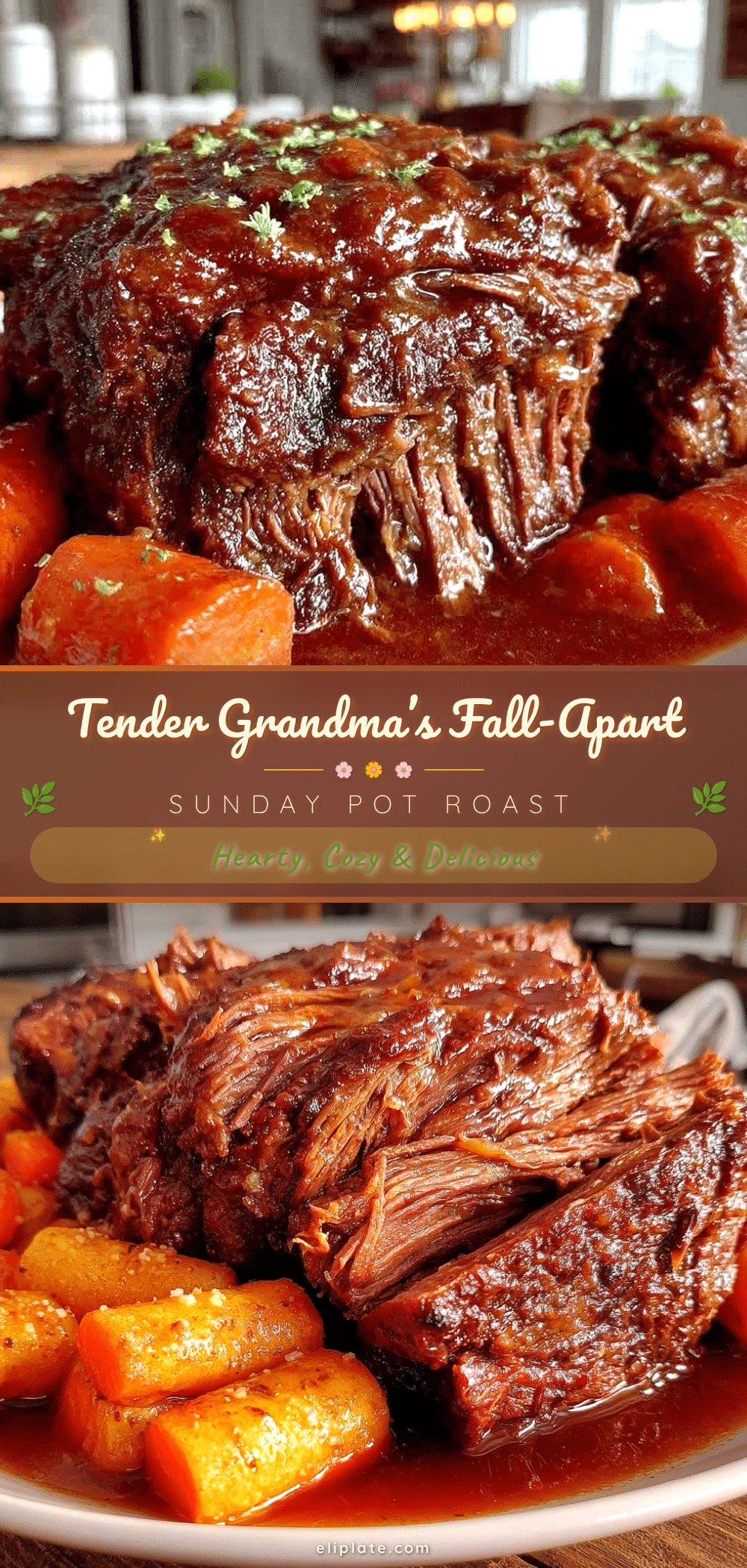
Tender Grandma’s Sunday Pot Roast Recipe with Carrots That Melt in Your Mouth
A slow-cooked, tender beef chuck roast braised with carrots, onions, and herbs, resulting in melt-in-your-mouth meat and soft, flavorful carrots. Perfect for comforting Sunday dinners and cozy gatherings.
- Prep Time: 15 minutes
- Cook Time: 3 hours 10 minutes
- Total Time: 3 hours 25 minutes
- Yield: 6 servings 1x
- Category: Main Course
- Cuisine: American
Ingredients
- 3 to 4 pounds beef chuck roast
- 4 to 5 large carrots, peeled and cut into chunks
- 2 medium yellow onions, sliced
- 4 garlic cloves, minced
- 3 cups beef broth (low-sodium preferred)
- 1 cup red wine (dry, such as Cabernet Sauvignon or Merlot, optional)
- 2 tablespoons tomato paste
- 4 to 5 sprigs fresh thyme
- 2 bay leaves
- Salt to taste (about 1 teaspoon)
- Freshly cracked black pepper to taste (about ½ teaspoon)
- 2 tablespoons olive oil
- 2 tablespoons all-purpose flour (optional, for thickening gravy)
Instructions
- Pat the beef chuck roast dry with paper towels. Season generously with salt and freshly cracked black pepper on all sides. Let it rest while you prep the vegetables (about 10 minutes).
- Heat 2 tablespoons of olive oil in a large Dutch oven or heavy-bottomed pot over medium-high heat. When hot, add the roast and sear until deeply browned on all sides, about 4 to 5 minutes per side. Remove and set aside.
- Lower heat to medium. Add sliced onions and minced garlic to the pot. Stir occasionally, scraping up browned bits from the bottom. Cook until onions soften and turn golden, about 5 minutes.
- Stir in tomato paste and cook for 1 minute. Pour in 1 cup red wine (or extra broth if not using wine). Scrape up any stuck bits with a wooden spoon. Let the liquid simmer until reduced by half, about 5 minutes.
- Return the roast to the pot. Pour in 3 cups beef broth, add fresh thyme sprigs and bay leaves. The liquid should come about halfway up the roast; add water if needed. Bring to a gentle simmer.
- Cover with a tight-fitting lid and transfer to a 325°F (160°C) oven. Cook for 2½ hours, turning the roast once halfway through.
- After 2½ hours, add the carrot chunks around the roast. Return to oven and cook uncovered for another 30 to 40 minutes, or until carrots are tender and starting to fall apart.
- Remove the roast and carrots to a serving platter and tent with foil to keep warm. Skim any excess fat from the braising liquid. For thicker gravy, whisk 2 tablespoons flour into a small amount of cold water and stir into the pot. Simmer on stove over medium heat until thickened, about 5 minutes.
- Slice or shred the roast against the grain. Spoon carrots and gravy over top and serve warm.
Notes
Searing the meat well is essential to lock in flavor. Keep oven temperature steady at 325°F (160°C) for best results. Add carrots late in cooking to avoid mushiness. Use a meat thermometer to check for an internal temperature of about 190°F (88°C) for fork-tender meat. Rest the meat before slicing to redistribute juices. For gluten-free, skip the flour or use a gluten-free thickener. Slow cooker adaptation: sear roast, cook on low 7-8 hours, add carrots last hour.
Nutrition
- Serving Size: Approx. 1/6 of the r
- Calories: 420
- Fat: 22
- Carbohydrates: 12
- Fiber: 3
- Protein: 38
Keywords: pot roast, beef chuck roast, slow cooked, Sunday dinner, comfort food, carrots, braised beef, tender meat, family recipe