“You can’t rush something good,” my friend joked as I stirred the pot of beef stew simmering gently on the stove. It was the first truly chilly night of the season—when the kind of cold that sneaks through your windows demands a meal that feels like a warm blanket. I had tossed together this beef stew recipe mostly on a whim, throwing in whatever vegetables were on hand, and letting it cook low and slow all afternoon while I tackled a mountain of emails and laundry. Honestly, I wasn’t expecting much, but the rich aroma that filled the kitchen later that evening stopped me in my tracks.
That first spoonful was like a gentle, savory hug—tender chunks of beef melting in my mouth, the roots and herbs dancing together perfectly. This stew wasn’t just dinner; it was a moment of pause on a hectic day. Over the next few weeks, I found myself making this cozy first chilly night beef stew that simmers all afternoon more than once, tweaking it just slightly each time, but always ending up with that same deep, comforting flavor.
There’s something about a slow-simmered beef stew that feels honest and grounding—like you’re pressing pause and letting the world slow down, even if just for a few bites. It’s not fancy or complicated, but it’s exactly what you want when the wind howls outside and you’re craving something warm and familiar. This recipe stuck with me because it’s forgiving, flavorful, and somehow feels like home—even if you’re just cooking for one.
Why You’ll Love This Recipe
This beef stew recipe has been tested in my kitchen on busy weekdays and lazy weekends alike, and it always delivers. I’ve learned a few tricks that make it a standout, and I’m happy to share why it might become your go-to for those chilly nights:
- Quick & Easy: While it simmers all afternoon, the active prep time is under 30 minutes, making it perfect for days when you’re juggling other tasks.
- Simple Ingredients: Nothing fancy here—just pantry staples and fresh veggies that you probably already have in your fridge or can easily grab.
- Perfect for Cozy Nights: This stew feels like it was made for curling up with a book or gathering around the table with family and friends.
- Crowd-Pleaser: Kids, adults, picky eaters—everyone seems to love the rich, hearty flavors and tender beef chunks.
- Unbelievably Delicious: The slow simmer melds flavors into a rich, soulful broth that keeps you coming back for more.
What sets this beef stew apart? It’s the balance of seasoning and the patience to let it simmer low and slow for hours. I’ve found that browning the beef well and adding a splash of red wine really deepens the flavor. Plus, swapping in root vegetables like parsnips and turnips adds a subtle sweetness you don’t find in every stew. This isn’t just a stew—it’s a cozy ritual that signals the start of sweater weather and slower evenings.
And if you want a quick side, I often pair this with my crispy lemon herb chicken for a balanced weeknight spread that’s both comforting and fresh.
What Ingredients You Will Need
This recipe uses simple, wholesome ingredients to deliver bold flavor and satisfying texture without the fuss. Most of these you’ll find in your pantry or fridge, and they work beautifully together to create that deep, slow-cooked goodness.
- Beef chuck roast, cut into 1-inch cubes (about 2 pounds / 900 g) – look for well-marbled pieces for tenderness and flavor
- Salt and freshly ground black pepper – seasoning is key for depth
- Olive oil or vegetable oil, 2 tablespoons – for browning the beef
- Yellow onion, 1 large, diced – adds sweetness and aroma
- Garlic cloves, 3, minced – essential for that cozy savory base
- Carrots, 3 medium, peeled and cut into chunks – classic stew veggie
- Celery stalks, 2, chopped – for subtle earthiness
- Potatoes, 2 medium Yukon Gold or Russet, peeled and diced – creamy texture when cooked
- Beef broth, 4 cups (950 ml) – homemade or store-bought, preferably low sodium
- Red wine, 1 cup (240 ml) – dry red wine like Cabernet or Merlot adds richness (optional but recommended)
- Tomato paste, 2 tablespoons – gives body and slight tang
- Fresh thyme, 3 sprigs – or 1 teaspoon dried thyme
- Bay leaves, 2 – classic for stew flavor
- Worcestershire sauce, 1 tablespoon – umami boost
- Flour, 1/4 cup (30 g) – for coating beef and thickening stew
- Optional: parsnips or turnips, peeled and chopped (adds subtle sweetness)
I usually recommend trusted brands like Kitchen Basics for broth and Colavita for olive oil, but really any quality basics work here. If you want to swap out potatoes for a lower-carb option, cauliflower florets make a nice substitute added near the end of cooking. Also, if you prefer a gluten-free stew, use cornstarch or a gluten-free flour blend instead of regular flour for dredging the beef.
Equipment Needed
- Large heavy-bottomed pot or Dutch oven: This is your go-to for even heat distribution and slow simmering. I personally love my 6-quart cast iron Dutch oven because it holds heat beautifully and is perfect for stovetop to oven transitions.
- Wooden spoon or heatproof spatula: Useful for stirring without scratching your pot.
- Sharp chef’s knife and cutting board: For prepping your veggies and beef.
- Measuring cups and spoons: To keep your seasoning on point.
- Optional: A ladle for serving and an instant-read thermometer to check beef doneness if you’re curious.
If you don’t have a Dutch oven, a large heavy pot with a tight-fitting lid works fine—just be sure to monitor the heat so it doesn’t scorch. For budget-friendly options, enamel-coated cast iron pots can be found at good prices and are easy to clean. Keep your knives sharp—it makes vegetable prep way less painful and faster.
Preparation Method
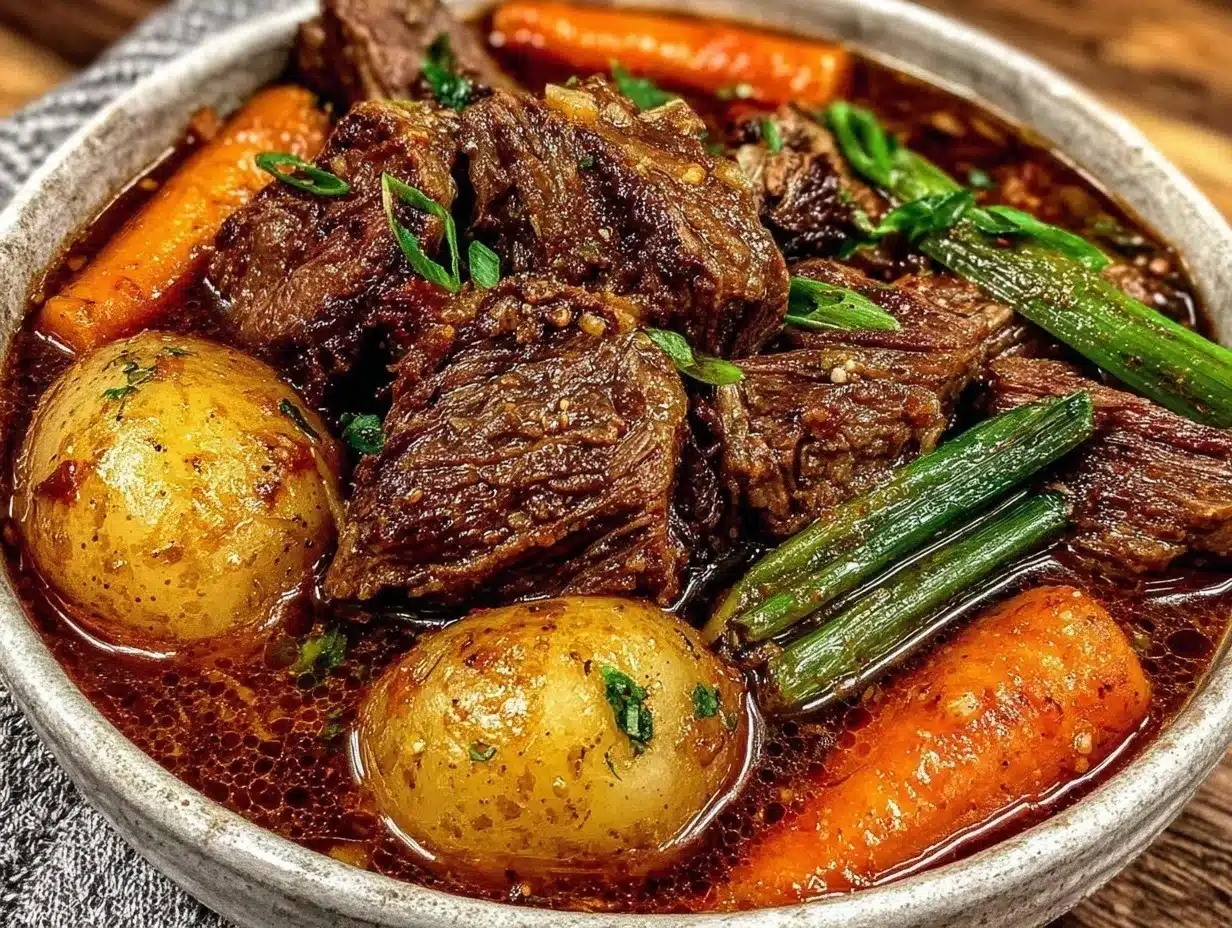
- Prep the beef: Pat the beef cubes dry with paper towels to help them brown better. Season generously with salt and pepper. Then toss the beef in the flour until lightly coated. This step adds a nice crust and helps thicken the stew later. (About 10 minutes)
- Brown the beef: Heat the oil over medium-high heat in your Dutch oven. Add beef in batches—don’t overcrowd the pan—to get a good sear. Brown on all sides, about 4-5 minutes per batch. Set browned beef aside on a plate. (15 minutes)
- Sauté the aromatics: Lower heat to medium. Add diced onion, carrots, and celery to the pot. Cook until softened and fragrant, around 5-7 minutes. Stir in garlic and cook another minute. (8 minutes)
- Deglaze the pot: Pour in the red wine and scrape up the browned bits stuck to the bottom. Let it reduce by half—this concentrates flavor and burns off alcohol. (5 minutes)
- Add tomato paste and season: Stir in tomato paste, thyme sprigs, bay leaves, and Worcestershire sauce. Stir well to combine. (2 minutes)
- Return beef and add broth: Put the browned beef back in along with any juices. Pour in beef broth, enough to cover the meat and veggies. Bring to a gentle boil. (3 minutes)
- Simmer low and slow: Reduce heat to low, cover, and let stew simmer gently for 2.5 to 3 hours. Check occasionally to ensure it’s just bubbling, not boiling. You’ll know it’s ready when the beef is fork-tender and the broth has thickened nicely. (2.5–3 hours)
- Add potatoes (and optional parsnips): About 45 minutes before finishing, stir in the potatoes and any other root veggies. Continue simmering until they’re tender but not mushy. (45 minutes)
- Final seasoning and serve: Remove thyme sprigs and bay leaves. Taste and adjust salt and pepper as needed. Serve hot with crusty bread or creamy mashed potatoes.
TIP: Browning the beef properly is worth the extra time—it locks in flavor and texture. Don’t rush it! Also, if you find the stew too thin near the end, mix a teaspoon of flour or cornstarch with cold water and stir in to thicken slightly.
Cooking Tips & Techniques
One of the key lessons I learned making this beef stew is patience. There’s a temptation to crank the heat to speed things up, but slow and steady wins the flavor race here. A gentle simmer lets the collagen in the beef break down, turning tough chunks into tender, melt-in-your-mouth bites.
Another tip: don’t skip the step of dredging the beef in flour. It not only helps thicken the stew but also creates that satisfying crust that adds texture. If you’ve ever ended up with a watery stew, this step (plus the reduction from wine and broth) is usually the fix.
When adding potatoes, timing matters. Add them too early, and they’ll disintegrate; too late, and they’ll be too firm. About 45 minutes before finishing is the sweet spot for tender but intact potatoes.
Multitasking during the long simmer is totally doable. I often prep a quick Greek yogurt breakfast bowl or tidy up the kitchen while the stew works its magic.
Variations & Adaptations
- Vegetarian version: Swap beef for hearty mushrooms like portobello or cremini and use vegetable broth. Add lentils for protein and texture.
- Slow cooker adaptation: After browning beef and sautéing veggies, transfer everything to a slow cooker. Cook on low for 7-8 hours or high for 4 hours.
- Spicy twist: Add a pinch of smoked paprika, cayenne pepper, or a diced chipotle pepper in adobo for warmth and depth.
- Seasonal veggies: In fall, add diced butternut squash; in spring, throw in fresh peas or green beans near the end.
- Low-carb option: Replace potatoes with cauliflower florets or turnips and thicken stew with xanthan gum or a low-carb thickener.
Personally, I tried adding a splash of balsamic vinegar at the end once, and it gave the stew an unexpectedly bright tang that balanced the richness beautifully. It’s a neat trick if you want a subtle twist without changing the core flavor.
Serving & Storage Suggestions
This beef stew is best served hot, straight from the pot, ideally in deep bowls that keep it cozy. A sprinkle of fresh parsley or thyme on top adds a pop of color and freshness. I like pairing it with crusty bread for dipping or creamy mashed potatoes to soak up all that glorious sauce.
Leftovers are fantastic—flavors deepen after a day in the fridge. Store cooled stew in airtight containers for up to 4 days. For longer storage, freeze in portioned containers for up to 3 months.
When reheating, do so gently on the stovetop over low heat, stirring occasionally to prevent sticking. You might need to add a splash of broth or water if it’s thickened too much.
This stew’s richness mellows beautifully overnight, making it a perfect make-ahead meal when life gets busy. If you’re pressed for time one evening, consider pairing with a quick side like my easy baked oatmeal for a nourishing breakfast to start the next day right after a comforting dinner.
Nutritional Information & Benefits
This hearty beef stew packs a nutritious punch, blending protein-rich beef with a mix of vegetables that provide fiber, vitamins, and minerals. A typical serving (about 1.5 cups / 350 g) offers approximately 350-400 calories, 30 grams of protein, and a good dose of iron and vitamin A from the carrots.
The slow cooking process preserves nutrients while making the beef easy to digest. Using leaner beef chuck can reduce fat content, and swapping potatoes for cauliflower cuts carbs without sacrificing volume.
For those watching sodium, choose low-sodium broth and season gradually. This recipe is naturally gluten-free if you use a gluten-free flour alternative for dredging.
From a wellness perspective, this stew feels nourishing without being heavy, perfect for chilly nights when you want comfort food that supports your body’s needs.
Conclusion
This cozy first chilly night beef stew that simmers all afternoon has become a quiet favorite in my kitchen for good reason. It’s straightforward, forgiving, and rewards your patience with deep, comforting flavors that feel like a warm hug on a cold evening. Whether you’re cooking for yourself or feeding a hungry family, it’s a meal that welcomes you back to the table.
Feel free to tweak the veggies, swap in your favorite herbs, or even boost it with a splash of wine like I do. The beauty is in how adaptable it is, yet always reliably delicious.
I’d love to hear how you make this stew your own—drop a comment below or share your spin. Here’s to many cozy, slow-simmered nights ahead!
FAQs
- Can I use stew beef instead of chuck roast?
Yes, stew beef works fine but tends to be leaner and might not be as tender after long cooking. Chuck roast has more connective tissue, which breaks down into that luscious texture. - Do I have to use red wine?
No, red wine adds depth but you can substitute with extra beef broth or a splash of balsamic vinegar for acidity. - How do I thicken the stew if it’s too watery?
Mix 1 teaspoon of flour or cornstarch with cold water and stir it into the stew. Let it simmer a few more minutes until thickened. - Can I make this stew in a slow cooker?
Absolutely! Brown the beef and sauté the veggies first, then transfer everything to a slow cooker and cook on low for 7-8 hours. - What’s the best way to reheat leftover stew?
Gently reheat it on the stovetop over low heat, stirring occasionally. Add a little broth if it’s too thick.
Pin This Recipe!
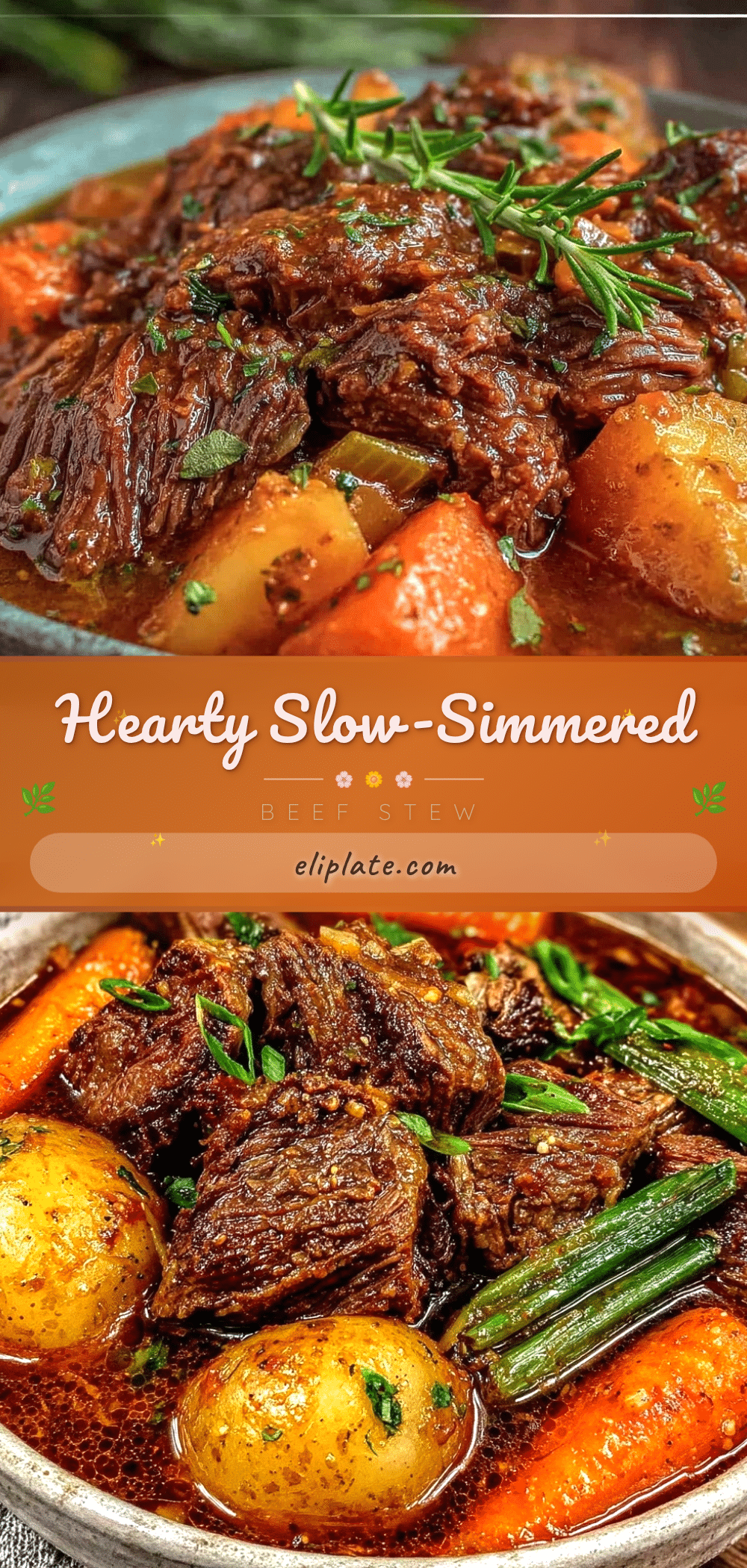
Beef Stew Recipe Easy Perfect Cozy Slow Simmer for Chilly Nights

A comforting and hearty beef stew simmered slowly to tender perfection, perfect for chilly nights. Made with simple ingredients and a rich, flavorful broth, this stew is a cozy meal that feels like a warm hug.
- Prep Time: 25 minutes
- Cook Time: 3 hours
- Total Time: 3 hours 25 minutes
- Yield: 6 servings 1x
- Category: Main Course
- Cuisine: American
Ingredients
- 2 pounds beef chuck roast, cut into 1-inch cubes
- Salt and freshly ground black pepper, to taste
- 2 tablespoons olive oil or vegetable oil
- 1 large yellow onion, diced
- 3 garlic cloves, minced
- 3 medium carrots, peeled and cut into chunks
- 2 celery stalks, chopped
- 2 medium Yukon Gold or Russet potatoes, peeled and diced
- 4 cups beef broth (preferably low sodium)
- 1 cup dry red wine (such as Cabernet or Merlot) – optional but recommended
- 2 tablespoons tomato paste
- 3 sprigs fresh thyme or 1 teaspoon dried thyme
- 2 bay leaves
- 1 tablespoon Worcestershire sauce
- 1/4 cup all-purpose flour (about 30 grams)
- Optional: parsnips or turnips, peeled and chopped
Instructions
- Pat the beef cubes dry with paper towels. Season generously with salt and pepper. Toss the beef in flour until lightly coated. (About 10 minutes)
- Heat oil over medium-high heat in a Dutch oven. Brown beef in batches, about 4-5 minutes per batch. Set browned beef aside. (15 minutes)
- Lower heat to medium. Add diced onion, carrots, and celery to the pot. Cook until softened, about 5-7 minutes. Stir in garlic and cook another minute. (8 minutes)
- Pour in red wine and scrape up browned bits. Let reduce by half. (5 minutes)
- Stir in tomato paste, thyme sprigs, bay leaves, and Worcestershire sauce. Mix well. (2 minutes)
- Return beef and any juices to pot. Add beef broth to cover meat and veggies. Bring to a gentle boil. (3 minutes)
- Reduce heat to low, cover, and simmer gently for 2.5 to 3 hours until beef is fork-tender and broth thickens.
- About 45 minutes before finishing, stir in potatoes and optional root veggies. Continue simmering until tender but not mushy. (45 minutes)
- Remove thyme sprigs and bay leaves. Taste and adjust seasoning with salt and pepper. Serve hot with crusty bread or mashed potatoes.
Notes
Browning the beef properly locks in flavor and texture. Use low heat for simmering to tenderize beef slowly. If stew is too thin, thicken with a slurry of flour or cornstarch mixed with cold water. Potatoes should be added about 45 minutes before the end to avoid disintegration. For gluten-free, substitute flour with cornstarch or gluten-free flour blend. Red wine is optional but adds depth. Leftovers taste better after a day and can be refrigerated for up to 4 days or frozen for 3 months.
Nutrition
- Serving Size: About 1.5 cups (350
- Calories: 375
- Sugar: 5
- Sodium: 600
- Fat: 15
- Saturated Fat: 5
- Carbohydrates: 25
- Fiber: 4
- Protein: 30
Keywords: beef stew, slow simmer, cozy dinner, comfort food, easy beef stew, hearty stew, chilly night meal