It was one of those chilly Sunday afternoons when the kitchen smelled of wood smoke and rain tapping gently against the windows. I’d just realized I’d forgotten to buy bread for dinner—classic me, right? With a pantry that’s mostly gluten-free staples and a stubborn craving for something hearty, I stumbled upon the idea of making Irish soda bread, but gluten-free. Honestly, I was skeptical at first. Soda bread without gluten? Could it be as cozy and rustic as the original?
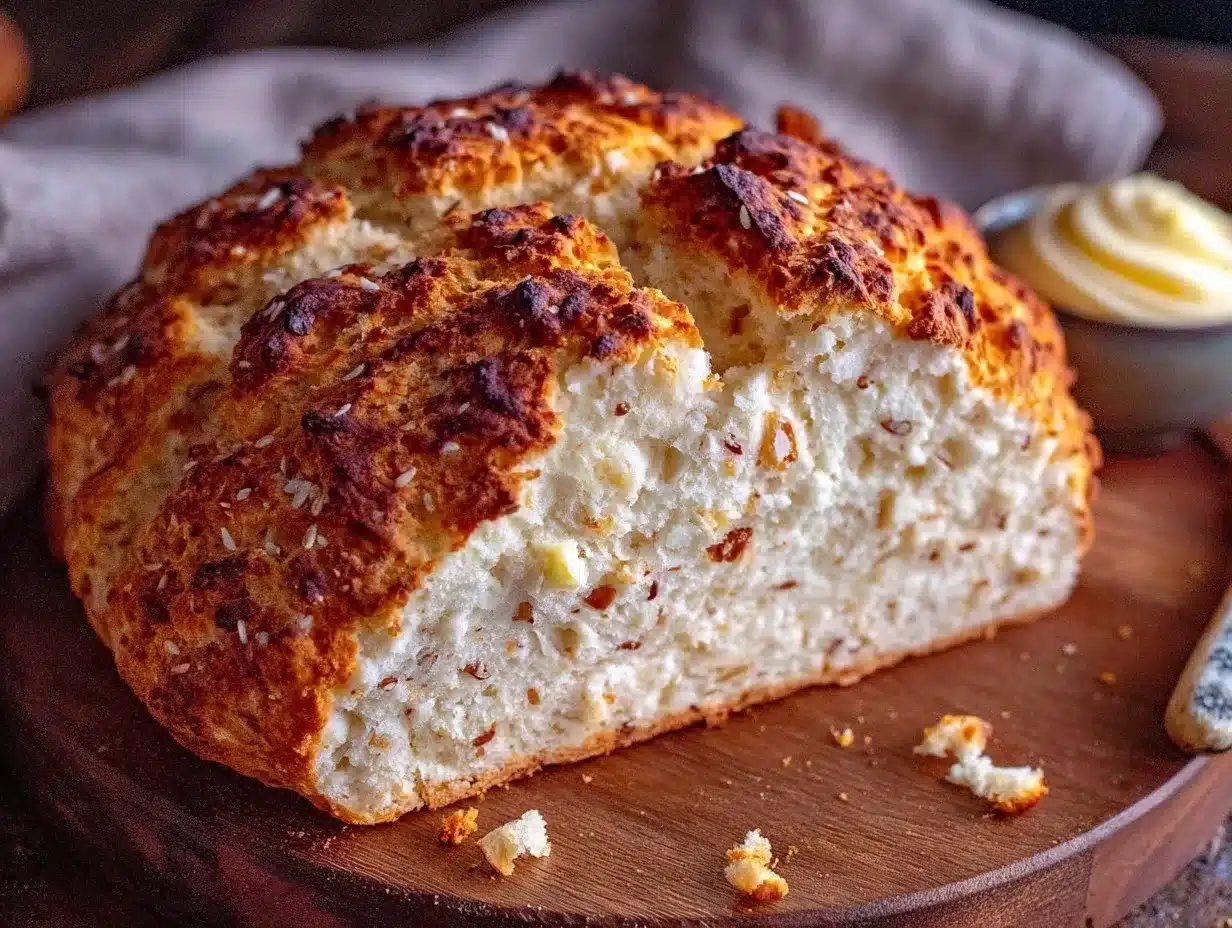
I mixed the ingredients almost half-heartedly, expecting a crumbly mess. But within minutes in the oven, my kitchen filled with a warm, inviting aroma that reminded me of old stone cottages and rolling green hills—something comforting and familiar, despite the gluten-free twist. When I finally sliced into that golden loaf, it was surprisingly tender yet sturdy, with a beautiful rustic crust that made me smile. It wasn’t just bread; it was a small, unexpected victory on a hectic day.
That loaf became a quiet staple, a kind of comfort that I could rely on without fuss. The recipe stuck because it’s honest—no complicated steps, no exotic ingredients, just good, simple food with a little Irish soul. It’s the kind of bread you can make on a whim, that feels like a warm hug after a long day.
Why You’ll Love This Recipe
- Quick & Easy: Comes together in just 5 simple steps, ready in under an hour—perfect for busy days when you want homemade without the hassle.
- Simple Ingredients: Uses pantry staples like gluten-free flour blends and baking soda, so no last-minute grocery runs needed.
- Perfect for Cozy Occasions: Great for brunch, tea time, or a comforting side with soups and stews.
- Crowd-Pleaser: Even gluten-eaters ask for seconds. The rustic crust and tender crumb win hearts every time.
- Unbelievably Delicious: The tang from buttermilk and the hearty texture make this bread more than just gluten-free—it’s soul food.
- Unique Twist: Using a blend of gluten-free flours with a touch of xanthan gum creates a loaf that’s both moist and sturdy, avoiding the dryness or crumbliness often found in gluten-free breads.
- Emotional Connection: It’s honest food that brings a quiet joy, whether you’re sharing it with loved ones or savoring a slice with butter in a peaceful moment.
What Ingredients You Will Need
This recipe calls for simple, wholesome ingredients that work together to build flavor and texture without fuss. Most are pantry essentials, and substitutions are easy if you have dietary preferences.
- Gluten-Free Flour Blend – 3 cups (360g), I like using Bob’s Red Mill 1-to-1 baking flour for best results
- Baking Soda – 1 teaspoon (5g), the leavening heart of soda bread
- Baking Powder – 1 teaspoon (5g), a little extra lift for lightness
- Salt – 1 teaspoon (6g), balances the flavors perfectly
- Buttermilk – 1 ¾ cups (420ml), room temperature, adds tang and moisture (use dairy-free yogurt mixed with lemon juice if needed)
- Egg – 1 large, room temperature, helps bind the dough and adds richness
- Honey – 1 tablespoon (15ml), optional but adds a subtle sweetness and helps crust color
- Xanthan Gum – ½ teaspoon (if your flour blend doesn’t already contain it, adds structure)
Tip: For a seasonal twist, you can add ½ cup of dried currants or raisins for a touch of sweetness and texture. When using buttermilk alternatives, make sure it’s thick enough to give that classic soda bread tang.
Equipment Needed
- Mixing Bowl: A large bowl for combining your dry and wet ingredients comfortably.
- Measuring Cups and Spoons: Precision matters here, especially with gluten-free baking.
- Wooden Spoon or Silicone Spatula: For mixing the dough without overworking it.
- Baking Sheet or Cast Iron Skillet: Either works great; a cast iron skillet gives a fantastic crust but a baking sheet is more common.
- Parchment Paper: To prevent sticking and make cleanup easier.
- Sharp Knife or Bread Lame: For scoring the traditional cross on top (adds to the rustic charm!).
For budget-friendly options, a simple metal baking sheet and a silicone spatula will do just fine. I’ve found that a well-seasoned cast iron skillet adds a lovely crust, but it’s not necessary if you don’t have one. Cleaning tools promptly after use keeps your kitchen gear happy and ready for the next bake.
Preparation Method
- Preheat your oven to 400°F (200°C). Line a baking sheet with parchment paper or lightly grease a cast iron skillet. This step takes about 10 minutes, so you can prep your ingredients while waiting.
- In a large bowl, whisk together: 3 cups (360g) gluten-free flour blend, 1 teaspoon (5g) baking soda, 1 teaspoon (5g) baking powder, ½ teaspoon xanthan gum (if needed), and 1 teaspoon (6g) salt. Mix until evenly combined and aerated, which helps the bread rise better.
- In a separate bowl, beat 1 large egg with 1 ¾ cups (420ml) buttermilk and 1 tablespoon (15ml) honey. Make sure your buttermilk is at room temperature to avoid shocking the leavening agents. This wet mix brings moisture and that signature tang.
- Pour the wet ingredients into the dry mix. Using a wooden spoon or spatula, gently fold everything together until just combined. The dough will be sticky and shaggy—that’s exactly what you want! Avoid overmixing, or the bread can become dense.
- Turn the dough out onto a lightly floured surface. With floured hands, shape it gently into a round loaf about 7 inches (18 cm) wide. Transfer it to your prepared baking sheet or skillet. Using a sharp knife, score a deep cross about 1/2 inch (1.3 cm) deep across the top. This helps the bread bake evenly and gives it that classic rustic look.
- Bake for 35-40 minutes. The crust should be golden brown and firm to the touch. Tap the bottom of the loaf; if it sounds hollow, it’s done. If it’s too soft, bake a few more minutes but watch closely to avoid burning.
- Cool on a wire rack for at least 30 minutes before slicing. Resist the urge to cut in too soon—this resting lets the crumb set and flavors develop.
Pro tip: If the crust browns too quickly, tent the bread loosely with foil halfway through baking. Also, room temperature ingredients and gentle mixing make all the difference in texture.
Cooking Tips & Techniques
One thing I learned the hard way is that gluten-free doughs behave differently—they’re stickier and more fragile. So, don’t try to knead this soda bread like you would a yeast loaf. The magic here is in gentle folding and quick shaping.
Always measure your gluten-free flour blend carefully. Different brands absorb liquids differently, so if your dough feels too wet, add a tablespoon of flour at a time. Too dry? Splash in a little extra buttermilk.
Scoring the bread can feel intimidating, but it’s a simple step that makes a big difference. A deep cross not only adds charm but helps heat penetrate evenly, so the loaf cooks through beautifully.
Timing is key—don’t rush cooling. I remember cutting into a hot loaf once, and it was gummy inside. Waiting those 30 minutes (no cheating!) ensures the crumb is just right.
Multitasking tip: While the bread bakes, clean up or prep a simple soup or salad to pair with it. You’ll have a cozy, complete meal in no time.
Variations & Adaptations
- Dairy-Free Version: Swap buttermilk for almond milk mixed with 1 tablespoon lemon juice or apple cider vinegar. Use coconut yogurt for richness if you like.
- Herb-Infused: Add 1 tablespoon of fresh chopped rosemary or thyme to the dry ingredients for a savory twist that pairs beautifully with stews.
- Sweet Version: Stir in ½ cup dried currants or chopped dried apricots and an extra teaspoon of honey for a gently sweet loaf perfect for breakfast.
- Whole Grain Boost: Replace ½ cup of gluten-free flour with buckwheat or sorghum flour for added nuttiness and fiber.
- Personal Experiment: I once added a handful of toasted pumpkin seeds on top before baking for extra crunch and rustic appeal—highly recommend!
Serving & Storage Suggestions
This soda bread is best served warm or at room temperature. Slather a slice with butter and maybe a drizzle of honey or a sprinkle of flaky sea salt. It pairs wonderfully with hearty soups, creamy cheeses, or a simple bowl of stew.
Store leftovers wrapped tightly in a clean kitchen towel or airtight container at room temperature for up to 2 days. For longer storage, slice and freeze in zip bags for up to 3 months. To reheat, toast slices directly or warm in a 350°F (175°C) oven for 10 minutes to regain that lovely crust.
Flavors actually mellow and deepen after a day, so if you can wait, you might find the next-day slice even better. Yep, patience pays off here.
Nutritional Information & Benefits
Each slice (about 1/10th of the loaf) offers approximately 150-180 calories, 4 grams of protein, and a modest 25 grams of carbohydrates, depending on your flour blend.
The key ingredients, like buttermilk, provide calcium and probiotics, supporting digestion. Gluten-free flours such as buckwheat or sorghum add fiber and antioxidants.
This bread is naturally free from gluten, making it suitable for those with celiac disease or gluten sensitivity. It’s free from nuts and soy unless you add them as variations, so check your flour blend labels if allergies are a concern.
From my experience, having a reliable gluten-free bread option that’s wholesome and satisfying supports a balanced, joyful diet without sacrificing comfort.
Conclusion
This easy gluten-free Irish soda bread is a recipe I keep coming back to when I want something simple yet soulful. It’s the kind of bread that feels honest, rustic, and welcoming without any fuss. Whether you’re new to gluten-free baking or just need a quick, reliable loaf that tastes like home, this recipe delivers.
Feel free to tweak it—add herbs, seeds, or dried fruit to make it your own. I love how versatile it is without losing its charming character. It’s become a quiet favorite, and I hope it finds a place in your kitchen too.
Give it a try, share your thoughts, or drop your own variations—I’d love to hear how you make this rustic loaf your own. Here’s to good bread and even better moments.
Frequently Asked Questions
Is this Irish soda bread truly gluten-free?
Yes! Using a certified gluten-free flour blend and ensuring all ingredients are gluten-free keeps this recipe safe for those avoiding gluten.
Can I use regular flour instead of gluten-free?
You can, but this recipe is designed for gluten-free flours. Traditional soda bread recipes use wheat flour and may require slight adjustments in liquid.
What if I don’t have buttermilk?
Mix 1 ¾ cups (420ml) of milk with 1 tablespoon lemon juice or vinegar and let it sit 5-10 minutes to curdle—this homemade buttermilk works great.
How do I know when the bread is done baking?
The crust should be golden brown and firm. Tap the bottom of the loaf; a hollow sound means it’s cooked through.
Can I freeze this bread?
Absolutely! Slice it first, then freeze in airtight bags. Toast or warm slices directly from frozen for best results.
Pin This Recipe!
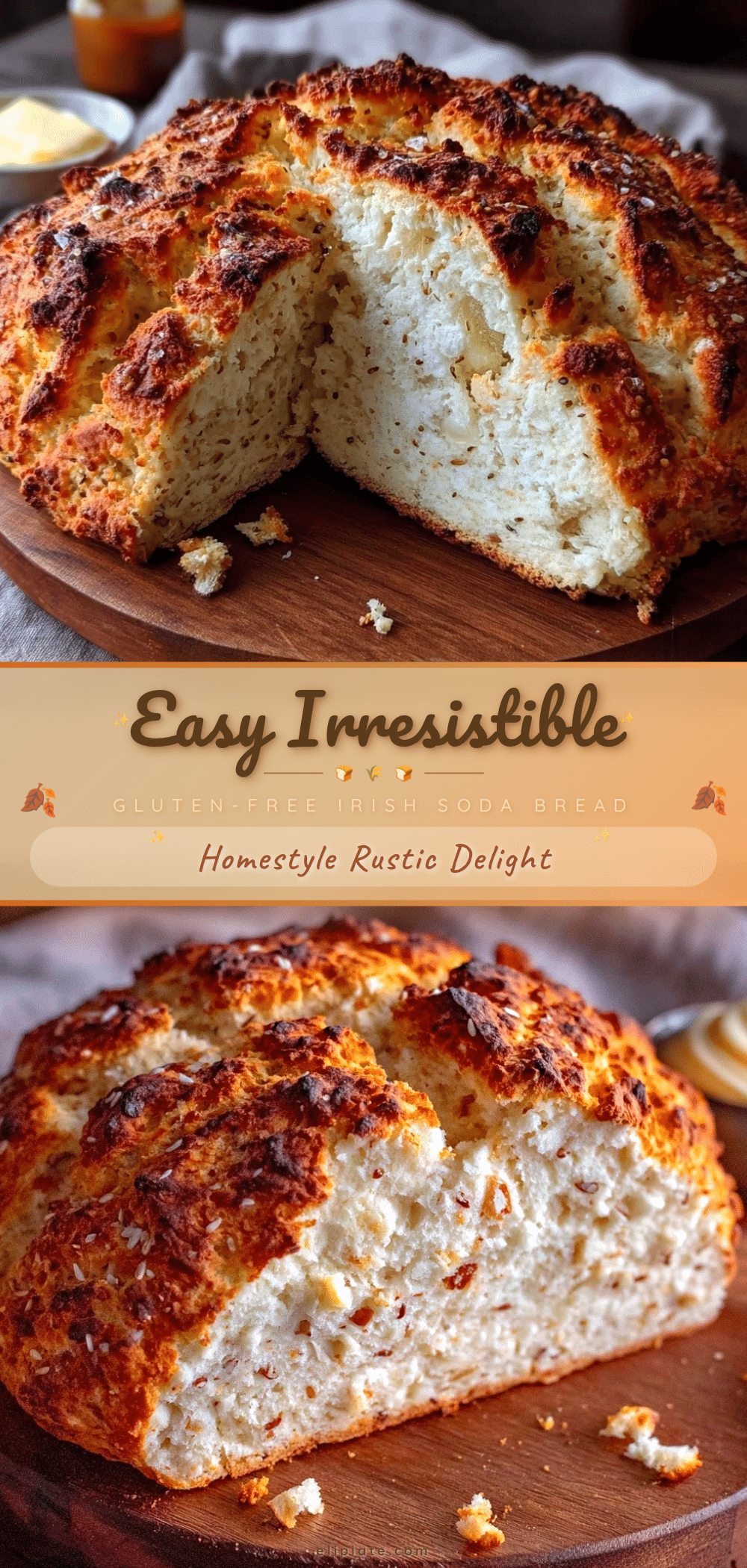
Easy Gluten-Free Irish Soda Bread
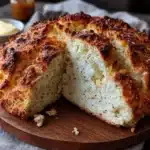
A quick and easy gluten-free Irish soda bread recipe that yields a rustic, tender loaf with a golden crust. Perfect for cozy occasions and made with simple pantry staples.
- Prep Time: 15 minutes
- Cook Time: 40 minutes
- Total Time: 55 minutes
- Yield: 10 servings 1x
- Category: Bread
- Cuisine: Irish
Ingredients
- 3 cups (360g) gluten-free flour blend (e.g., Bob’s Red Mill 1-to-1 baking flour)
- 1 teaspoon (5g) baking soda
- 1 teaspoon (5g) baking powder
- 1 teaspoon (6g) salt
- 1 ¾ cups (420ml) buttermilk, room temperature (or dairy-free yogurt mixed with lemon juice)
- 1 large egg, room temperature
- 1 tablespoon (15ml) honey (optional)
- ½ teaspoon xanthan gum (if flour blend does not contain it)
Instructions
- Preheat your oven to 400°F (200°C). Line a baking sheet with parchment paper or lightly grease a cast iron skillet.
- In a large bowl, whisk together gluten-free flour blend, baking soda, baking powder, xanthan gum (if needed), and salt until evenly combined and aerated.
- In a separate bowl, beat the egg with buttermilk and honey until combined.
- Pour the wet ingredients into the dry mix and gently fold together with a wooden spoon or spatula until just combined. The dough will be sticky and shaggy.
- Turn the dough onto a lightly floured surface and shape into a round loaf about 7 inches (18 cm) wide. Transfer to prepared baking sheet or skillet.
- Score a deep cross about ½ inch (1.3 cm) deep across the top of the loaf with a sharp knife.
- Bake for 35-40 minutes until the crust is golden brown and firm. Tap the bottom of the loaf; it should sound hollow when done.
- Cool on a wire rack for at least 30 minutes before slicing.
Notes
If the crust browns too quickly, tent the bread loosely with foil halfway through baking. Use room temperature ingredients and avoid overmixing to keep the bread tender. Let the bread cool completely before slicing to avoid gummy texture. For dairy-free version, substitute buttermilk with almond milk plus lemon juice or apple cider vinegar and use coconut yogurt for richness. Optional additions include dried currants, raisins, herbs, or seeds for variation.
Nutrition
- Serving Size: 1 slice (1/10th of l
- Calories: 165
- Sugar: 3
- Sodium: 300
- Fat: 2
- Saturated Fat: 0.5
- Carbohydrates: 25
- Fiber: 2
- Protein: 4
Keywords: gluten-free, Irish soda bread, easy bread recipe, rustic bread, gluten-free baking, quick bread, dairy-free option