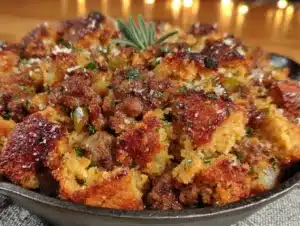
The way the sage leaves curl and crisp at the edges in that foaming brown butter—that’s the whole reason I make this dish. Everything else, the tender acorn squash, the nutty filling, the faint sweetness that catches in the throat—it all comes second to that one moment when the butter goes from golden to amber and the sage leaves turn brittle and fragrant. I stood over the stove the first time I made this, watching the butter foam and thinking, this is what fall smells like. Not pumpkin spice, not apple cider. Brown butter and sage. That’s it.
I didn’t grow up eating stuffed squash. Honestly, I didn’t even know what to do with an acorn squash for years. They sat on my counter looking pretty, and I’d walk past them, intimidated. Then a friend brought a version of this to a small dinner party, and I watched everyone go quiet after the first bite. Not in a dramatic way—just that quiet where you’re too busy tasting to talk. I asked for the recipe, tweaked it about six times, and landed here. This version has the nuttiness of brown butter tangled up with the earthiness of sage, all packed into a squash that roasts until you can cut it with a fork.
There’s no fussy technique here. No complicated steps. Just a few ingredients doing exactly what they’re supposed to do. If you’ve never made stuffed squash before, this is the one that’ll make you a believer. And if you have? You’ll know immediately that this version is different. It’s cozier. It’s more forgiving. It’s the kind of meal that makes you want to light a candle and put on a sweater and eat straight from the squash half because nobody’s watching anyway.
Why You’ll Love This Recipe
I’ve tested this recipe more times than I care to admit. I’ve over-browned the butter (burnt is the technical term), under-salted the filling, and once forgot the sage entirely. Through all those mistakes, I learned exactly what makes this version work. And I promise you—this is the one.
- Simple Ingredients, Big Flavor: You don’t need a specialty grocery store for this. Acorn squash, butter, fresh sage, a few pantry staples. That’s it. The magic happens in the pan, not the shopping cart.
- Surprisingly Easy to Make: It looks impressive, but honestly? The hardest part is waiting for the squash to roast. The filling comes together in under 10 minutes. This is weeknight-friendly, I promise.
- Perfect for Fall Gatherings: Whether it’s a cozy Sunday dinner or a Thanksgiving side dish that steals the show, this recipe fits. It’s elegant without being fussy. And it pairs beautifully with so many fall favorites—like this cozy 30-minute sausage and kale fall soup for a full autumn meal.
- Naturally Gluten-Free & Vegetarian: No one will miss the gluten or the meat. The filling is hearty and satisfying all on its own. You can add sausage or cheese if you want, but you really don’t need to.
- That Brown Butter-Sage Moment: You know that thing where you take a bite and your eyes close involuntarily? That’s what happens here. The nutty, toasty butter with the crispy sage leaves—it’s not just a flavor, it’s an experience.
This isn’t just another stuffed squash recipe. It’s the one I make every single fall. The one my family requests for Thanksgiving. The one that makes people ask, “Wait, can I get that recipe?” And honestly? I love sharing it.
What Ingredients You Will Need
This recipe relies on a handful of ingredients that work together to create something far greater than the sum of their parts. Most of these are pantry staples, and the few that aren’t are worth seeking out for the depth they bring.
- Acorn Squash (2 medium): Look for squash that feel heavy for their size and have a deep green color with some orange patches. That orange means they’re ripe and sweet. I prefer medium-sized squash because they’re easier to handle and the halves are the perfect single-serving size. Cut them in half through the stem end, scoop out the seeds, and you’re ready to go.
- Unsalted Butter (6 tablespoons): I use unsalted so I can control the salt level. The butter is the star here—it gets browned until nutty and fragrant, then the sage leaves go in to crisp up. Don’t skip this step. It’s the heart of the dish. I prefer Kerrygold or another European-style butter for its higher fat content, which browns more evenly.
- Fresh Sage Leaves (12-15 leaves): Dried sage will not work here. You need fresh sage for that earthy, slightly peppery flavor that mellows as it crisps. Look for leaves that are bright green and not wilted. I like to reserve a few whole leaves for garnish and chop the rest into the filling.
- Cooked Grains (1 ½ cups): I use farro or wild rice for their chewy texture, but quinoa, brown rice, or even cooked lentils work beautifully. The grains add body to the filling and soak up all that brown butter goodness. Leftover grains are perfect here—this is a great way to use up what’s in the fridge.
- Dried Cranberries (⅓ cup): They add little bursts of sweetness that balance the savory, nutty flavors. You can substitute dried cherries, chopped dried apricots, or even golden raisins. If you’re watching sugar, look for unsweetened dried cranberries.
- Pecans or Walnuts (⅓ cup, chopped): Toasted pecans add crunch and a buttery flavor that plays nicely with the brown butter. Walnuts work too, but pecans are my preference here. Toast them in a dry skillet for 2-3 minutes until fragrant—it makes a difference.
- Shallot (1 medium, finely diced): Shallots are milder than onions and melt into the filling without overpowering it. If you don’t have a shallot, use half a small yellow onion, finely diced.
- Garlic (2 cloves, minced): Because garlic makes everything better. Add it to the pan with the shallot and cook just until fragrant.
- Maple Syrup (1 tablespoon): A tiny bit of sweetness brushed onto the squash before roasting helps it caramelize. You can also use honey or brown sugar.
- Vegetable or Chicken Broth (¼ cup): This helps the filling stay moist and adds another layer of flavor. Use vegetable broth to keep it vegetarian.
- Salt and Black Pepper: To taste. I use flaky sea salt for finishing—it adds a nice little pop of saltiness.
- Optional: Grated Parmesan or Vegan Parmesan (¼ cup): I add this sometimes for an extra savory, umami note. It’s not essential, but it’s delicious. If you’re dairy-free, skip it or use a vegan alternative.
Equipment Needed
You don’t need a lot of fancy equipment for this recipe, which is one of the reasons I love it. Here’s what you’ll need:
- Large Baking Sheet: A rimmed baking sheet works best to catch any juices from the squash. Line it with parchment paper for easier cleanup.
- Chef’s Knife: A sharp, heavy knife is essential for cutting the acorn squash in half. Acorn squash is tough, so take your time and use a stable cutting board.
- Large Skillet or Sauté Pan: For browning the butter and cooking the filling. A light-colored pan (stainless steel or enameled) helps you see the butter change color. Dark pans make it hard to tell when the butter is properly browned.
- Mixing Bowl: For combining the filling ingredients.
- Measuring Spoons and Cups: Accuracy matters, especially with the maple syrup and broth.
- Wooden Spoon or Silicone Spatula: For stirring the butter and filling.
- Small Spoon or Scoop: For scooping out the squash seeds. A grapefruit spoon with a serrated edge works great if you have one.
- Pastry Brush: For brushing the maple syrup onto the squash. A silicone brush is easiest to clean.
If you don’t have a pastry brush, just use a paper towel to dab the syrup on. And if your skillet isn’t light-colored, just watch the butter carefully—it goes from browned to burnt fast.
Preparation Method
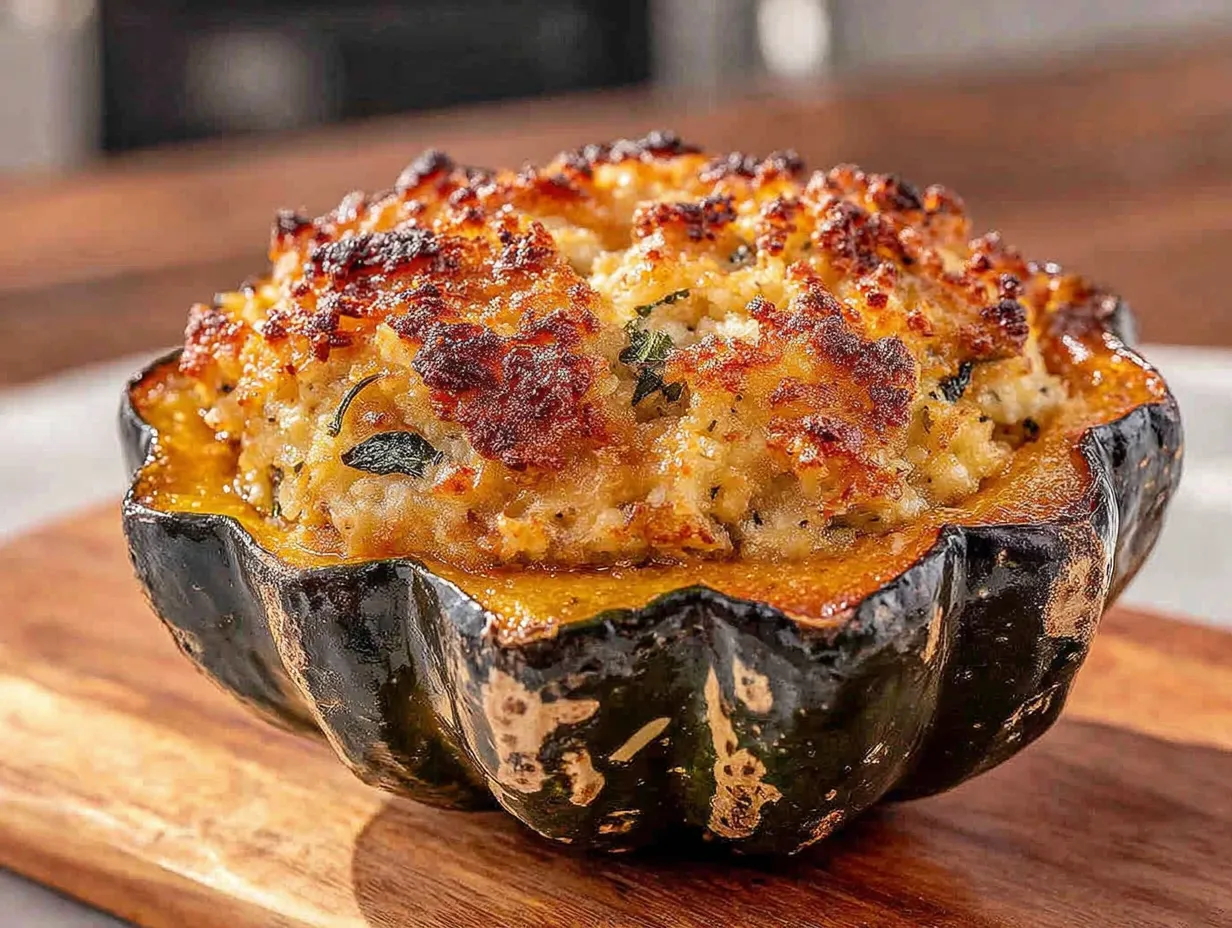
Let’s get cooking. This recipe has a few steps, but they’re all straightforward. I’ve included timing cues and sensory notes so you know exactly what to look for.
- Preheat your oven to 400°F (200°C). Position a rack in the middle of the oven. While it heats, prepare the squash.
- Cut the acorn squash in half. Place one squash on a stable cutting board. Using a sharp chef’s knife, carefully cut through the stem end down to the base. Repeat with the second squash. This takes some muscle—go slow and keep your fingers curled under. If the squash is too hard to cut, microwave it for 2 minutes to soften it slightly.
- Scoop out the seeds and stringy bits. Use a spoon to scrape out the seeds and the fibrous strings. Don’t rinse the squash—just scoop and discard. Place the squash halves cut-side up on your lined baking sheet.
- Brush with maple syrup and season. In a small bowl, mix the maple syrup with a pinch of salt. Brush this mixture over the cut sides and the inside cavity of each squash half. Sprinkle with a little more salt and pepper. Roast for 35-40 minutes, until the squash is tender when pierced with a fork. The edges should be caramelized and the flesh should yield easily. Start checking at 30 minutes—ovens vary.
- While the squash roasts, make the filling. In a large skillet over medium heat, add the butter. Let it melt completely, then continue cooking, swirling the pan occasionally. The butter will foam, then the foam will subside, and you’ll see brown specks forming at the bottom. This takes about 4-5 minutes. When the butter smells nutty and toasty and the specks are amber-colored, it’s ready. Watch closely—it burns fast.
- Add the sage leaves. Once the butter is browned, carefully add 8-10 sage leaves to the pan. They’ll sizzle and crisp up in about 30 seconds. Use a slotted spoon to transfer the crispy sage leaves to a paper towel-lined plate. They’ll continue to crisp as they cool.
- Cook the aromatics. Add the diced shallot to the remaining brown butter in the pan. Cook for 2-3 minutes until softened and translucent. Add the minced garlic and cook for 30 seconds until fragrant. The kitchen should smell incredible at this point.
- Build the filling. Add the cooked grains, dried cranberries, and toasted pecans to the pan. Stir to combine and coat everything in that brown butter. Add the broth and stir again. Cook for 2-3 minutes until everything is heated through and the liquid is mostly absorbed. Season with salt and pepper to taste. If using Parmesan, stir it in now. Chop the remaining fresh sage leaves (the ones you didn’t fry) and stir them in for a fresh herbal note.
- Stuff the squash. When the squash is tender, remove it from the oven. Carefully spoon the filling into each squash half, mounding it slightly. Don’t pack it too tightly—you want some texture. Return the stuffed squash to the oven and bake for another 10 minutes, until the filling is hot and the tops are slightly golden.
- Garnish and serve. Remove from the oven. Top each stuffed squash half with the crispy sage leaves and a few extra toasted pecans if you like. Drizzle with a tiny bit of maple syrup or a sprinkle of flaky sea salt. Serve warm.
Cooking Tips & Techniques
I’ve made this recipe enough times to know where things can go wrong. Here are the lessons I learned the hard way, so you don’t have to.
- Don’t rush the brown butter. This is the most important step. Use medium heat, not high. Swirl the pan occasionally. Watch for the color change—it goes from pale yellow to golden to amber quickly. The moment you see brown specks and smell that nutty aroma, pull it off the heat. I’ve burned more batches than I’d like to admit by walking away for “just a second.”
- Dry your sage leaves before frying. Wet sage leaves will sputter and steam instead of crisping. Pat them dry with a paper towel before adding them to the butter. And don’t crowd the pan—cook them in batches if needed.
- Cut the squash evenly. Try to cut both squash in half as evenly as possible. Uneven halves will cook at different rates. If one half is significantly smaller, check it earlier.
- Don’t overstuff the squash. It’s tempting to pile the filling high, but too much filling can make the squash tip over or cook unevenly. A generous mound is fine, just don’t go crazy.
- Make the filling ahead of time. The filling can be made a day in advance and stored in the fridge. Just reheat it gently on the stovetop with a splash of broth before stuffing the squash. This is a lifesaver for Thanksgiving or dinner parties.
- Save the squash seeds. Don’t toss them! Rinse off the strings, toss them with olive oil and salt, and roast them at 350°F for 10-12 minutes. They make a great snack or salad topping.
Variations & Adaptations
This recipe is flexible. Here are some ways to make it your own.
- Make It Vegan: Use vegan butter or coconut oil for browning, and skip the Parmesan. The filling is already naturally vegan-friendly. Maple syrup and nutritional yeast can replace the cheesy flavor if you want.
- Add Protein: Cooked and crumbled Italian sausage, ground turkey, or shredded chicken can be stirred into the filling for a heartier meal. I’ve done this for dinner parties where I knew guests wanted something more substantial. It works beautifully.
- Swap the Grains: Not a fan of farro? Use quinoa, brown rice, wild rice, or even cooked lentils. Each one gives a slightly different texture. Quinoa is lighter, wild rice is nuttier, and lentils add an earthy richness.
- Change the Nuts: Walnuts, almonds, or even pine nuts work here. If you’re nut-free, use toasted pumpkin seeds (pepitas) for crunch.
- Seasonal Variations: In the fall, I sometimes add diced apple or pear to the filling for extra sweetness. In winter, I’ll stir in some chopped kale or spinach for color and nutrients. You can also swap the cranberries for chopped dried figs or dates.
- Different Squash: If you can’t find acorn squash, try delicata squash (no need to peel it) or small sugar pumpkins. Adjust roasting times accordingly—delicata cooks faster, pumpkins take a bit longer.
Serving & Storage Suggestions
This dish is best served warm, right out of the oven. The squash should be tender, the filling hot, and the sage leaves still crispy. Here’s how to serve and store it.
- Serving Temperature: Serve immediately after the final bake. Let it rest for 5 minutes so the filling sets slightly. A sprinkle of flaky sea salt right before serving makes a difference.
- What to Serve With It: This stuffed squash pairs beautifully with a simple green salad dressed with lemon vinaigrette. It also works as a side dish for roasted chicken, pork chops, or a hearty creamy one-pot tomato basil soup for a cozy fall dinner. For a full Thanksgiving spread, serve it alongside perfect pumpkin cookies with brown butter cream cheese frosting for dessert.
- Storage: Store leftover stuffed squash in an airtight container in the refrigerator for up to 4 days. The squash will soften further, but the flavors will meld beautifully. I actually love leftovers—the filling gets even more flavorful overnight.
- Reheating: Reheat in a 350°F oven for 10-15 minutes, until warmed through. The microwave works in a pinch, but the squash will be softer. For best results, add a splash of broth to the filling before reheating to prevent it from drying out.
- Freezing: You can freeze the baked, unstuffed squash halves for up to 3 months. Thaw in the refrigerator overnight, then stuff and bake as directed. The filling can also be frozen separately. I don’t recommend freezing the fully stuffed and baked squash—the texture suffers.
Nutritional Information & Benefits
This recipe is as nourishing as it is delicious. Here’s a rough estimate per serving (one stuffed squash half):
- Calories: Approximately 380-420
- Protein: 6-8 grams (depending on grains used)
- Fat: 18-22 grams (from butter, nuts, and olive oil)
- Carbohydrates: 48-55 grams (mostly from squash and grains)
- Fiber: 8-10 grams
- Sugar: 12-15 grams (natural sugars from squash and cranberries)
Acorn squash is packed with vitamin A, vitamin C, and potassium. The fiber from the squash and grains supports digestive health, while the healthy fats from nuts and butter help you absorb fat-soluble vitamins. Sage has anti-inflammatory properties and is rich in antioxidants. This is comfort food that actually does your body some good. I feel good serving this to my family—and eating it myself.
Conclusion
This cozy brown butter sage stuffed acorn squash is the kind of recipe that feels special without being complicated. It’s the dish I turn to when I want to slow down and actually enjoy cooking. The brown butter and sage do all the heavy lifting—you just have to show up and follow along.
I hope you make this and love it as much as I do. Maybe you’ll tweak it a little—add some sausage, swap the nuts, throw in extra sage. That’s the beauty of a recipe like this. It’s a starting point, not a rulebook. Make it your own. And when you do, come back and tell me about it. I love hearing how these dishes show up in other people’s kitchens.
If you try this recipe, leave a comment below or tag me in your photos. It honestly makes my day. And if you’re looking for more cozy fall recipes, check out this best pumpkin banana bread with streusel topping for a sweet treat that pairs perfectly with a cup of tea. Happy cooking, friends.
Frequently Asked Questions
Can I use dried sage instead of fresh?
I don’t recommend it for this recipe. Fresh sage has a delicate, earthy flavor that crisps beautifully in brown butter. Dried sage is more concentrated and can become bitter when fried. If you’re in a pinch, use about 1 teaspoon of dried sage mixed into the filling, but skip the fried sage garnish.
Can I make this ahead of time?
Yes! You can roast the squash and prepare the filling up to 2 days in advance. Store them separately in the fridge. When you’re ready to serve, stuff the squash and bake for 15-20 minutes at 375°F until heated through. The crispy sage leaves are best added fresh, so make those right before serving.
How do I keep the squash from tipping over?
If your squash halves are uneven or wobbly, trim a thin slice off the bottom of each half to create a flat surface. Just don’t cut through the skin—you want the squash to stay intact. A stable squash makes for a prettier presentation.
Can I use a different type of squash?
Absolutely. Delicata squash is a great substitute because the skin is tender and edible. Small sugar pumpkins also work well. Just adjust the roasting time based on the squash you choose—delicata cooks faster, pumpkins take a bit longer. Check for tenderness with a fork.
Is this recipe gluten-free?
Yes, as written, this recipe is naturally gluten-free. Just make sure your grains (farro, wild rice, quinoa) are certified gluten-free if you have celiac disease or a severe sensitivity. Some grains like farro are not gluten-free, so choose accordingly.
Pin This Recipe!
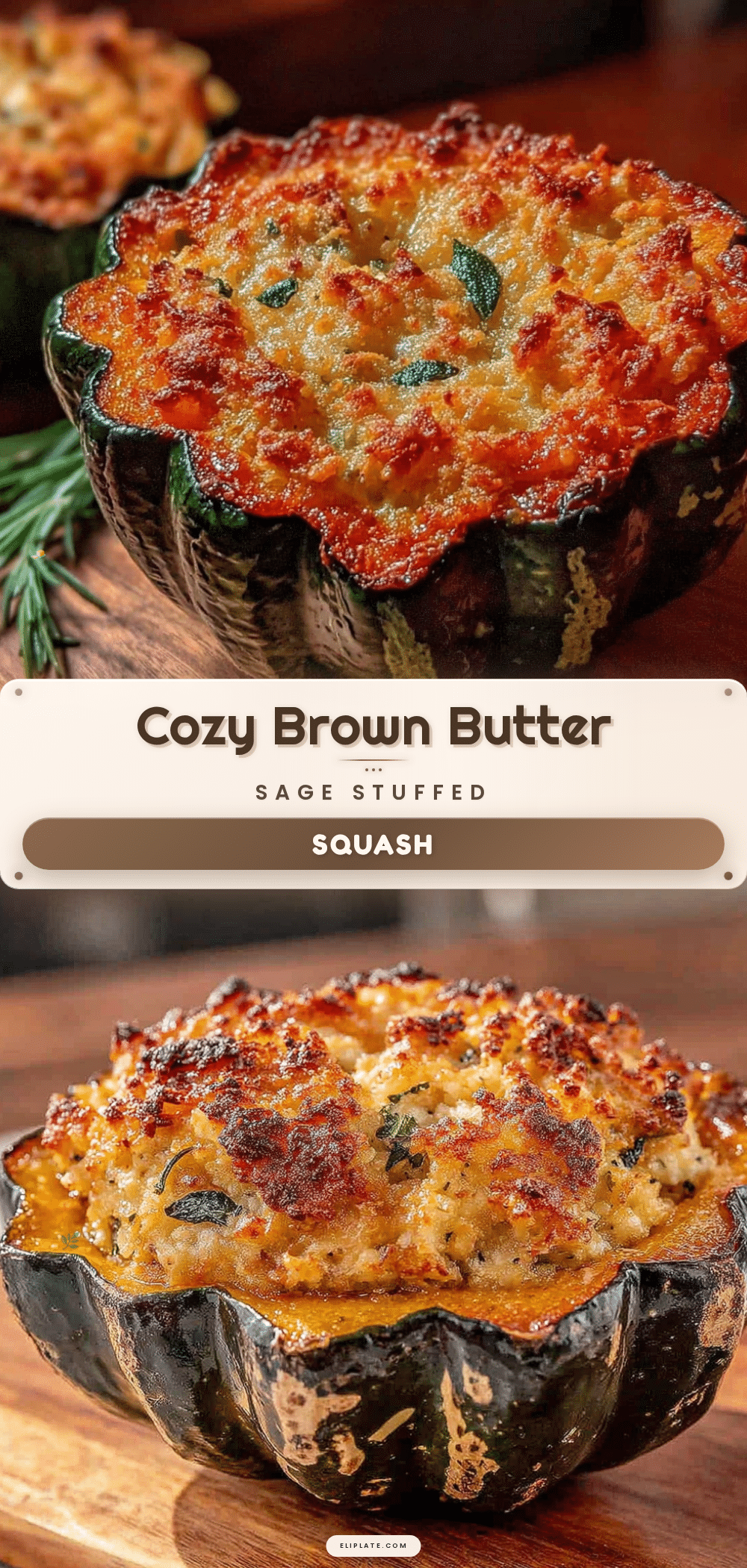
Best Brown Butter Sage Stuffed Acorn Squash Recipe

Tender roasted acorn squash halves are filled with a nutty brown butter, sage, farro, dried cranberries, and toasted pecan mixture. This cozy, gluten-free, and vegetarian fall dish is elegant yet surprisingly easy to make.
- Prep Time: 15 minutes
- Cook Time: 50 minutes
- Total Time: 1 hour 5 minutes
- Yield: 4 servings 1x
- Category: Main Course
- Cuisine: American
Ingredients
- 2 medium acorn squash
- 6 tablespoons unsalted butter
- 12–15 fresh sage leaves
- 1 ½ cups cooked farro or wild rice
- ⅓ cup dried cranberries
- ⅓ cup chopped pecans or walnuts, toasted
- 1 medium shallot, finely diced
- 2 cloves garlic, minced
- 1 tablespoon maple syrup
- ¼ cup vegetable or chicken broth
- Salt and black pepper to taste
- ¼ cup grated Parmesan cheese (optional)
Instructions
- Preheat oven to 400°F (200°C). Line a large baking sheet with parchment paper.
- Cut each acorn squash in half through the stem end. Scoop out seeds and stringy bits.
- Place squash halves cut-side up on the baking sheet. Brush cut sides and cavities with maple syrup mixed with a pinch of salt. Season with salt and pepper.
- Roast squash for 35-40 minutes until tender when pierced with a fork. Start checking at 30 minutes.
- While squash roasts, melt butter in a large skillet over medium heat. Cook, swirling occasionally, until butter foams, then subsides and brown specks form (about 4-5 minutes). Remove from heat when nutty and amber.
- Add 8-10 sage leaves to the brown butter; they will sizzle and crisp in about 30 seconds. Transfer crispy sage to a paper towel-lined plate.
- Add diced shallot to the remaining brown butter; cook 2-3 minutes until softened. Add minced garlic; cook 30 seconds until fragrant.
- Stir in cooked grains, dried cranberries, and toasted pecans. Add broth and cook 2-3 minutes until heated through and liquid is mostly absorbed. Season with salt and pepper. If using, stir in Parmesan. Chop remaining fresh sage and stir in.
- Remove roasted squash from oven. Spoon filling into each half, mounding slightly. Return to oven and bake 10 minutes until filling is hot and tops are golden.
- Garnish with crispy sage leaves and extra toasted pecans. Drizzle with maple syrup or sprinkle flaky sea salt. Serve warm.
Notes
Don’t rush the brown butter; watch closely as it burns quickly. Pat sage leaves dry before frying. Cut squash evenly for uniform cooking. Make filling ahead of time and reheat with a splash of broth. Save squash seeds to roast as a snack.
Nutrition
- Serving Size: 1 stuffed squash hal
- Calories: 400
- Sugar: 14
- Sodium: 350
- Fat: 20
- Saturated Fat: 10
- Carbohydrates: 52
- Fiber: 9
- Protein: 7
Keywords: stuffed acorn squash, brown butter sage, fall recipe, vegetarian, gluten-free, Thanksgiving side dish, cozy dinner