I never really liked tomato soup. That sounds like a weird way to start a recipe I’m about to rave about, but it’s the truth. For years, I thought I just wasn’t a tomato soup person. The stuff from a can was always too sweet or tasted like watered-down ketchup. The fancy versions at restaurants were better, but they never felt worth the hype. Then I found myself with a flat of Roma tomatoes that were about two days past their prime. I couldn’t bear to toss them, and I didn’t have the energy for a full sauce. So, I did the only thing that made sense: I halved them, tossed them with olive oil and salt, and shoved them in the oven at a low temperature. I figured I’d deal with the results later. What came out of that oven four hours later changed my mind about an entire category of food. That accidental afternoon is the only reason this recipe exists, and honestly, I’m a little bit smug about it.
The trick—and it really is the only trick—is patience. You are not roasting these tomatoes quickly at 400°F. You are coaxing them at 300°F until they collapse into themselves, concentrating all that summer flavor into a jammy, savory bomb. It is the difference between a decent soup and a bowl of something that feels like a hug. This Best Slow-Roasted Tomato Soup with Basil Oil is the one I make when I want to impress myself, not just other people. It’s the kind of soup that makes you close your eyes on the first bite, not because it’s fancy, but because it tastes like the best version of itself.
Why You’ll Love This Recipe
This isn’t your average 30-minute tomato soup. This is the soup you make when you want to taste every single ingredient on the spoon. It is deeply savory, naturally sweet from the caramelized tomatoes, and finished with a vibrant basil oil that makes the whole bowl feel alive. I have tested this recipe seven times to get the roasting time and temperature exactly right—no burnt edges, no watery results, just pure, concentrated tomato flavor.
- Deep, Concentrated Flavor: Slow-roasting does the heavy lifting. You get a rich, umami-packed base without needing a ton of cream or butter.
- Simple, Whole Ingredients: No cans of “cream of something” here. Just tomatoes, garlic, herbs, and a little love.
- Restaurant-Quality at Home: The basil oil is the secret weapon. It turns a humble bowl of soup into something you’d pay $14 for.
- Make-Ahead Friendly: This soup actually gets better after a day in the fridge. The flavors meld and deepen overnight.
- Freezer Stable: Make a double batch and stash half for a rainy day. It reheats like a dream.
What makes this version different from the hundreds of other tomato soup recipes out there? It’s the method. That low-and-slow roast is non-negotiable. It breaks down the cell walls of the tomatoes gently, releasing their natural sugars without burning them. You get a sweetness that doesn’t come from added sugar. And that basil oil? It’s not just a garnish. It’s a flavor infusion that adds a peppery, herby finish that cuts through the richness of the soup. This is the soup I make when I need to remember that simple food, done right, is the best food there is.
What Ingredients You Will Need
This recipe relies on the quality of its components. Since there are so few ingredients, each one needs to shine. The list is short, but picking the right items makes all the difference between a good soup and a great one.
For the Slow-Roasted Tomato Soup
- 3 pounds Roma tomatoes (or vine-ripened tomatoes): Roma tomatoes are ideal because they are meaty and have fewer seeds and less water content. This means a thicker, more concentrated soup. If you can only get vine-ripened, that works too, but you might need to roast them for an extra 30 minutes to cook off the extra liquid.
- 4 cloves garlic, smashed: Smashing the garlic releases its oils without mincing it too finely, which could cause it to burn during the long roast. I usually use the side of my chef’s knife to flatten them.
- 1 medium yellow onion, quartered: The onion adds a foundational savory sweetness. I leave the root end attached to the quarters so they don’t fall apart during roasting.
- 3 tablespoons extra-virgin olive oil: Use a good quality olive oil here, as it’s a primary flavor. Don’t use the cheap stuff for roasting.
- 1 teaspoon kosher salt: I prefer Diamond Crystal kosher salt for its clean taste and easy pinch-ability. If you use table salt, reduce the amount by half.
- ½ teaspoon black pepper, freshly ground: Freshly ground pepper makes a difference. Pre-ground pepper is dusty and flat.
- 1 cup vegetable broth or chicken broth: A good broth adds depth. I like using a low-sodium version so I can control the salt level. For a vegetarian version, obviously stick with vegetable broth.
- 2 tablespoons tomato paste: This is a little trick to boost the tomato flavor even further. It adds a concentrated richness that the roasted tomatoes alone don’t quite achieve.
- ½ teaspoon red pepper flakes (optional): A tiny pinch adds a warmth that you don’t even notice as “spice,” just complexity. I never skip it.
For the Easy Basil Oil
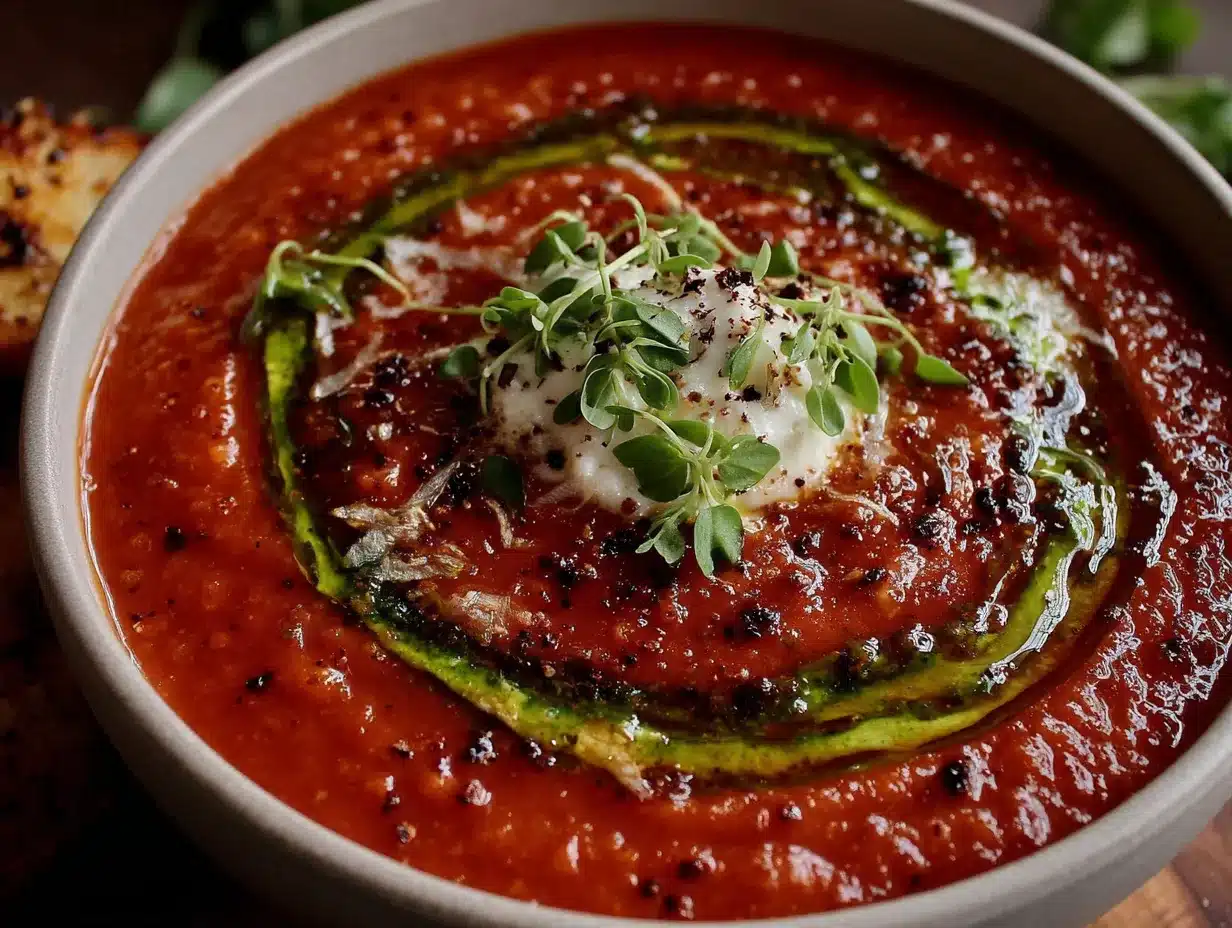
- 1 cup fresh basil leaves, packed: Do not use dried basil here. The whole point is the bright, fresh, almost peppery flavor of fresh basil.
- ½ cup extra-virgin olive oil: Use a fruity, high-quality olive oil for this. It’s the base of the oil, so it should taste good on its own.
- 1 small clove garlic: Just one small clove. Raw garlic is potent, and you want a whisper of it, not a shout.
- ¼ teaspoon flaky sea salt (like Maldon): Flaky salt adds little pops of salinity that are lovely against the rich oil. You can use kosher salt in a pinch.
Equipment Needed
You don’t need a lot of fancy gear for this recipe, which is one of the reasons I love it. A few basic kitchen staples will get the job done beautifully.
- Large Baking Sheet (Half-Sheet Pan): A rimmed baking sheet is essential for catching the tomato juices as they roast. I prefer a heavy-duty aluminum one for even heat distribution.
- Parchment Paper or Silicone Baking Mat: This makes cleanup a breeze. The caramelized tomato juices can stick to the pan, and no one wants to scrub that.
- High-Speed Blender or Immersion Blender: A high-speed blender (like a Vitamix) will give you the silkiest, smoothest soup. An immersion blender works well too, but the texture will be slightly less velvety. If you use a standard blender, be careful blending hot liquids—work in batches and leave the lid slightly ajar to release steam.
- Large Pot or Dutch Oven: You’ll need a heavy-bottomed pot to combine the roasted vegetables with the broth and simmer everything together. A Dutch oven is perfect for this.
- Small Food Processor or Mortar and Pestle: For the basil oil, you need something to emulsify the basil and oil together. A small food processor is easiest, but a mortar and pestle works beautifully if you have the arm strength.
- Fine-Mesh Strainer (Optional): If you want an absolutely silky smooth soup, you can strain it through a fine-mesh strainer after blending. I usually skip this step because I like a little bit of texture, but it’s an option if you’re feeling fancy.
Preparation Method
This is where the magic happens. The process is slow, but the active work is minimal. You’re basically letting the oven do all the heavy lifting while you go about your day. The smell alone is worth the wait.
- Preheat and Prep the Vegetables: Preheat your oven to 300°F (150°C). Line a large baking sheet with parchment paper. Wash and halve the Roma tomatoes lengthwise. If they are very large, you can quarter them. Place them cut-side up on the prepared baking sheet. Scatter the smashed garlic cloves and quartered onion around the tomatoes. Drizzle everything with the 3 tablespoons of olive oil, and season with the kosher salt and black pepper. Use your hands to gently toss everything together, then spread it back out into an even layer, making sure the tomatoes are cut-side up.
- The Slow Roast: Place the baking sheet in the preheated oven. Roast for 3 to 4 hours, or until the tomatoes are shriveled, deeply caramelized around the edges, and have released most of their liquid. The garlic should be soft and golden, and the onions should be translucent and jammy. Don’t rush this step. The longer they roast (within reason), the more concentrated the flavor will be. I usually check on them at the 3-hour mark and decide if they need another 30 minutes. You are looking for a deep, brick-red color on the tomatoes.
- Bloom the Tomato Paste: Once the vegetables are done roasting, remove them from the oven and let them cool slightly on the pan. In a large pot or Dutch oven over medium heat, add the tomato paste. Cook it for about 1-2 minutes, stirring constantly, until it darkens in color and smells fragrant. This step, called “blooming,” removes the raw, tinny taste from the paste and adds another layer of savory depth.
- Combine and Simmer: Carefully scrape the roasted tomatoes, onions, and garlic (along with all the delicious juices and olive oil from the pan) into the pot with the bloomed tomato paste. Add the vegetable broth and red pepper flakes (if using). Stir everything together, scraping up any browned bits from the bottom of the pot. Bring the soup to a gentle simmer over medium heat. Reduce the heat to low and let it simmer, uncovered, for 15 minutes. This allows all the flavors to meld together.
- Blend Until Silky: Remove the pot from the heat. Let the soup cool for about 5 minutes. Using an immersion blender, carefully blend the soup directly in the pot until it is completely smooth. If you are using a countertop blender, work in batches. Fill the blender no more than halfway full, and hold the lid down with a kitchen towel while you blend. Blend until smooth, then pour the blended soup into a clean pot or bowl. Repeat with the remaining soup. Taste and adjust seasoning with more salt and pepper if needed.
- Make the Basil Oil: While the soup is simmering or cooling, make the basil oil. In a small food processor, combine the packed basil leaves, ½ cup of olive oil, the small garlic clove, and the flaky sea salt. Pulse until the basil is finely chopped and the oil is bright green and fragrant. You don’t want it to be a completely smooth puree; a little texture is nice. If you are using a mortar and pestle, pound the basil and garlic with the salt until it forms a paste, then slowly drizzle in the olive oil while continuing to stir.
- Serve: Ladle the hot soup into bowls. Drizzle a generous spoonful of the basil oil over the top of each bowl. You can also swirl it in with a toothpick for a pretty presentation. Serve immediately with a side of crusty bread or a gooey grilled cheese sandwich.
Cooking Tips & Techniques
I have made this soup at least a dozen times, and I’ve messed it up more than a few times. Here are the lessons I learned the hard way so you don’t have to.
- Don’t Crowd the Pan: The tomatoes need space to roast, not steam. If they are piled on top of each other, they will release their liquid and boil instead of caramelizing. Use a large enough baking sheet to give them some breathing room. If you are doubling the recipe, use two pans.
- Patience is Key: I know 3-4 hours sounds like a long time for a soup, but the active work is maybe 15 minutes. The oven does everything. The first time I made this, I got impatient and cranked the heat to 375°F. The edges of the tomatoes burned, but the centers were still watery. The flavor was bitter, not sweet. Trust the low temperature.
- Strain for Perfection: If you are serving this to guests or just want the most velvety texture possible, pass the blended soup through a fine-mesh strainer. This will catch any remaining tomato seeds or tough bits of basil (if you used an immersion blender on the oil). It’s an extra step, but the result is a soup that is as smooth as silk.
- Rescue a Broken Soup: If your soup tastes a little flat or acidic, don’t panic. A tiny pinch of baking soda will neutralize the acidity without affecting the flavor. Alternatively, a splash of heavy cream or a pat of butter stirred in at the end will round out the sharp edges and add richness.
- Make the Basil Oil Ahead: The basil oil can be made up to 3 days in advance. Store it in an airtight container in the refrigerator. The color will dull slightly, but the flavor will still be amazing. Let it come to room temperature before drizzling over the soup.
Variations & Adaptations
This recipe is a fantastic base for experimentation. Once you master the slow-roast method, you can tweak the flavors to match your mood or what you have in the pantry. Here are a few of my favorite twists.
- Roasted Red Pepper & Tomato: Add 2 large red bell peppers to the baking sheet with the tomatoes. Roast them whole alongside the tomatoes. Once they are soft and the skin is blistered, let them cool in a bowl covered with plastic wrap, then peel off the skins and remove the seeds. Add the roasted pepper flesh to the pot before blending. The peppers add a subtle sweetness and a lovely smoky depth.
- Creamy Coconut Tomato Soup: For a dairy-free and vegan version that is still incredibly rich, replace the vegetable broth with full-fat coconut milk. Use only ½ cup of broth and 1 cup of coconut milk. The coconut flavor is subtle and pairs beautifully with the roasted tomatoes and basil oil. This is my go-to version during the colder months.
- Smoky Chipotle Kick: Add 1-2 chipotle peppers in adobo sauce to the pot when you add the broth. This will give the soup a deep, smoky heat that is absolutely addictive. Serve it with a dollop of sour cream or crema to cool things down. It’s a completely different soup, but it’s so good.
- Herb Swirl Variations: Don’t limit yourself to basil. You can make a cilantro-lime oil, a parsley-garlic oil, or even a rosemary-thyme oil. Use the same method: 1 cup of fresh herbs, ½ cup of olive oil, and a pinch of salt. Each one will give the soup a completely different personality.
Serving & Storage Suggestions
This soup is a meal in itself, but it loves company. The way you serve it can turn a simple lunch into a cozy dinner. And because it makes a generous batch, you will likely have leftovers, which is a very good thing.
Serving: Serve the soup piping hot. The basil oil should be drizzled on top just before serving so it stays vibrant and fragrant. A classic pairing is a grilled cheese sandwich with crispy croutons for dipping. I also love serving it alongside a simple green salad with a lemony vinaigrette to cut through the richness. For a heartier meal, spoon it over cooked pasta or grains like farro or quinoa. A sprinkle of freshly grated Parmesan cheese on top is never a bad idea.
Storage: Let the soup cool completely to room temperature before storing. Transfer it to an airtight container and refrigerate for up to 5 days. The flavors actually improve after a day or two as they meld together. The basil oil should be stored separately in a small jar in the refrigerator for up to 3 days.
Freezing: This soup freezes beautifully. Pour the cooled soup into freezer-safe bags or containers, leaving about an inch of headspace for expansion. It will keep for up to 3 months. Thaw overnight in the refrigerator before reheating. Do not freeze the basil oil; make a fresh batch when you are ready to serve the soup.
Reheating: Reheat the soup gently on the stovetop over medium-low heat, stirring occasionally. You can also reheat individual portions in the microwave. If the soup seems too thick after storing, thin it out with a splash of broth or water until it reaches your desired consistency.
Nutritional Information & Benefits
This soup is packed with nutrients, making it a meal you can feel good about eating. The slow-roasting process actually makes some of the nutrients more bioavailable.
- Rich in Lycopene: Tomatoes are famously high in lycopene, a powerful antioxidant linked to heart health and cancer prevention. Cooking the tomatoes, especially with a little fat (olive oil), actually increases the amount of lycopene your body can absorb. So this soup is a nutritional powerhouse.
- Vitamin C Boost: While some Vitamin C is lost during cooking, tomatoes still provide a good dose. The basil oil adds a fresh hit of Vitamin K and antioxidants.
- Low Calorie, High Satisfaction: A typical serving of this soup (about 1.5 cups) contains roughly 200-250 calories, depending on the amount of olive oil used. It is naturally gluten-free and can easily be made vegan by using vegetable broth.
- Heart-Healthy Fats: The extra-virgin olive oil is rich in monounsaturated fats, which are good for your heart. It also helps with the absorption of the fat-soluble vitamins (A, D, E, K) from the tomatoes.
Estimated Nutritional Information (per serving, makes 4-6 servings):
| Nutrient | Amount |
|---|---|
| Calories | 220 |
| Fat | 16g |
| Carbohydrates | 18g |
| Fiber | 4g |
| Sugar | 10g |
| Protein | 3g |
| Sodium | 580mg |
Note: Nutritional values are estimates and will vary based on specific ingredients used.
Frequently Asked Questions
Can I use canned tomatoes instead of fresh?
Technically, yes, but you will lose the magic of the slow-roast. The recipe relies on the caramelization of fresh tomatoes for its deep flavor. If you are in a pinch, use a 28-ounce can of whole San Marzano tomatoes, drain them, and roast them at 400°F for 30-40 minutes to concentrate their flavor. It won’t be the same, but it will be better than just opening a can.
My soup is too acidic. How do I fix it?
This is the most common issue with tomato soup. First, make sure you roasted the tomatoes long enough. Under-roasted tomatoes can be very acidic. If it still tastes sharp, add a pinch of baking soda (start with ¼ teaspoon) and stir. It will fizz a little, but it will neutralize the acid. You can also stir in a tablespoon of butter or a splash of cream to round out the flavor.
Can I make this in a slow cooker or Instant Pot?
You can, but you will lose the caramelization that makes this soup special. For a slow cooker, you would need to roast the tomatoes in the oven first, then transfer them to the slow cooker with the broth and cook on low for 4-6 hours. For an Instant Pot, use the sauté function to bloom the tomato paste, then add the roasted vegetables and broth. Pressure cook on high for 10 minutes, then blend. The oven method is still the best.
How do I make the basil oil without a food processor?
A mortar and pestle works beautifully. Pound the basil leaves, garlic, and salt together until they form a rough paste. Then, slowly drizzle in the olive oil while you continue to grind and stir with the pestle. You can also just finely chop the basil and garlic by hand, put them in a jar with the oil and salt, and shake vigorously. It won’t be as emulsified, but it will still taste great.
Can I skip the basil oil?
You can, but you really shouldn’t. The basil oil is not just a garnish; it is a integral part of the flavor profile. It adds a bright, herbaceous, and slightly peppery note that cuts through the rich, savory sweetness of the soup. Without it, the soup is still good, but it is a one-note dish. If you don’t have basil, try using parsley or cilantro instead, or simply drizzle the soup with a really good, peppery extra-virgin olive oil.
Conclusion
This Best Slow-Roasted Tomato Soup with Basil Oil is more than just a recipe; it’s a reminder that the best things in life are worth waiting for. The slow roast transforms humble, everyday ingredients into something deeply comforting and luxurious. It is the kind of soup that makes a rainy Wednesday feel like a special occasion. I love this recipe because it is forgiving, it is adaptable, and it always, always delivers. It has become my go-to for sick days, for lazy Sundays, and for impressing dinner guests without breaking a sweat. I hope you give it a try and make it your own. If you are looking for another cozy meal to round out the week, this creamy spiced butternut squash soup is another absolute favorite in my kitchen.
I would love to hear how it turns out for you. Did you try a fun variation? Did you serve it with the perfect grilled cheese? Drop a comment below and let me know. And if you really loved it, please share this recipe with a friend who needs a little bowl of comfort today. Happy cooking!
Pin This Recipe!
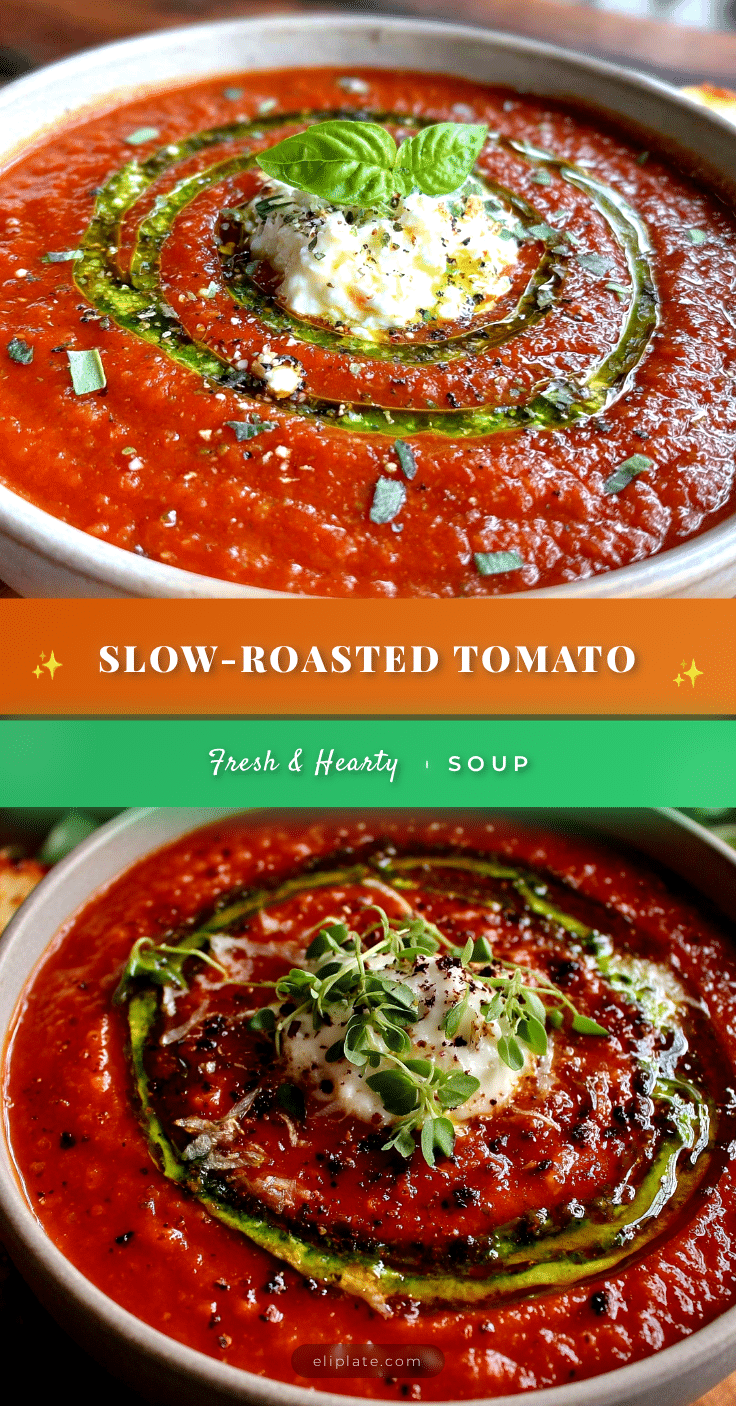
Best Slow-Roasted Tomato Soup with Easy Basil Oil
This deeply savory, slow-roasted tomato soup is made with simple, whole ingredients and finished with a vibrant basil oil. It’s a restaurant-quality bowl of comfort that’s surprisingly easy to make.
- Prep Time: 15 minutes
- Cook Time: 3 hours 15 minutes
- Total Time: 3 hours 30 minutes
- Yield: 4-6 servings 1x
- Category: Soup
- Cuisine: American
Ingredients
- 3 pounds Roma tomatoes (or vine-ripened tomatoes), halved lengthwise
- 4 cloves garlic, smashed
- 1 medium yellow onion, quartered (root end attached)
- 3 tablespoons extra-virgin olive oil
- 1 teaspoon kosher salt (Diamond Crystal preferred)
- ½ teaspoon black pepper, freshly ground
- 1 cup vegetable broth or chicken broth (low-sodium)
- 2 tablespoons tomato paste
- ½ teaspoon red pepper flakes (optional)
- 1 cup fresh basil leaves, packed
- ½ cup extra-virgin olive oil (for basil oil)
- 1 small clove garlic (for basil oil)
- ¼ teaspoon flaky sea salt (like Maldon, for basil oil)
Instructions
- Preheat oven to 300°F (150°C). Line a large baking sheet with parchment paper.
- Place halved tomatoes cut-side up on the baking sheet. Scatter smashed garlic cloves and quartered onion around them. Drizzle with 3 tablespoons olive oil, season with kosher salt and black pepper, and toss gently to coat. Spread into an even layer with tomatoes cut-side up.
- Roast for 3 to 4 hours, until tomatoes are shriveled, deeply caramelized around the edges, and have released most of their liquid. Garlic should be soft and golden, onions translucent and jammy.
- Remove from oven and let cool slightly on the pan. In a large pot or Dutch oven over medium heat, add tomato paste and cook for 1-2 minutes, stirring constantly, until darkened and fragrant (blooming).
- Scrape roasted tomatoes, onions, garlic, and all pan juices into the pot. Add vegetable broth and red pepper flakes (if using). Stir, scraping up browned bits. Bring to a gentle simmer over medium heat, then reduce heat to low and simmer uncovered for 15 minutes.
- Remove from heat and let cool for 5 minutes. Using an immersion blender, blend soup directly in the pot until completely smooth. Alternatively, blend in batches in a countertop blender (fill no more than halfway, hold lid with a towel). Taste and adjust seasoning with salt and pepper.
- While soup simmers or cools, make basil oil: In a small food processor, combine packed basil leaves, ½ cup olive oil, small garlic clove, and flaky sea salt. Pulse until basil is finely chopped and oil is bright green and fragrant (some texture is fine). Alternatively, use a mortar and pestle.
- Ladle hot soup into bowls. Drizzle a generous spoonful of basil oil over each bowl. Serve immediately with crusty bread or grilled cheese.
Notes
Don’t crowd the pan; give tomatoes space to roast. Patience is key—do not rush the roasting time. For an ultra-smooth soup, strain through a fine-mesh strainer after blending. If soup tastes flat or acidic, add a pinch of baking soda or a splash of cream/butter. Basil oil can be made up to 3 days ahead and stored in the refrigerator; let come to room temperature before using.
Nutrition
- Serving Size: 1.5 cups
- Calories: 220
- Sugar: 10
- Sodium: 580
- Fat: 16
- Saturated Fat: 2
- Carbohydrates: 18
- Fiber: 4
- Protein: 3
Keywords: tomato soup, slow-roasted tomato soup, basil oil, easy tomato soup, homemade tomato soup, roasted tomato soup, comfort food, vegetarian soup