“Hey, you gotta try this,” my friend said over the phone, sounding unusually enthusiastic for someone who usually sticks to plain pasta and takeout. I was skeptical. Chicken adobo? Sure, I knew the classic Filipino stew well enough—vinegar, soy sauce, garlic—but creamy? With coconut milk and bay leaves? It sounded almost too rich, maybe even confusing. Still, curiosity won over skepticism, and I figured—why not? The next evening, I found myself stirring a pot that smelled like a tropical island and my childhood all at once. The coconut milk added a silky smoothness that made the dish feel cozy without weighing it down. The bay leaves gave it that subtle herbal depth you don’t expect but can’t get enough of. Honestly, I couldn’t stop tweaking it for days—each time it felt just a little better, a little more perfect.
What stuck with me wasn’t just the taste but how this creamy Filipino chicken adobo with coconut milk and bay leaves became a quiet reset on hectic days. It’s the kind of recipe that feels like a warm hug after a long one, comforting yet excitingly different. And the best part? You don’t have to be a pro chef to nail it.
Even now, whenever I catch that faint scent of coconut and garlic mingling in the kitchen, I pause, knowing something delicious is about to happen. That’s why this recipe isn’t just food—it’s a little moment of calm you can make whenever you need it.
Why You’ll Love This Recipe
After countless trials and a few happy accidents, this creamy Filipino chicken adobo with coconut milk and bay leaves has become a staple in my kitchen. Here’s why it deserves a spot in yours:
- Quick & Easy: Ready in under 45 minutes, it’s perfect for busy weeknights or when you want something comforting without the fuss.
- Simple Ingredients: The pantry staples like soy sauce, garlic, and vinegar blend beautifully with coconut milk and bay leaves to create something special, no exotic shopping required.
- Perfect for Any Occasion: Whether it’s a casual family dinner or a small gathering, this dish fits right in with its creamy, savory goodness.
- Crowd-Pleaser: Kids and adults alike can’t get enough of the tender chicken and rich sauce—I’ve had friends ask for the recipe multiple times!
- Unbelievably Delicious: The creaminess from the coconut milk balances the tangy vinegar and salty soy, while the bay leaves add a fragrant, earthy note that ties it all together.
This isn’t your average adobo. By gently simmering the chicken in coconut milk and layering bay leaves into the mix, the texture becomes luxuriously smooth, and the flavor profile deepens wonderfully. It’s like comfort food got a tropical twist that feels both familiar and exciting. For a meal that feels as special as it is simple, this recipe hits all the right notes, making it stand out from the crowd.
What Ingredients You Will Need
This creamy Filipino chicken adobo with coconut milk and bay leaves uses straightforward, wholesome ingredients that pack a punch in flavor and texture. Most of these are pantry staples, with coconut milk and bay leaves adding that signature twist.
- Chicken thighs, bone-in and skin-on for the best flavor and tenderness (you can substitute with boneless if preferred, but the bone adds richness)
- Coconut milk, full-fat for creamy texture (I prefer brands like Aroy-D for its smooth consistency)
- Soy sauce, use naturally brewed for deeper flavor
- White vinegar, traditional cane vinegar is ideal, but apple cider vinegar works well too
- Garlic cloves, crushed or minced (fresh is best for that punch!)
- Bay leaves, dried (don’t skip these—they’re essential for the subtle herbal layers)
- Black peppercorns, whole (ground pepper won’t give the same aroma)
- Brown sugar, just a touch to balance acidity (optional but recommended)
- Water or chicken broth, to adjust sauce consistency
- Cooking oil, for browning the chicken (vegetable or coconut oil works well)
For a gluten-free version, swap soy sauce with tamari or coconut aminos. If you want a lighter coconut flavor, use light coconut milk but expect a thinner sauce. When fresh bay leaves aren’t available, dried ones are perfectly fine—just use slightly less. The balance of acid, salt, and creaminess in this recipe is something I fine-tuned over several attempts, so sticking close to these ingredients will give you the best results.
Equipment Needed
- Heavy-bottomed skillet or Dutch oven: Ideal for even heat distribution and good for browning the chicken as well as simmering the sauce. I’ve found a 4-quart size works perfectly for this recipe.
- Wooden spoon or silicone spatula: For stirring gently without scraping the pan’s surface.
- Measuring cups and spoons: Precise measurements help balance the tangy, salty, and creamy elements.
- Sharp knife and cutting board: For prepping garlic and trimming chicken.
- Optional: A fine-mesh strainer if you want to rinse the bay leaves out before serving, though many just leave them in as a flavor enhancer.
Don’t worry if you don’t own a Dutch oven. A deep skillet with a tight-fitting lid works just fine. Over the years, I’ve used both cast iron and stainless steel pans for this dish, and each lends a slightly different character. Just avoid non-stick pans for the browning stage to get that nice caramelization on the chicken skin.
Preparation Method
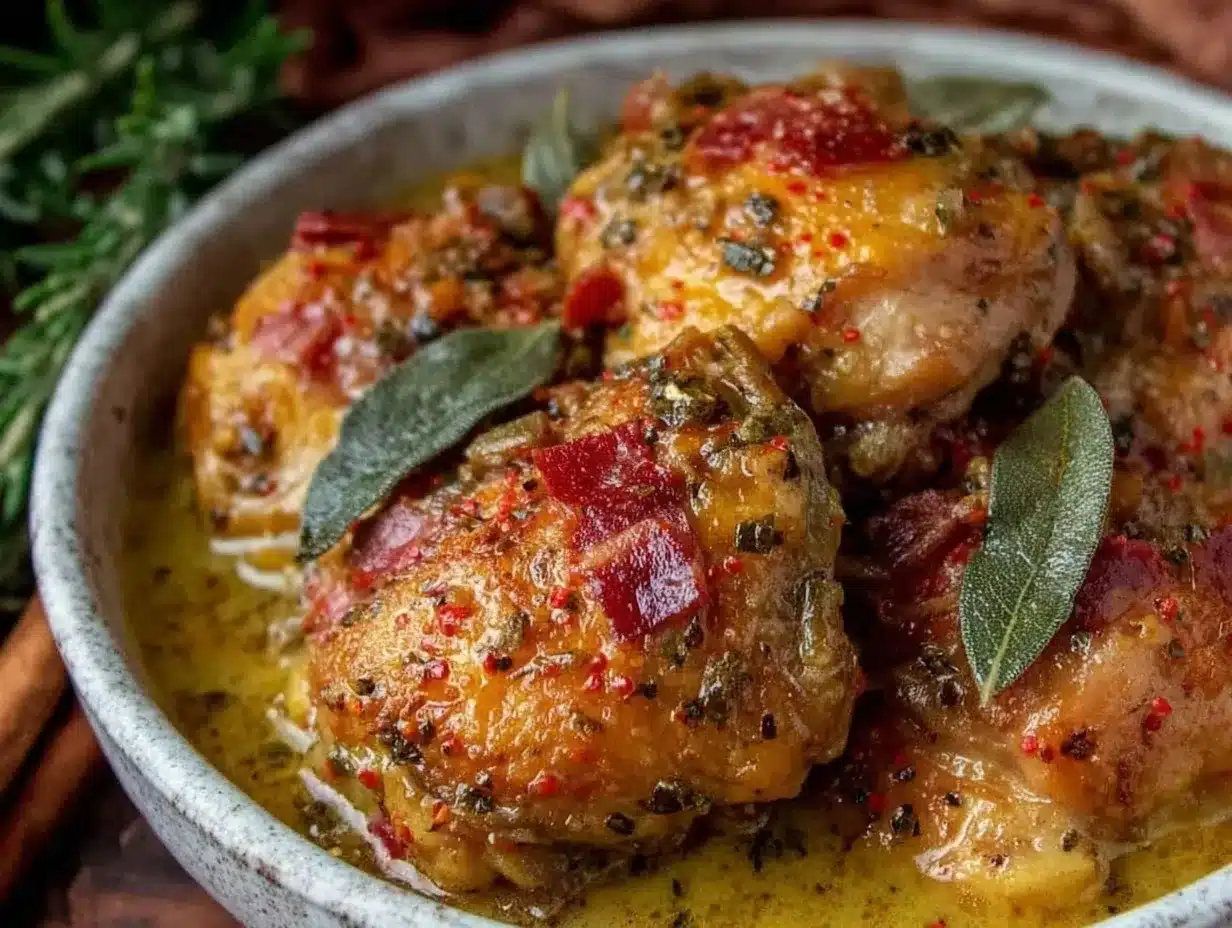
- Prepare the chicken: Pat 2 pounds (900g) of chicken thighs dry with paper towels. This helps achieve a crispy skin when browning. Season lightly with salt.
- Sear the chicken: Heat 2 tablespoons (30 ml) of cooking oil in your skillet over medium-high heat. Once shimmering, add the chicken skin-side down. Cook for about 5 minutes until golden and crisp, then flip and brown the other side for 3 minutes. Remove chicken and set aside.
- Sauté garlic: Lower the heat to medium. In the same pan, add 6 crushed garlic cloves and sauté for 1-2 minutes until fragrant but not burnt. This step unlocks the garlic’s sweetness and builds the base flavor.
- Add liquids and seasonings: Pour in 1/2 cup (120 ml) soy sauce, 1/2 cup (120 ml) white vinegar, and 1 cup (240 ml) coconut milk. Stir in 2-3 dried bay leaves and 1 teaspoon whole black peppercorns. If you like a touch of sweetness, sprinkle in 1 tablespoon (12g) brown sugar.
- Return chicken to pan: Nestle the browned chicken thighs back into the sauce, skin side up. Add 1/2 cup (120 ml) water or chicken broth to loosen the sauce as necessary.
- Simmer gently: Cover the pan loosely and reduce heat to low. Let it simmer for about 30 minutes, turning the chicken halfway through. The sauce should thicken slightly and the chicken become tender. Watch for the sauce to reduce but not dry out—add a splash of water if needed.
- Final touches: Remove the bay leaves and adjust seasoning with salt or a bit more vinegar if you want extra tang. The sauce should be creamy, glossy, and rich, coating the chicken beautifully.
- Serve: This dish is best served hot over steamed rice. The sauce soaks right in, making every bite a delight.
Pro tip: If the sauce feels too thin after simmering, remove the chicken and turn the heat to medium-high to reduce the sauce further for a couple of minutes. It will thicken nicely without losing the creamy coconut texture.
Cooking Tips & Techniques
Getting creamy Filipino chicken adobo just right requires a few handy tricks I’ve picked up along the way. First, don’t rush the browning step. That crispy skin isn’t just for looks—it adds a caramelized depth that plays beautifully against the tangy sauce.
When simmering, keep the heat low and the lid slightly ajar. This prevents the coconut milk from separating or curdling, which can happen if it’s boiled too hard. If you notice any oil separating, just stir gently; it usually comes back together.
I used to overdo the vinegar, thinking that tang was the star, but it’s really about balance. Start with equal parts soy and vinegar, then adjust after simmering. The brown sugar is subtle but important—it rounds out the sharp edges and makes the sauce feel velvety.
Also, whole peppercorns are your friend here. They release flavor slowly and give little bursts of spice instead of flat heat. If you only have ground pepper, add it sparingly at the end.
Lastly, when choosing chicken, thighs work best because they stay moist and flavorful. If you want leaner meat, breasts can be used, but watch the cooking time closely to avoid dryness. For an extra layer of flavor, try finishing the dish under the broiler for a minute or two to crisp up the skin just before serving.
Variations & Adaptations
This creamy chicken adobo is forgiving and flexible, so you can make it your own in several ways:
- Low-carb option: Skip the brown sugar or replace it with a keto-friendly sweetener. Serve over cauliflower rice instead of regular steamed rice.
- Spicy kick: Add sliced bird’s eye chilies or a dash of cayenne powder while simmering for a gentle heat that cuts through the richness.
- Different protein: Swap chicken for pork belly or even firm tofu for a vegetarian twist. Tofu lovers might want to press and pan-fry it before simmering to hold texture.
- Seasonal veggies: Toss in quartered baby potatoes or green beans halfway through simmering for a heartier, one-pot meal reminiscent of a creamy chicken pasta dish like the creamy one-pot chicken pasta I love making when I want everything in one pot.
- Dairy-free alternative: This recipe is naturally dairy-free thanks to the coconut milk, but for a less coconut-forward flavor, use unsweetened almond or cashew milk.
I once added a splash of freshly squeezed calamansi juice at the end for an extra bright citrus note—it was surprisingly refreshing and cut through the richness nicely. Feel free to experiment; that’s half the fun.
Serving & Storage Suggestions
Serve your creamy Filipino chicken adobo steaming hot, nestled over a mound of fluffy white rice. The sauce soaks in beautifully, making every bite a perfect balance of creamy, tangy, and savory. Garnish with chopped scallions or a sprinkle of fried garlic for texture contrast.
It pairs wonderfully with simple sides like sautéed greens or roasted vegetables—something light to offset the richness. If you’re hosting, this dish shines alongside easy flavor-packed crockpot chicken taco bowls or even a crisp salad with a sharp vinaigrette.
For leftovers, store the adobo in an airtight container in the refrigerator for up to 3 days. The flavors actually deepen overnight, making it taste even better the next day. When reheating, warm gently on the stove or microwave, adding a splash of water or broth if the sauce thickened too much.
You can freeze this dish as well, but be sure to thaw it slowly in the fridge to keep the coconut milk sauce from separating. A gentle reheat will bring it back to creamy perfection.
Nutritional Information & Benefits
This creamy Filipino chicken adobo combines hearty protein with healthy fats from coconut milk, making it a satisfying and nourishing meal. For a typical serving (about 1 cup/240g), you can expect roughly 350-400 calories, with approximately 25g of protein and 20g of fat depending on chicken cut and coconut milk fat content.
Coconut milk provides medium-chain triglycerides (MCTs), which some studies suggest may support metabolism and energy levels. Garlic and bay leaves offer antioxidants and anti-inflammatory properties, contributing to overall wellness.
Gluten-free and dairy-free by nature, this recipe suits many dietary needs. Just swap soy sauce for tamari to avoid gluten. It’s a balanced meal that feels indulgent without being overly processed or heavy.
Conclusion
If you’re looking for a chicken dish that’s both comforting and uniquely flavorful, this creamy Filipino chicken adobo with coconut milk and bay leaves is a winner. It brings together simple ingredients in a way that feels special yet approachable. I love how it’s become my go-to reset meal when life feels a little chaotic—something that warms the soul while being easy enough to whip up any night of the week.
Feel free to make it your own with the variations and tweaks that suit your taste. And hey, if you try it, I’d love to hear how it turned out for you—drop a comment or share your twist! Cooking is all about sharing those little moments that make food feel like home.
FAQs About Creamy Filipino Chicken Adobo with Coconut Milk and Bay Leaves
Can I use chicken breast instead of thighs?
Yes, but chicken breasts can dry out faster. Cook them for a shorter time and keep an eye on the sauce to prevent overcooking.
What can I substitute for coconut milk?
Unsweetened almond or cashew milk works as a lighter alternative, though the sauce won’t be quite as creamy or rich.
Do I have to remove the bay leaves before serving?
It’s best to remove them after cooking since they’re tough and not pleasant to eat, but they can stay in during serving for extra aroma.
Is this recipe gluten-free?
Yes, as long as you use gluten-free soy sauce alternatives like tamari or coconut aminos.
Can I make this dish ahead of time?
Absolutely! The flavors deepen after resting, so it’s ideal for making a day ahead and reheating gently before serving.
Pin This Recipe!
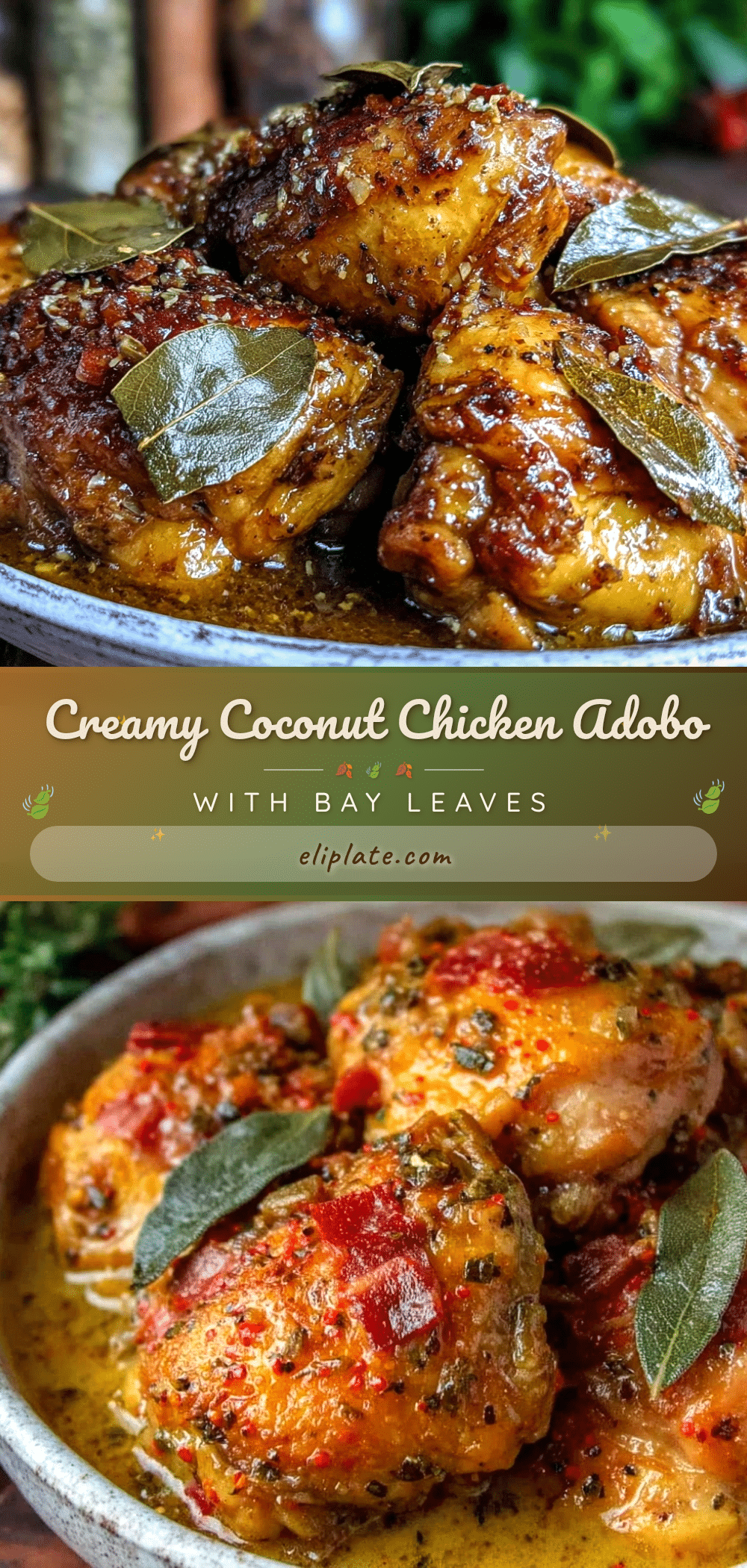
Creamy Filipino Chicken Adobo Recipe with Coconut Milk and Bay Leaves

A comforting and flavorful Filipino chicken adobo made creamy with coconut milk and infused with aromatic bay leaves. This easy recipe is perfect for busy weeknights and offers a tropical twist on a classic stew.
- Prep Time: 10 minutes
- Cook Time: 35 minutes
- Total Time: 45 minutes
- Yield: 4 servings 1x
- Category: Main Course
- Cuisine: Filipino
Ingredients
- 2 pounds chicken thighs, bone-in and skin-on
- 1 cup (240 ml) full-fat coconut milk
- 1/2 cup (120 ml) soy sauce, naturally brewed
- 1/2 cup (120 ml) white vinegar (cane vinegar or apple cider vinegar)
- 6 garlic cloves, crushed or minced
- 2–3 dried bay leaves
- 1 teaspoon whole black peppercorns
- 1 tablespoon (12 g) brown sugar (optional)
- 1/2 cup (120 ml) water or chicken broth
- 2 tablespoons (30 ml) cooking oil (vegetable or coconut oil)
Instructions
- Pat 2 pounds (900g) of chicken thighs dry with paper towels and season lightly with salt.
- Heat 2 tablespoons (30 ml) of cooking oil in a heavy-bottomed skillet or Dutch oven over medium-high heat. Add chicken skin-side down and cook for about 5 minutes until golden and crisp, then flip and brown the other side for 3 minutes. Remove chicken and set aside.
- Lower heat to medium. In the same pan, add 6 crushed garlic cloves and sauté for 1-2 minutes until fragrant but not burnt.
- Pour in 1/2 cup (120 ml) soy sauce, 1/2 cup (120 ml) white vinegar, and 1 cup (240 ml) coconut milk. Stir in 2-3 dried bay leaves and 1 teaspoon whole black peppercorns. Add 1 tablespoon (12 g) brown sugar if using.
- Return the browned chicken thighs to the pan, skin side up. Add 1/2 cup (120 ml) water or chicken broth to loosen the sauce as needed.
- Cover the pan loosely and reduce heat to low. Simmer gently for about 30 minutes, turning the chicken halfway through. The sauce should thicken slightly and the chicken become tender. Add a splash of water if the sauce reduces too much.
- Remove bay leaves and adjust seasoning with salt or more vinegar if desired. The sauce should be creamy, glossy, and rich.
- Serve hot over steamed rice.
Notes
Do not rush browning the chicken to get crispy skin and caramelized flavor. Keep heat low and lid slightly ajar when simmering to prevent coconut milk from curdling. Whole peppercorns add slow-releasing spice bursts. For a thicker sauce, remove chicken and reduce sauce over medium-high heat. Use tamari or coconut aminos for gluten-free soy sauce alternatives. Chicken breasts can be used but watch cooking time to avoid dryness.
Nutrition
- Serving Size: About 1 cup (240 g)
- Calories: 375
- Sugar: 3
- Sodium: 900
- Fat: 20
- Saturated Fat: 15
- Carbohydrates: 6
- Fiber: 1
- Protein: 25
Keywords: Filipino chicken adobo, creamy chicken adobo, coconut milk chicken, bay leaves, easy chicken recipe, Filipino cuisine, comfort food