Introduction
“Are you sure this is going to work?” I muttered, eyeing the jumble of spring vegetables and cream, wondering if it would blend into something edible—or a total mess. Truth be told, it started as a rushed attempt to clear out the fridge before guests arrived. I was juggling peeling peas from their pods and zesting lemons while the pasta boiled furiously, all under a ticking clock. Somehow, between the chaos and last-minute tweaks, this creamy spring vegetable pasta primavera with lemon garlic sauce came together like a little miracle. The tangy brightness of lemon, the mellow kiss of garlic, and the burst of fresh, crisp veggies created a dish that was anything but ordinary. It’s funny how sometimes the best meals sneak up on you when you least expect it.
I wasn’t even sure my taste buds would forgive the gamble, but every bite proved otherwise. The sauce clung just right to the tender pasta, and the veggies—snap peas, asparagus, and baby spinach—added a freshness that felt like a spring morning on a plate. Since that hectic day, I’ve found myself making this recipe over and over, especially when I need something that feels light but satisfying. It’s the kind of meal that makes you pause for a moment and realize how just a few simple ingredients can come together to feel like a little celebration.
This creamy spring vegetable pasta primavera with lemon garlic sauce has stuck around in my rotation because it’s honest, comforting, and bright all at once. It’s not fussy, and it’s not trying too hard—just pure, delicious food that you’ll want to come back to time and again.
Why You’ll Love This Recipe
This creamy spring vegetable pasta primavera with lemon garlic sauce isn’t just another pasta dish—it’s a fresh take that’s been tested and tweaked to get the balance just right. Here’s why this recipe has become a favorite:
- Quick & Easy: Ready in just about 30 minutes, it fits perfectly into busy weeknights or those last-minute dinner plans.
- Simple Ingredients: No fancy or hard-to-find items here—just fresh spring veggies, pantry staples like garlic and pasta, and a handful of basics you probably have on hand.
- Perfect for Seasonal Meals: It celebrates spring’s bounty with crisp asparagus, tender snap peas, and fresh herbs that make every bite feel lively.
- Crowd-Pleaser: Whether you’re feeding kids, friends, or your own craving, the creamy lemon garlic sauce hits that sweet spot between tangy and comforting.
- Unbelievably Delicious: The combo of creaminess and zesty lemon with fresh garlic is a flavor pairing that turns simple ingredients into something memorable.
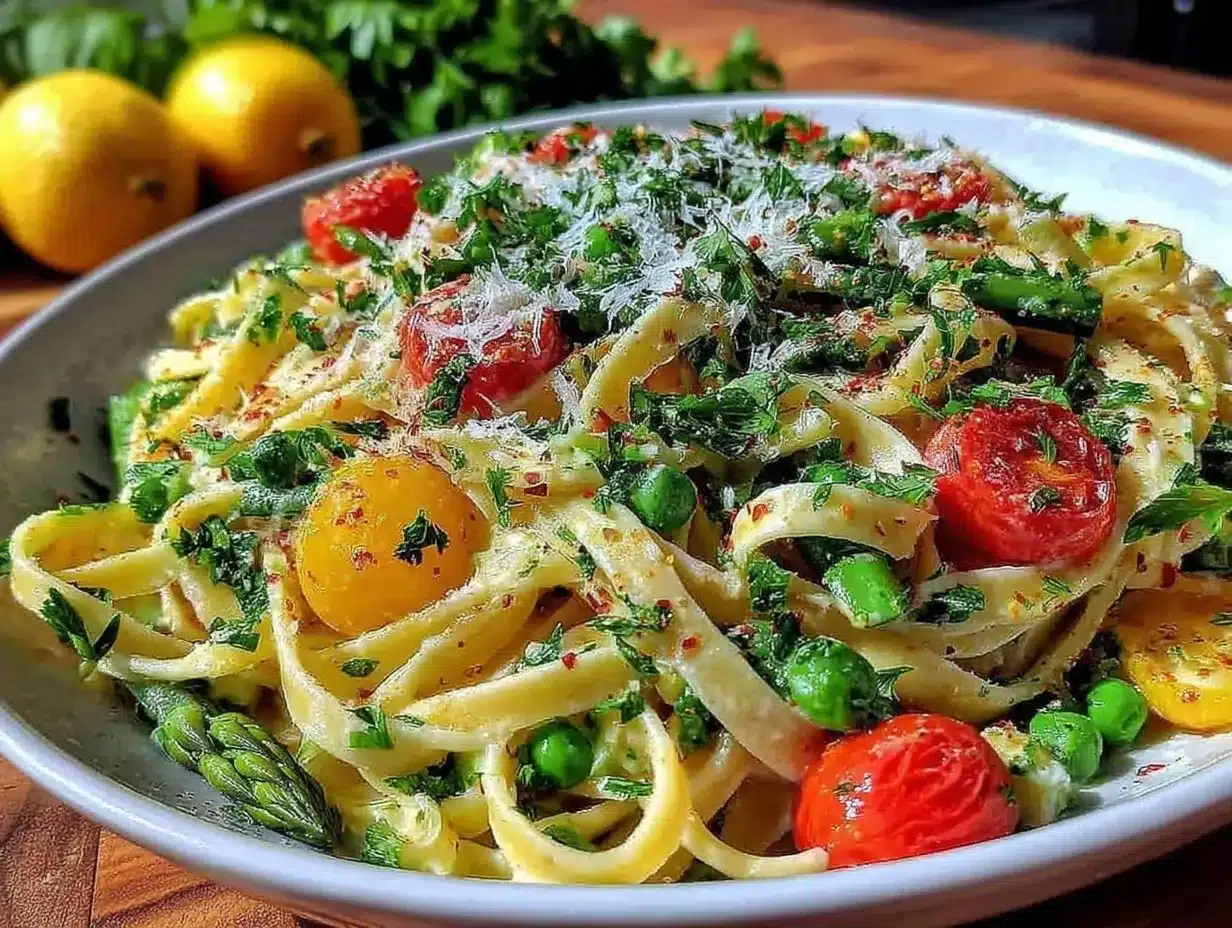
What sets this pasta primavera apart is the lemon garlic sauce—it’s silky, but bright; rich, but fresh—and I’ve found that blending a bit of cream with lemon zest and garlic really lifts the dish beyond the usual. Plus, the spring vegetables aren’t just tossed in; they’re lightly sautéed to keep their crispness and vibrant color, making every forkful a textural pleasure. Honestly, it’s this balance that makes this recipe a keeper in my kitchen, and I love how it feels both indulgent and light at once.
Try pairing it with a crisp white wine or a fresh salad for a meal that somehow feels both fancy and homey. If you’re curious how to add a protein kick, the creamy one-pot chicken pasta recipe I worked on recently offers great ideas for mixing things up without losing that comforting vibe.
What Ingredients You Will Need
This recipe uses simple, wholesome ingredients to deliver bold flavor and satisfying texture without the fuss. Most are pantry staples or fresh spring produce, which makes it easy to whip up anytime you want a quick, colorful meal.
- Pasta: 12 oz (340 g) of fettuccine or linguine works best for holding the sauce (feel free to substitute with gluten-free pasta if needed).
- Spring Vegetables:
- 1 cup snap peas, trimmed (adds crunch and sweetness)
- 1 bunch asparagus, trimmed and cut into 2-inch pieces (fresh and tender)
- 2 cups baby spinach (for a touch of earthiness and color)
- 1/2 cup cherry tomatoes, halved (optional, for bursts of sweetness)
- Lemon Garlic Sauce:
- 3 cloves garlic, minced (fresh garlic is key for punchy flavor)
- 2 tablespoons unsalted butter (for richness)
- 1 cup heavy cream (or half-and-half for a lighter option)
- 1/2 cup freshly grated Parmesan cheese (I recommend Parmigiano-Reggiano for the best melt and flavor)
- 1 tablespoon lemon zest (adds bright citrus notes)
- 2 tablespoons fresh lemon juice (for that refreshing tang)
- Salt and freshly ground black pepper, to taste
- Olive oil: 2 tablespoons for sautéing vegetables (extra virgin is best for flavor)
- Fresh herbs: 2 tablespoons chopped fresh basil or parsley (optional, but highly recommended for garnish and fresh aroma)
If you want to adapt this recipe, swapping heavy cream with coconut cream makes a lovely dairy-free version, and almond flour pasta works well for gluten-free diets. When asparagus is out of season, green beans or zucchini ribbons can stand in nicely, keeping that garden-fresh feel alive.
Equipment Needed
- Large pot for boiling pasta – any standard size works fine; make sure it’s big enough for the pasta to swim freely.
- Large skillet or sauté pan – a heavy-bottomed pan helps cook vegetables evenly without burning.
- Colander – for draining pasta.
- Microplane or fine grater – to zest the lemon finely, which really lifts the sauce.
- Measuring cups and spoons – accuracy matters in balancing the lemon garlic sauce flavors.
- Wooden spoon or silicone spatula – gentle on cookware and perfect for stirring sauce.
If you don’t own a microplane, a small box grater’s fine side works just as well for zesting lemons. I’ve used both, and while the microplane is faster, the box grater gets the job done without fuss. Also, a non-stick skillet can simplify clean-up, but a well-seasoned stainless steel pan gives you better caramelization on those veggies.
Preparation Method
- Cook the pasta: Bring a large pot of salted water to a boil. Add 12 oz (340 g) of fettuccine or linguine and cook according to package instructions until al dente (usually 9-11 minutes). Stir occasionally to prevent sticking. Once done, reserve 1 cup of pasta water and drain the rest.
- Sauté the vegetables: While pasta cooks, heat 2 tablespoons olive oil in a large skillet over medium heat. Add 1 cup snap peas and 1 bunch asparagus (cut into 2-inch pieces). Cook for about 4-5 minutes, stirring occasionally, until veggies are tender-crisp and bright green. Add 2 cups baby spinach and optional 1/2 cup halved cherry tomatoes; cook for another 1-2 minutes until spinach wilts. Season with a pinch of salt and pepper. Remove veggies from heat and set aside.
- Make the lemon garlic sauce: In the same skillet, melt 2 tablespoons unsalted butter over medium-low heat. Add 3 cloves minced garlic and sauté gently for 1-2 minutes until fragrant but not browned (watch carefully to avoid bitterness). Pour in 1 cup heavy cream and stir to combine. Let it simmer gently for 3-4 minutes to thicken slightly.
- Add cheese and lemon: Stir in 1/2 cup freshly grated Parmesan cheese until melted and smooth. Mix in 1 tablespoon lemon zest and 2 tablespoons fresh lemon juice. Taste and adjust seasoning with salt and freshly ground black pepper. If the sauce feels too thick, add reserved pasta water a few tablespoons at a time until you reach desired consistency.
- Combine pasta and sauce: Return the cooked vegetables to the skillet with the sauce. Add the drained pasta and toss everything together over low heat for 1-2 minutes, allowing the sauce to cling to the noodles and veggies.
- Finish with fresh herbs: Remove from heat and stir in 2 tablespoons chopped fresh basil or parsley for a fresh, aromatic finish.
- Serve immediately: Plate the creamy spring vegetable pasta primavera with a sprinkle of extra Parmesan and a twist of lemon zest if you like. Enjoy warm for the best flavor and texture.
Pro tip: Don’t overcook the vegetables—they should stay vibrant and just tender. Also, adding reserved pasta water gradually helps control sauce thickness without watering down flavor. I’ve learned the hard way that too much water turns the sauce soupy, so patience here pays off!
Cooking Tips & Techniques
Getting this creamy spring vegetable pasta primavera just right is all about timing and balance. Here are some tips I picked up after a few kitchen mishaps:
- Don’t rush the garlic: Sauté it gently on medium-low heat. Burnt garlic turns bitter, and that flavor can linger, ruining the sauce.
- Vegetable timing is everything: Start with the firmer veggies like asparagus and snap peas, then add delicate ones like spinach last. This layering keeps textures distinct and fresh.
- Use reserved pasta water wisely: It’s your secret weapon to loosen the sauce without losing flavor or creaminess.
- Grate cheese fresh: Pre-grated Parmesan can be dry or clumpy, while freshly grated cheese melts better, giving the sauce more silkiness.
- Adjust lemon juice last: Acid can change as it cooks, so start with less and add more after tasting the finished sauce.
- Multitasking helps: Boil pasta while prepping veggies and making sauce, so everything comes together hot and fresh—no cold noodles waiting around.
From personal experience, overcooked pasta is the biggest enemy here. I always set a timer and taste a strand a minute before the suggested cook time. It’s worth the little extra attention to keep the noodles al dente and hold that creamy sauce perfectly.
Variations & Adaptations
This creamy spring vegetable pasta primavera with lemon garlic sauce is flexible and forgiving, perfect for customizing:
- Protein boost: Add seared chicken breast strips or sautéed shrimp for a heartier meal. The creamy sauce pairs beautifully with either.
- Vegan version: Swap heavy cream for coconut cream or cashew cream and use nutritional yeast instead of Parmesan for that cheesy flavor. Olive oil and garlic remain the same.
- Seasonal swaps: When asparagus is scarce, green beans or zucchini ribbons work well. For a summer twist, toss in fresh peas or lightly sautéed baby zucchini.
- Gluten-free: Use gluten-free pasta varieties such as brown rice or chickpea pasta to keep the dish accessible.
- Extra zest: For a punchier lemon flavor, add a teaspoon of lemon oil or a splash of white wine to the sauce while simmering.
One variation I love is mixing in some sun-dried tomatoes and fresh basil for a slightly richer, Mediterranean-inspired flavor. It’s a little nod to the creamy one-pot chicken pasta I made recently, which also balances creaminess with fresh herbs beautifully.
Serving & Storage Suggestions
This pasta primavera is best served warm right off the stove, with the sauce still silky and the veggies vibrant. A sprinkle of extra Parmesan and a few fresh basil leaves on top add a nice finishing touch. Pair it with a crisp green salad or steamed green beans to keep the meal light and fresh.
For storage, let leftovers cool to room temperature, then refrigerate in an airtight container for up to 3 days. The sauce may thicken or firm up in the fridge; reheat gently on the stove with a splash of water or broth to bring back the creamy texture. Avoid microwaving aggressively, as the sauce can split.
Flavors meld beautifully after resting overnight, so this dish can be even better the next day if you don’t mind a little extra reheating effort. If you want to freeze, it’s best to keep pasta and sauce separate to preserve texture, but fresh veggies don’t freeze well in this dish.
Nutritional Information & Benefits
This creamy spring vegetable pasta primavera with lemon garlic sauce balances indulgence and nutrition. Here’s an estimated breakdown per serving (makes about 4 servings):
| Nutrient | Amount |
|---|---|
| Calories | 450-500 kcal |
| Protein | 15-18 g |
| Carbohydrates | 55-60 g |
| Fat | 15-20 g |
| Fiber | 5-7 g |
The fresh spring vegetables provide fiber, vitamins A and C, and antioxidants. Lemon adds a boost of vitamin C and a natural brightness that feels refreshing. Using fresh garlic contributes to heart-healthy compounds, while the Parmesan cheese offers calcium and protein. For those watching carbs, switching to whole-grain or legume-based pasta can increase fiber and protein content.
Just a heads up: this recipe contains dairy and gluten by default, so consider substitutions if you’re avoiding these. I appreciate how it fits into a balanced diet—comfort food without too much guilt.
Conclusion
This creamy spring vegetable pasta primavera with lemon garlic sauce is one of those recipes that feels like a little gift from the kitchen. It’s bright, creamy, and fresh—a perfect way to celebrate the flavors of spring without fuss or stress. I love how adaptable it is; whether you want to keep it light or add some protein, it welcomes tweaks without losing its soul. Making it has become a small ritual for me when I want a quick, satisfying meal that reminds me of sunny days and easy dinners.
Give it a try, and don’t be afraid to make it your own. Maybe add a handful of pine nuts, or swap in your favorite spring veggies. I’d love to hear how it turns out or what twists you come up with.
Enjoy the simplicity, savor the freshness, and remember: good food doesn’t have to be complicated to be memorable.
Frequently Asked Questions
What type of pasta is best for primavera?
Long, flat pasta like fettuccine or linguine works best because it holds the sauce well and mixes nicely with the vegetables. You can also use penne or farfalle for a chunkier feel.
Can I make this recipe vegan?
Yes! Substitute heavy cream with coconut or cashew cream, and use nutritional yeast or vegan Parmesan alternatives to keep the cheesy flavor.
How do I keep the vegetables crisp and colorful?
Cook firmer vegetables like asparagus and peas first, then add delicate ones like spinach at the end just to wilt lightly. Avoid overcooking and use medium heat for sautéing.
Can I prepare this in advance?
You can chop veggies and prepare the sauce base ahead, but it’s best to toss everything together just before serving to keep the pasta and veggies fresh and vibrant.
What can I serve with creamy spring vegetable pasta primavera?
This pasta pairs well with a light green salad, crusty bread, or even some lemon roasted chicken for a fuller meal. If you want vegetarian sides, simple steamed green beans or a crisp cucumber salad complement the flavors nicely.
Pin This Recipe!
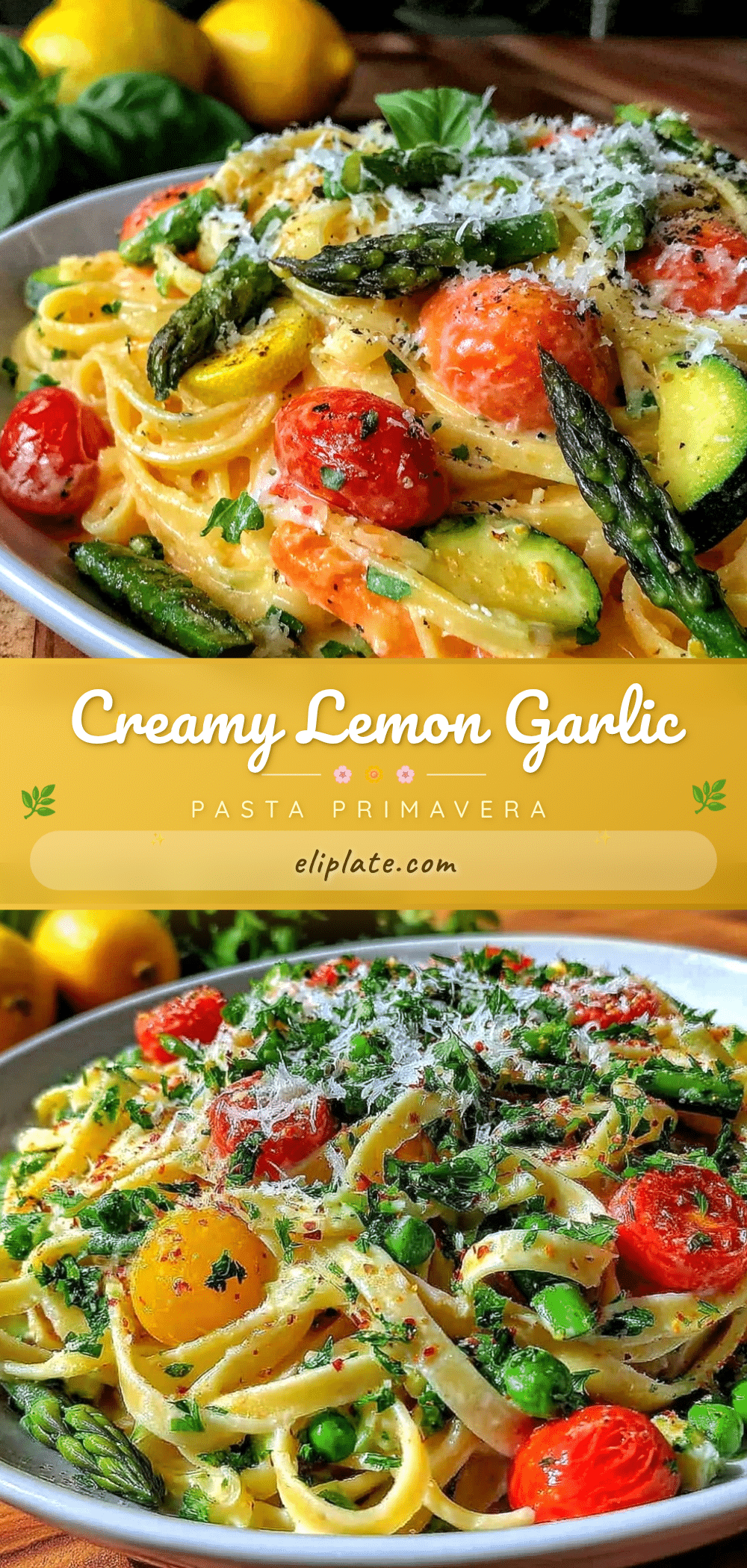
Creamy Spring Vegetable Pasta Primavera Recipe Easy Lemon Garlic Sauce
A bright and creamy pasta primavera featuring fresh spring vegetables and a tangy lemon garlic sauce, perfect for a quick and satisfying meal.
- Prep Time: 10 minutes
- Cook Time: 20 minutes
- Total Time: 30 minutes
- Yield: 4 servings 1x
- Category: Main Course
- Cuisine: Italian
Ingredients
- 12 oz (340 g) fettuccine or linguine pasta
- 1 cup snap peas, trimmed
- 1 bunch asparagus, trimmed and cut into 2-inch pieces
- 2 cups baby spinach
- 1/2 cup cherry tomatoes, halved (optional)
- 3 cloves garlic, minced
- 2 tablespoons unsalted butter
- 1 cup heavy cream (or half-and-half for a lighter option)
- 1/2 cup freshly grated Parmesan cheese
- 1 tablespoon lemon zest
- 2 tablespoons fresh lemon juice
- Salt and freshly ground black pepper, to taste
- 2 tablespoons olive oil
- 2 tablespoons chopped fresh basil or parsley (optional)
Instructions
- Bring a large pot of salted water to a boil. Add 12 oz (340 g) of fettuccine or linguine and cook according to package instructions until al dente (usually 9-11 minutes). Stir occasionally to prevent sticking. Once done, reserve 1 cup of pasta water and drain the rest.
- While pasta cooks, heat 2 tablespoons olive oil in a large skillet over medium heat. Add 1 cup snap peas and 1 bunch asparagus (cut into 2-inch pieces). Cook for about 4-5 minutes, stirring occasionally, until veggies are tender-crisp and bright green. Add 2 cups baby spinach and optional 1/2 cup halved cherry tomatoes; cook for another 1-2 minutes until spinach wilts. Season with a pinch of salt and pepper. Remove veggies from heat and set aside.
- In the same skillet, melt 2 tablespoons unsalted butter over medium-low heat. Add 3 cloves minced garlic and sauté gently for 1-2 minutes until fragrant but not browned.
- Pour in 1 cup heavy cream and stir to combine. Let it simmer gently for 3-4 minutes to thicken slightly.
- Stir in 1/2 cup freshly grated Parmesan cheese until melted and smooth. Mix in 1 tablespoon lemon zest and 2 tablespoons fresh lemon juice. Taste and adjust seasoning with salt and freshly ground black pepper. If the sauce feels too thick, add reserved pasta water a few tablespoons at a time until desired consistency is reached.
- Return the cooked vegetables to the skillet with the sauce. Add the drained pasta and toss everything together over low heat for 1-2 minutes, allowing the sauce to cling to the noodles and veggies.
- Remove from heat and stir in 2 tablespoons chopped fresh basil or parsley for a fresh, aromatic finish.
- Serve immediately with a sprinkle of extra Parmesan and a twist of lemon zest if desired.
Notes
Do not overcook the vegetables; they should remain vibrant and tender-crisp. Add reserved pasta water gradually to adjust sauce thickness without watering down flavor. Sauté garlic gently on medium-low heat to avoid bitterness. Freshly grate Parmesan cheese for best sauce texture. Adjust lemon juice at the end to maintain bright flavor.
Nutrition
- Serving Size: 1 serving (approxima
- Calories: 475
- Sugar: 4
- Sodium: 450
- Fat: 17.5
- Saturated Fat: 10
- Carbohydrates: 57.5
- Fiber: 6
- Protein: 16.5
Keywords: pasta primavera, spring vegetables, lemon garlic sauce, creamy pasta, easy dinner, vegetarian pasta, quick pasta recipe