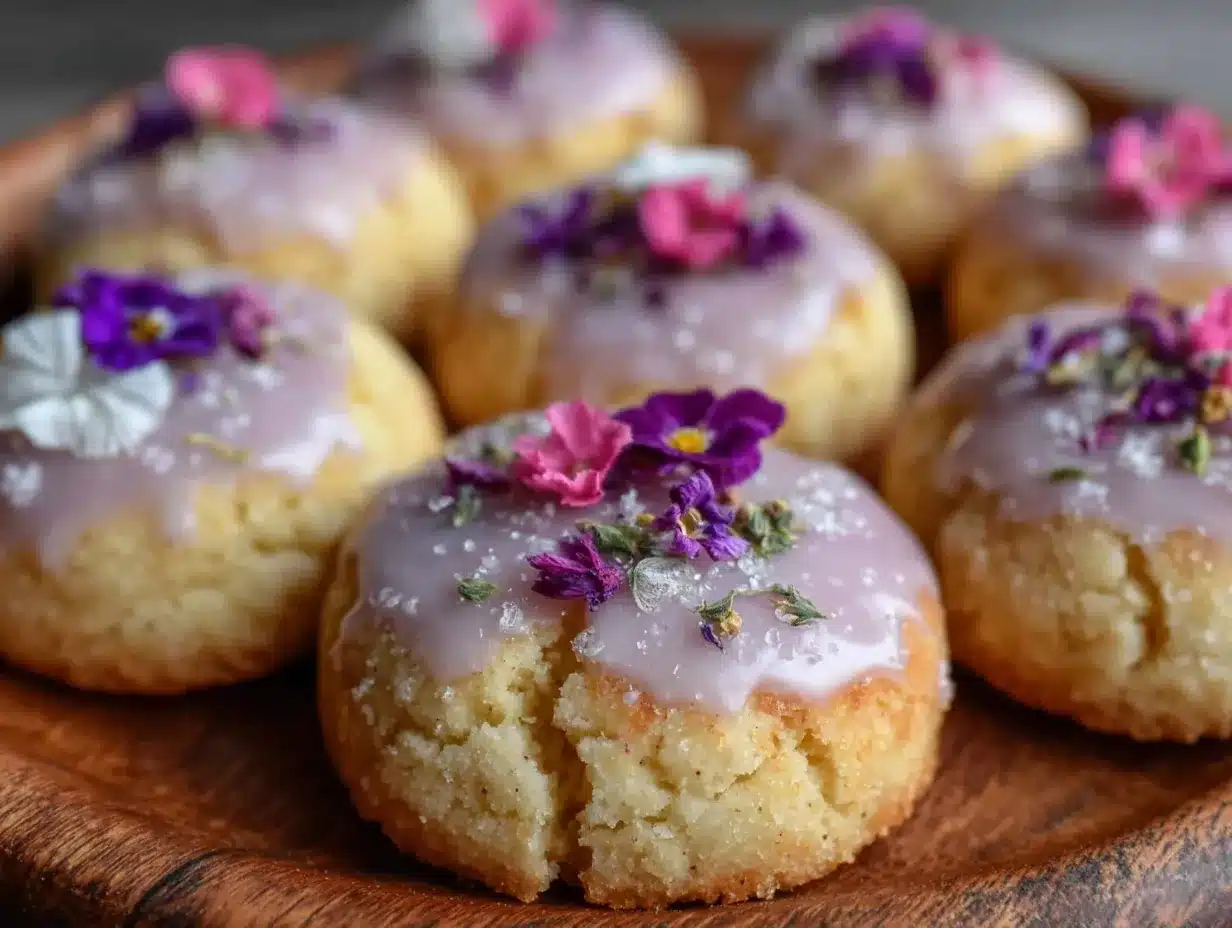
“You’ve got to try these,” my neighbor said, dropping off a small, delicate box on my doorstep. I was skeptical—lemon and lavender in cookies? Sounds like a perfumery, not a kitchen. But that afternoon, the scent of freshly zested lemons mingling with a subtle hint of lavender filled my kitchen, and honestly, it was like a calm breeze on a hectic day. The texture was buttery and crumbly, just like the best shortbread should be, but with a twist that made me pause mid-bite. Those edible flowers on top? They weren’t just for looks—they gave a gentle floral whisper that lingered, a reminder that sometimes simple ingredients can surprise you.
I found myself baking these perfect lemon shortbread cookies with lavender glaze multiple times that week—each batch a little experiment in balance and flavor. It wasn’t just about making cookies; it became a small ritual that grounded me after busy days. That quiet moment of mixing, folding, and glazing was like a reset button. Now, whenever I slice into one of these tender, citrusy rounds, I’m reminded of that unexpected gift and the calm it brought.
These cookies aren’t just a treat—they’re a small celebration of simple pleasures captured in buttery bites, with a floral finish that feels both elegant and comforting. And I think that’s why they stick with you long after the last crumb is gone.
Why You’ll Love This Recipe
Honestly, this isn’t just another lemon cookie recipe lurking in the archives. I’ve tested dozens of versions, tweaking ingredients and techniques until these lemon shortbread cookies with lavender glaze came out just right. Here’s why you’ll want to keep this one on hand:
- Quick & Easy: Ready in under 40 minutes, these cookies are perfect for when you need a homemade treat without fussing for hours.
- Simple Ingredients: No obscure or intimidating components here; most are pantry staples or easy to find at your local market.
- Elegant Presentation: The edible flowers on top turn these into a stunning gift or party favor that always gets compliments.
- Crowd-Pleaser: Whether it’s a tea party, bridal shower, or an impromptu coffee break, these cookies vanish fast.
- Flavor Harmony: The bright lemon zest cuts through the rich, buttery shortbread, while the lavender glaze adds a subtle floral note that’s neither overpowering nor faint.
- Unique Twist: The lavender glaze isn’t just a drizzle—it’s carefully balanced to complement the lemon, making these cookies stand apart from your typical citrus shortbread.
What’s more, this recipe blends comfort and sophistication effortlessly. It’s the kind of treat that makes you close your eyes after the first bite, savoring the delicate textures and fresh flavors. And if you’re looking for other crowd-pleasing baked goods that balance ease and flavor, you might enjoy my creamy no-bake mini cheesecakes or the irresistibly crispy vegan pizza with herb pesto.
What Ingredients You Will Need
This recipe calls for straightforward, wholesome ingredients that come together to create bold flavors and a satisfying texture without any fuss. Most are pantry staples, and substitutions are easy if you’re accommodating diets or preferences.
- For the Shortbread Dough:
- All-purpose flour, 2 cups (240g) – the base for that tender crumb
- Unsalted butter, 1 cup (226g), softened – for richness and that melt-in-your-mouth texture (I prefer Plugrá for its creamy consistency)
- Powdered sugar, 3/4 cup (90g) – to keep the texture soft and sweet without grittiness
- Fresh lemon zest from 2 lemons – essential for bright, fragrant citrus notes
- Vanilla extract, 1 teaspoon – adds depth
- Salt, 1/4 teaspoon – balances the sweetness and enhances flavor
- For the Lavender Glaze:
- Powdered sugar, 1 cup (120g) – smooth and sweet base
- Milk or cream, 2-3 tablespoons (30-45ml) – adjust to get desired glaze consistency
- Food-grade dried lavender buds, 1 teaspoon, finely ground (use sparingly for floral fragrance without bitterness)
- Fresh lemon juice, 1 tablespoon – to tie the glaze flavor with the cookie
- For Decoration:
- Edible flowers (such as pansies, violets, or nasturtiums) – fresh, organic, and pesticide-free
Pro tip: If you want a gluten-free version, swap the all-purpose flour for a 1-to-1 gluten-free baking flour blend. And if dairy is a no-go, use plant-based butter alternatives and oat or almond milk for the glaze. For the freshest edible flowers, local farmers markets are often the best source during spring and summer.
Equipment Needed
- Mixing bowls – a medium and a large one for combining ingredients
- Electric mixer or stand mixer – helps achieve the perfect buttery creaminess, but hand mixing works fine with a bit more elbow grease
- Microplane or fine grater – for zesting lemons finely without the bitter pith
- Measuring cups and spoons – accuracy is key for balance in shortbread
- Rolling pin – to roll out dough evenly to about 1/4 inch thickness
- Cookie cutters or knife – I use a 2.5-inch round cutter for consistent shapes, but a simple square or rectangle works too
- Baking sheet lined with parchment paper or silicone baking mat – prevents sticking and browning on the bottom
- Cooling rack – for those cookies to cool perfectly crisp without steam
- Small whisk or spoon – for mixing the glaze
For budget-friendly alternatives, a wooden rolling pin and a butter knife can substitute specialized tools without sacrificing results. If you want to keep your microplane sharp, I recommend hand-washing and drying immediately to avoid dulling.
Preparation Method
- Mix the Dry Ingredients: In a large bowl, whisk together 2 cups (240g) all-purpose flour, 3/4 cup (90g) powdered sugar, and 1/4 teaspoon salt. This ensures even distribution and prevents clumps. (5 minutes)
- Cream Butter and Flavorings: Using an electric mixer, beat 1 cup (226g) softened unsalted butter with the zest of 2 lemons and 1 teaspoon vanilla extract until fluffy and pale. This step is crucial for that melt-in-your-mouth texture. (3-4 minutes)
- Combine Wet and Dry: Gradually add the dry ingredients to the butter mixture, mixing on low speed until a crumbly dough forms. If the dough feels too dry, add a teaspoon of cold water, but be cautious—too much can toughen the cookies. (3 minutes)
- Chill the Dough: Shape the dough into a flat disk, wrap in plastic wrap, and refrigerate for at least 30 minutes. This helps relax the gluten and firm the butter, making for cleaner cuts and less spreading during baking. (30 minutes)
- Preheat and Prepare: Preheat your oven to 325°F (165°C). Line a baking sheet with parchment paper or a silicone mat. (10 minutes)
- Roll and Cut: On a lightly floured surface, roll the dough out to about 1/4 inch (6mm) thickness. Use a 2.5-inch (6cm) round cookie cutter to cut shapes, placing them about 1 inch (2.5cm) apart on the baking sheet. Gather scraps, reroll, and cut until all dough is used. (10-15 minutes)
- Bake: Bake for 18-20 minutes, or until the edges just begin to turn golden. The cookies should feel firm on the edges but still soft in the center. Overbaking will dry them out. (18-20 minutes)
- Cool: Transfer cookies to a cooling rack and let cool completely before glazing. This prevents the glaze from melting or sliding off. (30 minutes)
- Make the Lavender Glaze: In a small bowl, whisk together 1 cup (120g) powdered sugar, 2 tablespoons (30ml) milk or cream, 1 tablespoon fresh lemon juice, and 1 teaspoon finely ground dried lavender buds. Adjust the milk to get a smooth but slightly thick glaze. (5 minutes)
- Glaze and Decorate: Using a spoon or small brush, drizzle the lavender glaze over the cooled cookies. While the glaze is still wet, gently press edible flowers onto each cookie for a beautiful finish. Let the glaze set for 20-30 minutes before serving. (30 minutes)
Tip: If the glaze thickens too much while decorating, add a splash more milk to loosen it. Also, keep an eye on your oven’s heat; every oven bakes differently, and the cookie edges should never turn too dark.
Cooking Tips & Techniques
One of the best things about shortbread is its forgiving nature, but there are a few tricks I’ve picked up over the years to make sure these lemon shortbread cookies come out perfect every time.
- Butter Temperature: Softened, not melted. If your butter is too warm, the cookies will spread too much. Room temperature butter helps trap air for a lighter texture.
- Don’t Overwork the Dough: Overmixing develops gluten, which can make cookies tough. Mix just until the dough comes together.
- Chilling is Key: The 30-minute chill may feel like a drag when you’re eager to bake, but skipping it risks losing that crumbly integrity.
- Even Thickness: Rolling the dough evenly prevents some cookies from browning too fast while others stay pale and underdone.
- Glaze Consistency: The lavender glaze should be fluid enough to drizzle but thick enough to set without pooling. Adding a bit of lemon juice brightens the flavor and helps balance the floral notes.
- Edible Flowers: Gently press them onto the glaze before it sets to avoid bruising. If you can’t find edible flowers, finely chopped lemon zest or a sprinkle of lavender buds works in a pinch.
Once, I forgot to chill the dough, and the cookies spread into sad, thin discs. Lesson learned the hard way! Also, if you like multitasking in the kitchen, try prepping the glaze while the cookies bake—it saves a good 10 minutes and keeps your workflow smooth.
Variations & Adaptations
Feeling adventurous? Here are some ways to make these lemon shortbread cookies with lavender glaze your own:
- Herbal Swap: Replace lavender with rosemary or thyme for a savory twist. Both herbs add complex notes that pair beautifully with lemon.
- Gluten-Free: Use a gluten-free baking blend. Many brands work well, but I’ve had luck with King Arthur’s GF flour for texture closest to all-purpose.
- Vegan Version: Substitute vegan butter and use a plant-based milk like oat or almond in the glaze. The cookies still turn out rich and tender.
- Seasonal Flair: In summer, swap edible flowers for fresh berries pressed gently into the glaze before it sets.
- Chocolate Drizzle: Add a drizzle of melted white or dark chocolate after the glaze sets for extra indulgence.
Personally, I once swapped lemon zest for orange and paired it with a light honey glaze—delicious, but the lemon-lavender combo remains my favorite. And if you enjoy recipes with a similar balance of fresh herbs and citrus, you might appreciate my crockpot chicken taco bowls, which bring bright, herby notes to dinner.
Serving & Storage Suggestions
These lemon shortbread cookies are best served at room temperature, allowing the buttery crumb and delicate glaze to shine. They pair wonderfully with a cup of herbal tea—lavender or chamomile feels like a natural match—or a light sparkling wine for a special occasion.
To store, keep the cookies in an airtight container at room temperature for up to 3 days. If you want to save them longer, they freeze well up to 1 month. Just thaw at room temperature before glazing, or glaze and freeze separately.
Reheat gently in a low oven (around 275°F/135°C) for 5 minutes if you want that fresh-baked warmth. The flavors actually deepen a bit after a day or two, making them even more irresistible.
If you enjoy layering flavors in your desserts, you may find the texture contrast in my lemon raspberry trifle equally delightful for entertaining.
Nutritional Information & Benefits
Each cookie contains approximately:
| Nutrient | Amount per Cookie |
|---|---|
| Calories | 110 kcal |
| Fat | 7 g |
| Carbohydrates | 12 g |
| Sugar | 6 g |
| Protein | 1 g |
Lemon zest provides vitamin C and antioxidants, while lavender has been traditionally used for its calming properties. The recipe is free from artificial additives and can easily be adapted for gluten-free or vegan diets by swapping key ingredients.
From a wellness perspective, these cookies strike a balance between indulgence and mindful eating, letting you savor a treat without feeling weighed down.
Conclusion
These perfect lemon shortbread cookies with lavender glaze and edible flowers are more than just a pretty face—they’re a harmonious blend of bright citrus, floral notes, and buttery crumb that bring a little joy to your day. I love how they feel both sophisticated and approachable, a reminder that homemade treats can be effortless and special at the same time.
Feel free to play around with the flavors and presentation to make them truly yours. And if you give this recipe a try, I’d love to hear how you customized it or what moments you shared them with. Baking is better when it’s shared, after all.
Here’s to many cozy afternoons punctuated by the sweet scent of lemon and lavender in your kitchen!
Frequently Asked Questions About Perfect Lemon Shortbread Cookies with Lavender Glaze and Edible Flowers
Can I make the cookie dough ahead of time?
Absolutely! The dough can be refrigerated for up to 48 hours or frozen for up to 1 month. Just thaw in the fridge before rolling out.
Where can I find edible flowers?
Look for edible flowers at specialty grocery stores, farmers markets, or online. Make sure they’re organic and pesticide-free for safe consumption.
Can I use fresh lavender instead of dried in the glaze?
Fresh lavender is stronger and can be bitter. If you want to experiment, use very small amounts and finely chop it, but dried food-grade lavender is usually best for even flavor.
What if I don’t have a rolling pin?
You can use a clean wine bottle or any cylindrical object to roll out the dough evenly.
How do I store glazed cookies without the glaze sticking?
Let the glaze set completely before stacking cookies. Place parchment paper between layers to prevent sticking.
Pin This Recipe!

Perfect Lemon Shortbread Cookies Recipe with Lavender Glaze and Edible Flowers

These lemon shortbread cookies feature a buttery, crumbly texture with bright citrus notes and a subtle floral lavender glaze, topped with edible flowers for an elegant finish.
- Prep Time: 20 minutes
- Cook Time: 20 minutes
- Total Time: 50 minutes
- Yield: 24 cookies 1x
- Category: Dessert
- Cuisine: American
Ingredients
- 2 cups (240g) all-purpose flour
- 1 cup (226g) unsalted butter, softened
- 3/4 cup (90g) powdered sugar
- Zest of 2 lemons
- 1 teaspoon vanilla extract
- 1/4 teaspoon salt
- 1 cup (120g) powdered sugar (for glaze)
- 2–3 tablespoons (30-45ml) milk or cream
- 1 teaspoon food-grade dried lavender buds, finely ground
- 1 tablespoon fresh lemon juice
- Edible flowers (such as pansies, violets, or nasturtiums), fresh and organic
Instructions
- In a large bowl, whisk together 2 cups (240g) all-purpose flour, 3/4 cup (90g) powdered sugar, and 1/4 teaspoon salt.
- Using an electric mixer, beat 1 cup (226g) softened unsalted butter with the zest of 2 lemons and 1 teaspoon vanilla extract until fluffy and pale.
- Gradually add the dry ingredients to the butter mixture, mixing on low speed until a crumbly dough forms. Add a teaspoon of cold water if dough feels too dry.
- Shape the dough into a flat disk, wrap in plastic wrap, and refrigerate for at least 30 minutes.
- Preheat oven to 325°F (165°C). Line a baking sheet with parchment paper or silicone mat.
- Roll dough on a lightly floured surface to about 1/4 inch (6mm) thickness. Cut with a 2.5-inch (6cm) round cookie cutter and place cookies 1 inch apart on baking sheet.
- Bake for 18-20 minutes until edges are just golden and cookies feel firm on edges but soft in center.
- Transfer cookies to a cooling rack and cool completely before glazing.
- In a small bowl, whisk together 1 cup (120g) powdered sugar, 2 tablespoons (30ml) milk or cream, 1 tablespoon fresh lemon juice, and 1 teaspoon finely ground dried lavender buds until smooth and slightly thick.
- Drizzle lavender glaze over cooled cookies and gently press edible flowers onto each cookie while glaze is wet. Let glaze set for 20-30 minutes before serving.
Notes
Use softened, not melted butter for best texture. Chill dough for at least 30 minutes to prevent spreading. Adjust glaze consistency with milk as needed. Press edible flowers gently onto wet glaze to avoid bruising. Dough can be refrigerated up to 48 hours or frozen up to 1 month. For gluten-free, substitute all-purpose flour with a 1-to-1 gluten-free baking blend. For vegan, use plant-based butter and milk alternatives.
Nutrition
- Serving Size: 1 cookie
- Calories: 110
- Sugar: 6
- Fat: 7
- Carbohydrates: 12
- Protein: 1
Keywords: lemon shortbread cookies, lavender glaze, edible flowers, lemon cookies, shortbread, homemade treats, floral cookies, easy dessert