My partner took one bite of this creamy basil walnut pesto and immediately asked if I could make it again the next day—without even waiting for dinner to finish. Honestly, I was caught off guard; pesto isn’t usually the type of sauce anyone begs for more of so quickly. But that bright, fresh basil mingling with the rich, slightly nutty walnuts made something unexpectedly comforting and lively. Watching that moment unfold right at the kitchen counter, with the sunlight catching the glossy green sauce, I realized this recipe wasn’t just a quick sauce fix—it was a little homemade magic that felt both familiar and new.
The texture is what really got me here: smooth, creamy, but still with bits of walnut crunch that give it character. It’s not the usual pine nut pesto you find everywhere, but it’s got this hearty twist that makes it stick in your mind. Plus, it’s so easy to whip up that it quickly became my secret weapon for turning simple meals into something special. There’s something quietly satisfying about blending fresh basil and walnuts with a touch of creaminess that just feels like a hug for your taste buds. And honestly, it’s that combination that keeps me coming back to this creamy basil walnut pesto no pine nuts recipe.
It’s not flashy or complicated, but just the right balance of fresh and rich, grounded in good ingredients and a little kitchen know-how. This pesto isn’t about perfection, it’s about enjoying something wholesome that works every time—whether tossed with pasta, slathered on crusty bread, or dolloped onto roasted veggies. And that’s why it stuck with me: it’s the kind of recipe you trust to bring a bit of joy to your table without fuss or fanfare.
Why You’ll Love This Recipe
This creamy basil walnut pesto no pine nuts recipe has been tested and tweaked through many dinners, and it always delivers in flavor and ease. Here’s why it’s become a staple in my kitchen:
- Quick & Easy: Ready in about 10 minutes, it’s perfect for those busy weeknights or when you want a last-minute sauce with big flavor.
- Simple Ingredients: You don’t need fancy nuts or specialty items—just fresh basil and walnuts, which are pantry-friendly and easy to find.
- Perfect for Any Occasion: Whether it’s a casual dinner, a picnic, or a cozy lunch, this pesto adds a fresh, vibrant touch that feels special without stress.
- Crowd-Pleaser: Kids, adults, and even pesto skeptics have given it thumbs up, thanks to its creamy texture and balanced flavor.
- Unbelievably Delicious: The creamy element (I like to use a little cream cheese or Greek yogurt) makes the texture silky smooth, while walnuts bring a deep, earthy nuttiness that pine nuts just can’t match.
What sets this apart from other pesto recipes? It’s the creamy twist combined with walnuts instead of pine nuts, which gives it a unique flavor and a bit more protein. Plus, you get to avoid the sometimes pricey or hard-to-find pine nuts, making this pesto not just delicious but practical. When I first tried blending in cream cheese, I thought it might be too rich, but the brightness of fresh lemon juice and basil balances everything out beautifully.
Honestly, this isn’t just another pesto recipe—it’s a reliable, flavorful sauce that feels like summer in a jar, but with a cozy, creamy touch that works year-round. It’s the kind of recipe that invites you to close your eyes and savor every bite, whether it’s on pasta, sandwiches, or even drizzled over grilled chicken. It’s comfort food with a fresh twist, easy enough to make any day but impressive enough for guests.
What Ingredients You Will Need
This recipe uses simple, wholesome ingredients to deliver bold flavor and a satisfying texture without fuss. All ingredients are easy to source, many probably already sitting in your kitchen or fridge, and you can swap a few elements if needed.
- Fresh Basil Leaves: About 2 cups packed, washed and dried. Fresh basil is the star here—look for bright green leaves without any browning or wilting.
- Walnuts: ½ cup toasted walnuts. Toasting them lightly brings out a deeper nuttiness and crunch. I prefer organic walnuts from Diamond of California for consistent quality.
- Garlic: 1 large clove, peeled. For a mellow garlic flavor, you can roast it beforehand or just use fresh raw.
- Parmesan Cheese: ½ cup freshly grated. Parm adds salty, savory depth. Use a good-quality aged cheese for best results.
- Olive Oil: ⅓ cup extra virgin olive oil, cold-pressed. This binds everything together and adds that classic pesto richness.
- Cream Cheese or Greek Yogurt: ¼ cup. This is the creamy secret that makes the pesto smooth without losing the fresh basil flavor. You can use full-fat cream cheese for richness or Greek yogurt for a lighter touch.
- Lemon Juice: 1 tablespoon fresh squeezed. It brightens the pesto and balances the richness.
- Salt & Pepper: To taste (about ½ teaspoon salt and a few grinds of black pepper). Adjust carefully because the parmesan is salty.
Substitution tips: Use almond flour or sunflower seeds if you want a nut-free version, though the flavor will shift a bit. For a vegan take, swap Parmesan for nutritional yeast and cream cheese for a plant-based alternative like cashew cream. In summer, swapping walnuts for fresh toasted pine nuts or pistachios is lovely if you’re not avoiding pine nuts specifically.
Equipment Needed
- Food Processor or High-Powered Blender: Essential for getting the pesto creamy and smooth. I’ve used everything from a basic Cuisinart to a Vitamix for this, and both work well—just pulse carefully to avoid overprocessing.
- Measuring Cups and Spoons: For accuracy, especially with oil and lemon juice.
- Microplane or Fine Grater: For grating fresh Parmesan cheese.
- Spatula: To scrape down the sides of the processor bowl for even blending.
- Small Bowl or Jar: For storing the pesto. A glass container with a tight lid keeps it fresh in the fridge.
If you don’t have a food processor, a sturdy blender will do, but you might need to add the oil more slowly and scrape down the sides more often. A mortar and pestle is a classic way to make pesto, though it takes more elbow grease, and you won’t get that ultra-creamy texture from the cream cheese addition as easily. For budget-friendly options, any basic food processor under $50 will handle this recipe just fine.
Preparation Method
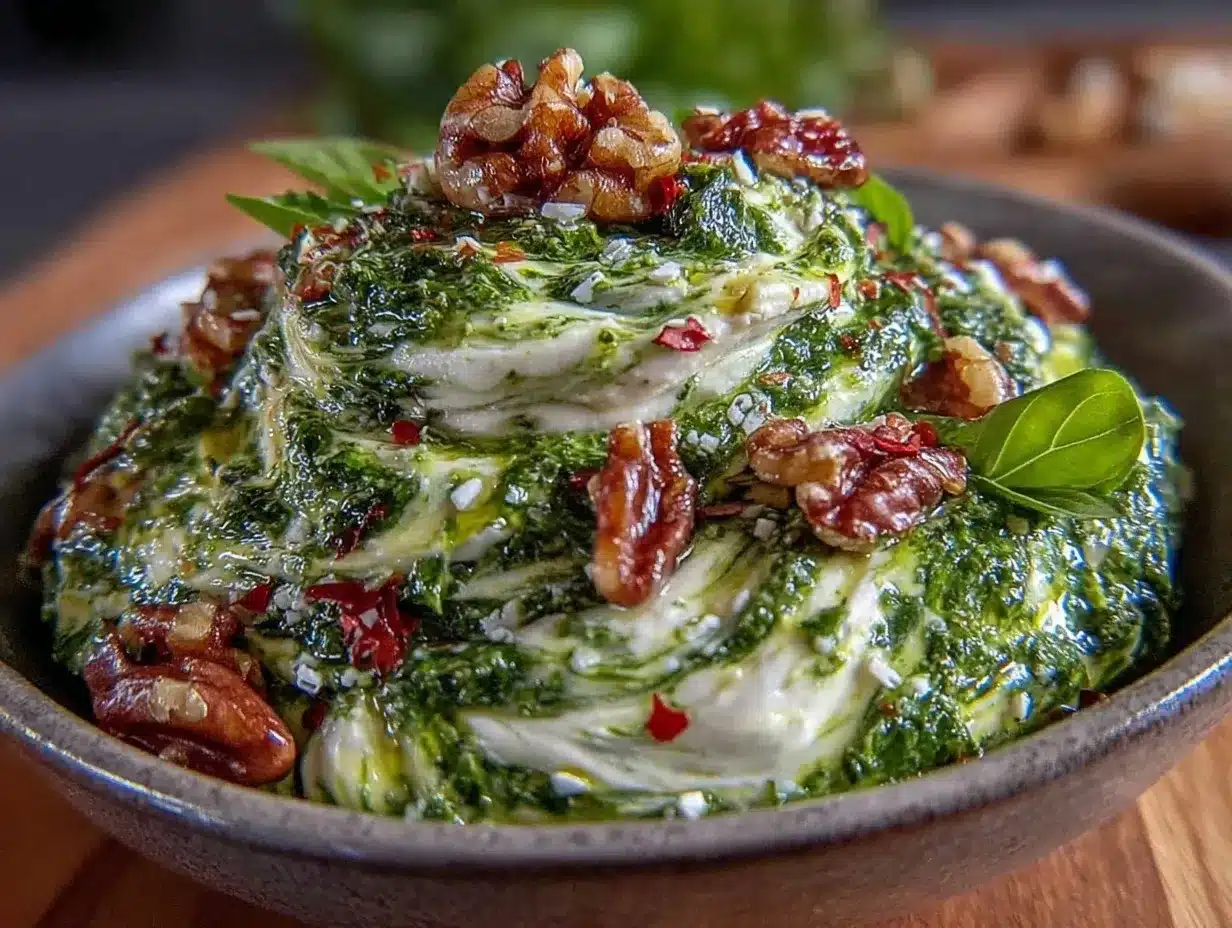
- Toast the Walnuts: Preheat your oven to 350°F (175°C). Spread walnuts evenly on a baking sheet and toast for 5-7 minutes, until fragrant and lightly browned. Keep an eye so they don’t burn. Let them cool completely before using.
- Prep the Basil and Garlic: Rinse basil leaves and pat dry thoroughly. Peel the garlic clove. Fresh, dry basil is key to avoid watery pesto.
- Combine Ingredients: In the bowl of your food processor, add toasted walnuts, basil leaves, garlic, and grated Parmesan cheese. Pulse 5-6 times to roughly chop.
- Add Cream Cheese and Lemon Juice: Add the cream cheese (or Greek yogurt) and lemon juice. Pulse a few more times to start blending the creamy element evenly with the herbs and nuts.
- Slowly Add Olive Oil: With the processor running on low speed, drizzle in the olive oil through the feed tube. Stop and scrape the sides as needed to incorporate all ingredients evenly. The pesto should become smooth but still slightly textured.
- Season: Add salt and freshly ground black pepper to taste. Pulse once or twice to mix. Taste and adjust seasoning or lemon if needed.
- Final Texture Check: The creamy basil walnut pesto should be thick but spreadable, with a silky mouthfeel and small walnut pieces for texture. If too thick, add a teaspoon of olive oil or water to loosen.
- Store or Serve: Transfer to a jar or bowl and use immediately or cover and refrigerate. It keeps fresh for up to 4 days (and the flavor often deepens overnight).
Quick tip: If your pesto tastes a bit bitter, a pinch of sugar or an extra squeeze of lemon juice can brighten it up perfectly. And don’t skip toasting the walnuts—it really changes the flavor profile.
Cooking Tips & Techniques
Making pesto sounds easy, but a few tricks make all the difference in this creamy basil walnut pesto recipe without pine nuts:
- Toast Nuts Carefully: Toasting walnuts brings out their natural oils and flavor. Too dark, and they’ll turn bitter, so watch the color closely.
- Dry Basil Is a Must: Water on basil leaves will make your pesto watery and dull. After washing, spin or pat dry thoroughly.
- Don’t Overprocess: Pulse in short bursts to keep some texture—overblending turns pesto into a paste that’s too smooth and loses character.
- Incorporate Oil Slowly: Adding olive oil in a slow drizzle helps emulsify the sauce, creating that creamy texture instead of separated oil.
- Balance Acidity: Fresh lemon juice cuts through the richness but add little by little. Too much lemon can overpower the basil’s delicate flavor.
- Keep It Fresh: If you’re not using the pesto immediately, press a thin layer of olive oil over the surface before sealing to prevent browning.
From personal experience, I learned that using a blend of cream cheese and a little Greek yogurt gives the best consistency and flavor—too much cream cheese can be heavy, and yogurt alone sometimes makes it tangy. Also, starting with room temperature ingredients helps everything blend more easily.
Variations & Adaptations
This creamy basil walnut pesto no pine nuts recipe is a fantastic base for customization. Here are some ways I’ve mixed it up:
- Vegan Version: Swap Parmesan for nutritional yeast and use cashew cream or silken tofu instead of cream cheese for a dairy-free, creamy pesto.
- Spicy Kick: Add a small pinch of red pepper flakes or a dash of hot sauce for subtle heat without overshadowing the basil’s freshness.
- Herb Mix: Add fresh parsley or mint along with basil for a layered herbal flavor. This works great if you want to use up garden herbs.
- Seasonal Nut Swaps: In fall, try pecans or toasted hazelnuts instead of walnuts for a slightly sweeter, richer pesto.
- Cooking Method: Instead of raw pesto, toss it with hot pasta and finish with a quick sauté in a pan to slightly warm the sauce, which softens the creaminess deliciously.
Once, I tried blending in a bit of roasted red pepper for a smoky twist—turned out surprisingly well with the creamy base. Feel free to experiment with your favorite flavors. Just keep the proportions balanced to keep that creamy basil walnut pesto magic alive.
Serving & Storage Suggestions
This creamy basil walnut pesto is best served fresh or chilled slightly, depending on your dish. Here’s how I like to enjoy and store it:
- Serving Temperature: Room temperature brings out the basil’s aroma best. If refrigerated, let it sit out 10-15 minutes before serving.
- Pairings: Toss with warm pasta, spread on toasted baguette slices, spoon over grilled chicken or fish, or dollop onto a fresh heirloom tomato tart like the one in this recipe. It also shines alongside simple roasted vegetables or mixed into creamy risotto.
- Storage: Store leftover pesto in an airtight container in the fridge for up to 4 days. Press a thin layer of olive oil on top to keep it from browning.
- Freezing: Pesto freezes well. Portion into ice cube trays and freeze, then transfer cubes to a freezer bag. Thaw in the fridge or stir frozen cubes directly into hot dishes.
- Flavor Development: The flavors deepen and mellow after a day or two in the fridge, making it great for make-ahead meals.
Nutritional Information & Benefits
Per serving (approximate, based on 8 servings):
| Calories | 120 |
|---|---|
| Fat | 11g (mostly healthy fats from walnuts and olive oil) |
| Protein | 3g |
| Carbohydrates | 2g |
| Fiber | 1g |
Key benefits:
- Walnuts: Rich in omega-3 fatty acids and antioxidants, walnuts support heart health and brain function.
- Basil: Contains vitamins A, K, and C, and has anti-inflammatory properties.
- Olive Oil: A source of monounsaturated fats, known for promoting healthy cholesterol levels.
This pesto is naturally gluten-free and can be made dairy-free with substitutions, making it adaptable for many diets. I find it a satisfying way to add healthy fats and fresh herbs to meals without extra fuss.
Conclusion
This creamy basil walnut pesto no pine nuts recipe has quietly become one of my favorite go-to sauces. It’s simple, fast, and brings a fresh but rich flavor that’s just right for so many dishes. Whether you’re looking for a make-ahead sauce to brighten up fresh zucchini ribbons or want a creamy twist on a classic pesto, this recipe has you covered.
I love how customizable it is—feel free to tweak the creaminess or swap nuts based on what you have. It’s a recipe that invites you to play without worrying about messing it up. And honestly, seeing someone else ask for it again just after trying it? That’s the kind of kitchen win I live for.
If you try this pesto, I’d love to hear how you enjoy it or what variations you create—it’s always fun to see this little recipe take on a life of its own in different kitchens.
FAQs
Can I use other nuts besides walnuts in this pesto?
Yes! Pecans, almonds, or hazelnuts work well toasted. Just keep in mind the flavor will change slightly with each nut.
Is this pesto suitable for vegans?
It can be made vegan by substituting Parmesan with nutritional yeast and using a dairy-free cream cheese or cashew cream instead of regular cream cheese.
How long does homemade pesto keep in the fridge?
Stored in an airtight container with a thin layer of olive oil on top, it stays fresh for up to 4 days. For longer storage, freeze in portions.
Can I use frozen basil leaves for this recipe?
Fresh basil is best for flavor and texture. Frozen basil tends to be watery and may alter the pesto’s consistency.
What dishes pair best with creamy basil walnut pesto?
It’s great tossed with pasta, spread on grilled bread, drizzled over roasted veggies, or used as a sauce for chicken, fish, or even stirred into risotto.
Pin This Recipe!
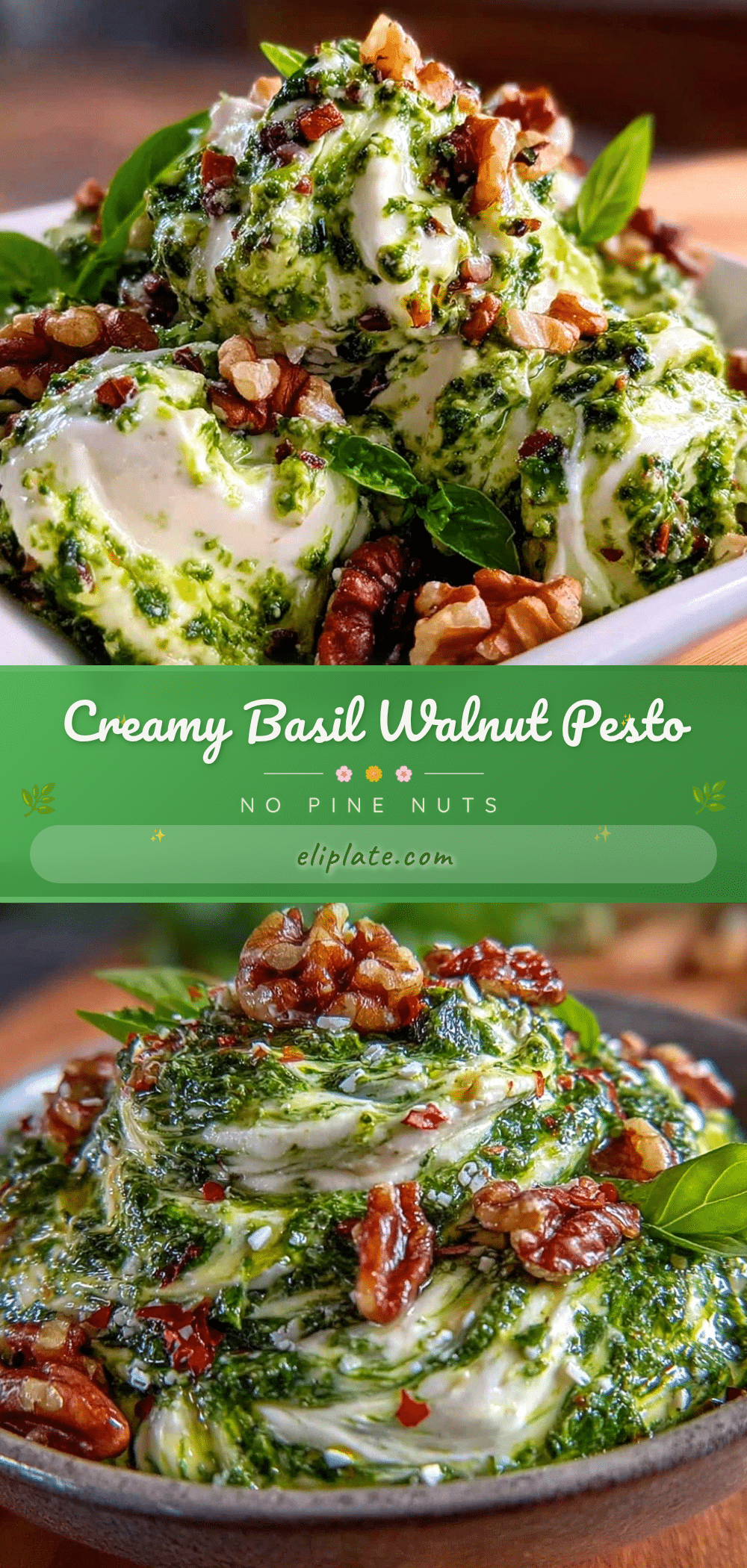
Creamy Basil Walnut Pesto Recipe Without Pine Nuts Easy Homemade

A quick and easy creamy basil walnut pesto that replaces pine nuts with toasted walnuts and adds a smooth texture with cream cheese or Greek yogurt. Perfect for pasta, sandwiches, or roasted veggies.
- Prep Time: 10 minutes
- Cook Time: 7 minutes
- Total Time: 17 minutes
- Yield: 8 servings 1x
- Category: Sauce
- Cuisine: Italian
Ingredients
- 2 cups fresh basil leaves, packed, washed and dried
- 1/2 cup toasted walnuts
- 1 large garlic clove, peeled
- 1/2 cup freshly grated Parmesan cheese
- 1/3 cup extra virgin olive oil, cold-pressed
- 1/4 cup cream cheese or Greek yogurt
- 1 tablespoon fresh lemon juice
- 1/2 teaspoon salt (adjust to taste)
- Freshly ground black pepper, to taste
Instructions
- Preheat oven to 350°F (175°C). Spread walnuts evenly on a baking sheet and toast for 5-7 minutes until fragrant and lightly browned. Let cool completely.
- Rinse basil leaves and pat dry thoroughly. Peel the garlic clove.
- In a food processor, add toasted walnuts, basil leaves, garlic, and grated Parmesan cheese. Pulse 5-6 times to roughly chop.
- Add cream cheese (or Greek yogurt) and lemon juice. Pulse a few more times to blend evenly.
- With the processor running on low speed, slowly drizzle in olive oil through the feed tube. Stop and scrape sides as needed until smooth but slightly textured.
- Add salt and freshly ground black pepper to taste. Pulse once or twice to mix. Taste and adjust seasoning or lemon juice if needed.
- Check texture; pesto should be thick but spreadable with small walnut pieces. If too thick, add a teaspoon of olive oil or water to loosen.
- Transfer pesto to a jar or bowl. Use immediately or cover and refrigerate for up to 4 days.
Notes
Toast walnuts carefully to avoid bitterness. Use dry basil leaves to prevent watery pesto. Pulse in short bursts to keep texture. Add olive oil slowly to emulsify. Adjust lemon juice and salt to balance flavor. Press a thin layer of olive oil on top before storing to prevent browning. Can be frozen in ice cube trays for longer storage.
Nutrition
- Serving Size: Approximately 2 tabl
- Calories: 120
- Fat: 11
- Carbohydrates: 2
- Fiber: 1
- Protein: 3
Keywords: basil pesto, walnut pesto, creamy pesto, no pine nuts, homemade pesto, easy pesto recipe, basil sauce, walnut sauce